
A kit pool on bare grass reads like a promise the yard has not kept. The water sparkles, the metal legs do not, and the whole setup says experiment. These above ground pool ideas fix the part most people skip.
You get fifteen ideas that treat the yard as part of the design. Skirt the wall, add a deck that meets the water, plant for splashing, and light the night.
Costs stay honest throughout, with in-ground prices shown for contrast. An above-ground setup costs a fraction of that, once you put the savings into everything around the water.
Skirt Your Above Ground Pool Wall
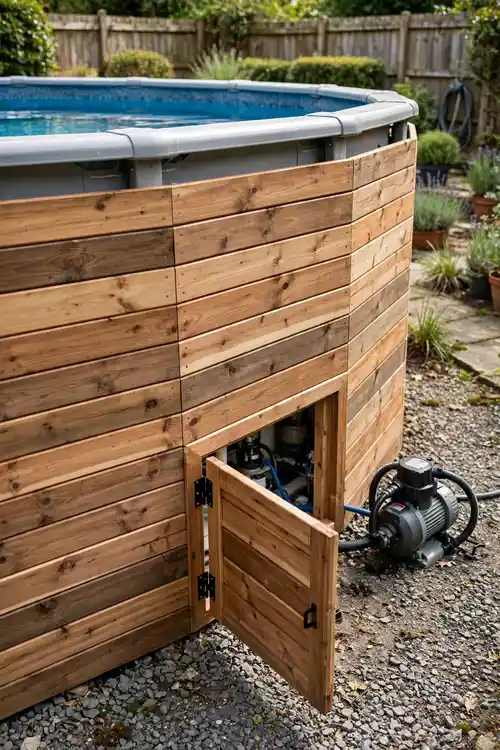
The fastest way to make a pool look permanent is to hide its wall. A simple skirt of horizontal boards or lattice around the base covers the metal legs and liner edge.
The skirt costs under $150 in lumber and changes the pool more than any accessory. Short on tools or time? A ring of large planters hides the visible legs just as well, and you can pull them aside for access.
Leave a removable panel where the pump and filter sit, because you will need to reach them weekly. A screwed-shut skirt turns maintenance into demolition. Ventilation gaps near the equipment keep motors from cooking in summer.
An Above Ground Pool Deck That Meets the Water
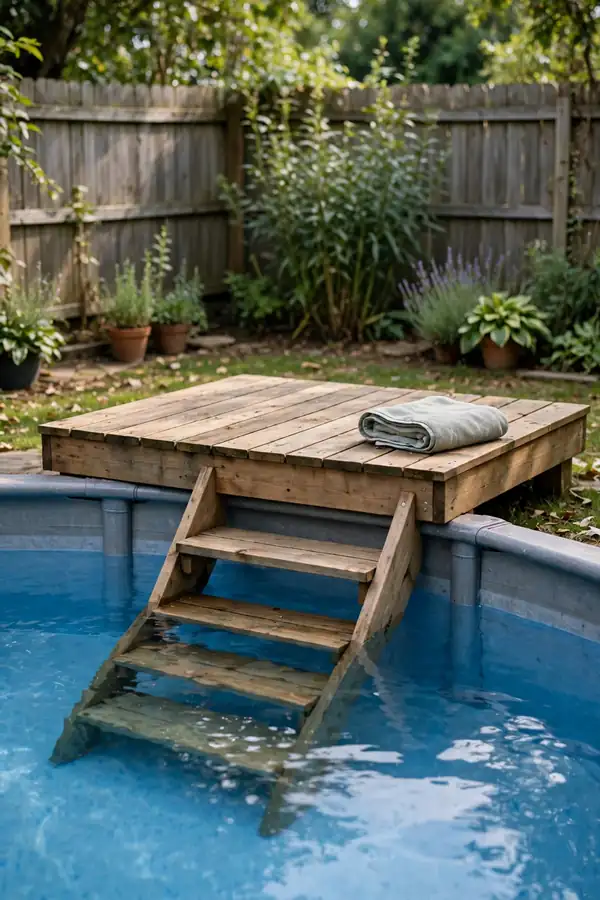
Before: a ladder leans against the pool wall and swimmers climb over like boarding a boat. After: a small platform meets the coping at the same height. Stepping in feels like the yard grew an extra room.
Building the full wraparound deck before your first swim season is the popular move that disappoints. You do not yet know where the sun lands at 4 in the afternoon or which side the neighbors overlook. Start with one platform and one season of use. Build it level with the top rail, with a gap of an inch or two for the cover.
Freestanding decks avoid attaching to the pool wall, which most manufacturers warn against. Check local code for railings once a platform passes a certain height. A deck this size also anchors the outdoor living around it. Trex composite costs more than wood but skips the yearly staining, though it gets hot under bare feet.
Add a simple handrail on the steps. It changes daily use more than extra square footage, and grandparents will actually swim.
The Stock Tank Soak Corner
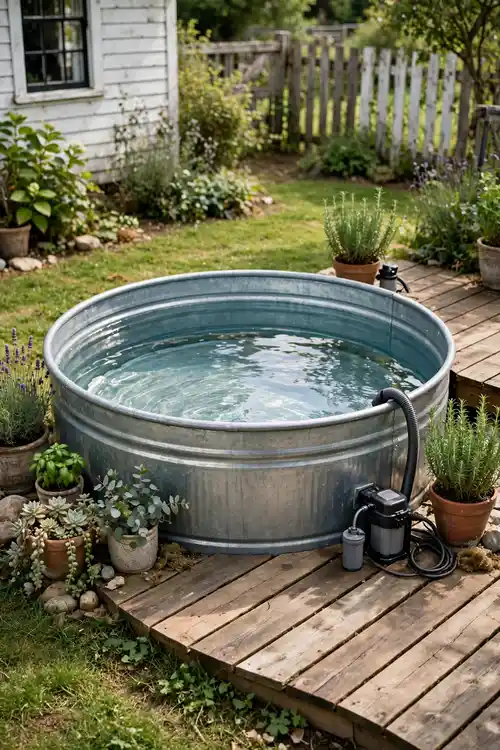
You probably do not need a big pool. A galvanized stock tank, eight feet across, holds two adults for an evening soak. It costs less than a weekend trip.
Permits are the pleasant surprise: a stock tank often needs no permit, but call the town office first. Some towns regulate any standing water over a set depth, and the call takes ten minutes.
Farm stores like Tractor Supply sell them as livestock waterers, which is why they suit farmhouse style yards without trying. Add a small filter pump, since still water turns green within days. The metal sides get hot in direct sun, so plan shade or a wrap.
A stock tank is also the most renter-friendly pool that exists: drain it, and the yard is unchanged. No excavation, no concrete, no argument with the landlord. For small yards, it is often the one pool that fits.
Plants That Forgive Splashing
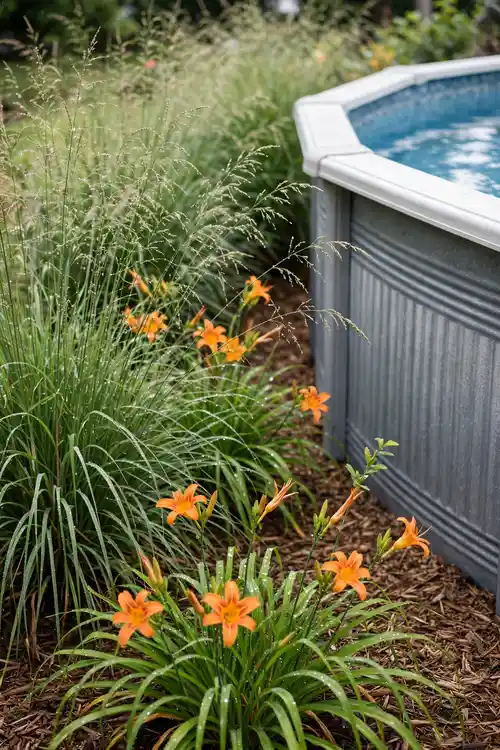
Pool water kills fussy plants. Chlorine splash and constant wet feet murder most ornamentals within a season.
Plant like the pool is a coastline instead. Ornamental grasses, daylilies, and hostas take the splash zone in most climates. They look lush in photos, but unlike tropical showpieces they survive a real summer of cannonballs. Keep anything with dropping leaves or heavy pollen a few feet back from the edge.
Give new plantings a mulch ring a few inches from the stems. Rinse the foliage after heavy swim days if your chlorine runs high. Budget for a few replacements the first year; the survivors tell you what the spot wants.
Gravel, Not Grass, Underfoot
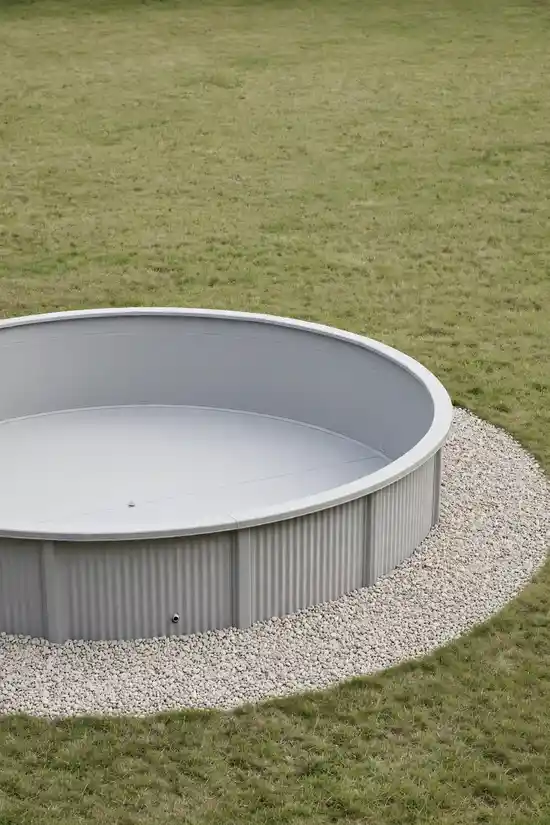
The mistake is nursing the grass ring around the pool back to life each spring. Feet, splash, and shade from the wall turn it into mud by August, and it rarely recovers. Most pool owners learn this by the second summer.
Replace a three-foot ring around the pool with gravel or river rock. It drains, it does not turn to mud, and it reads as a designed border. Lay landscape fabric first or weeds will colonize it by July.
This is a weekend project with a wheelbarrow and a free Saturday. Edge it with steel or stone so the gravel stays put.
Light Your Above Ground Pool After Dark
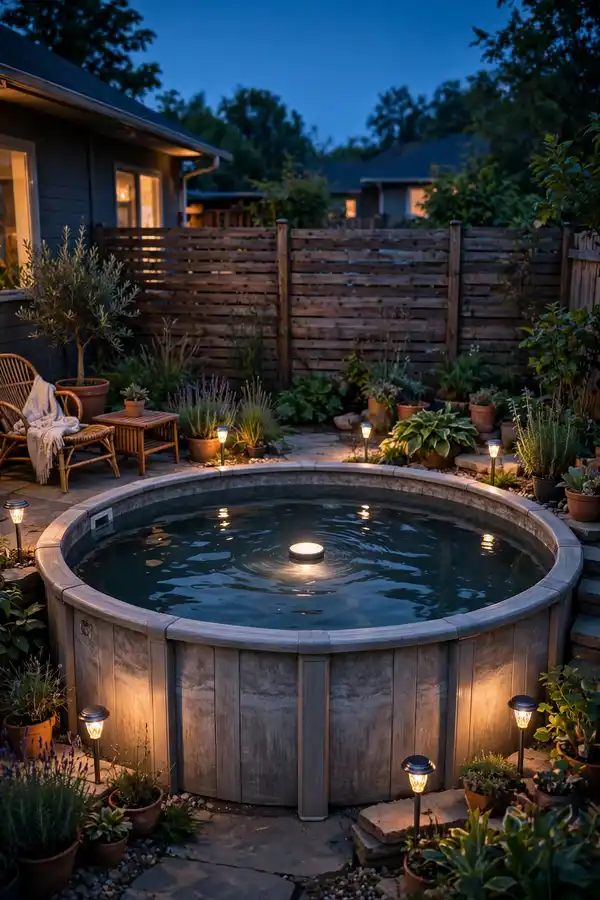
Before: the pool goes black at sunset and the family stops swimming after dinner. After: a soft glow on the water, and the yard gets a second shift. That difference alone justifies the lighting.
Start with solar path lights around the perimeter and a floating LED light in the water. Both cost under $100 together and install in minutes. Keep the bright work light for the equipment corner and the soft light for the swim side. Check the lights from the kitchen window before you call it done.
One floating light covers a small pool; add a second for pools over twenty feet across.
Privacy Without a Prison Fence
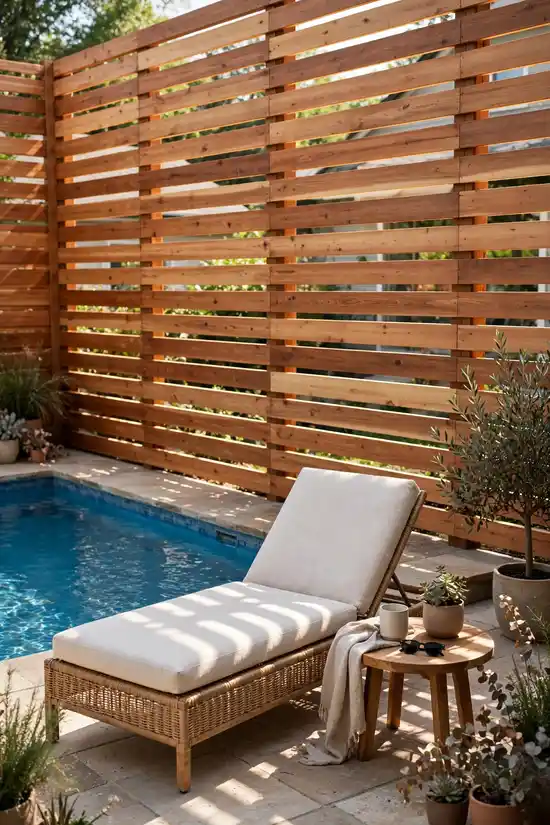
The standard answer is a six-foot fence around everything, and it makes a small yard feel like a compound.
That said, the need is real: you want privacy from the neighbors, not a wall against the sky. Start by standing where you lounge and noting exactly which windows and yards can see you.
Horizontal slat screens block those sightlines while letting breeze and light through. Place them only where neighbors actually look: the lounge side, the changing corner.
Climbing vines on a trellis do the same job in two seasons, for less money. Plant them this year and the screen fills in while you swim.
What It Actually Costs
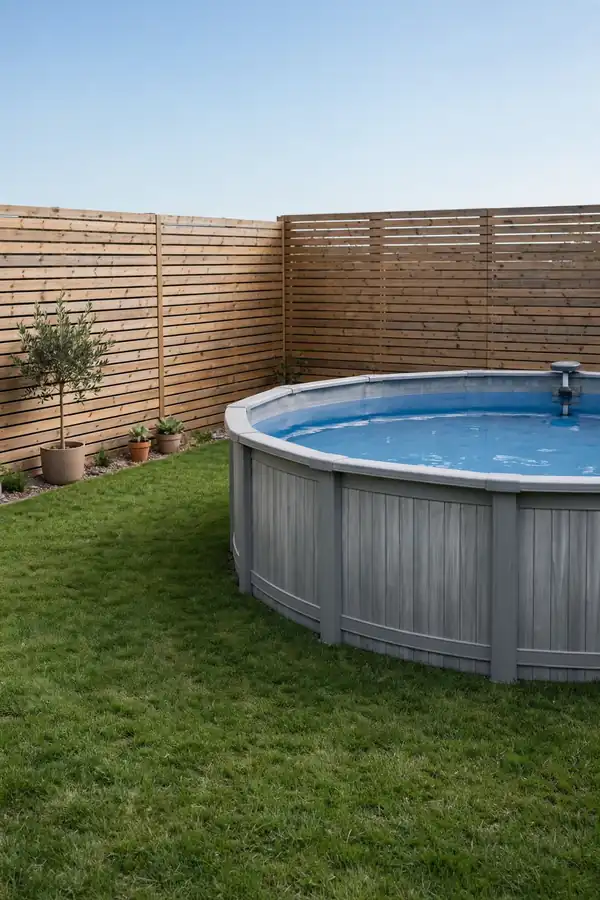
An in-ground pool often runs $40,000 to $80,000 installed, before the fence and landscaping most towns require. An above-ground kit often lands between $3,000 and $8,000 installed. A stock tank setup with pump and chemicals can come in under $2,000.
The gap buys a lot of decking, planting, and lighting. That is the honest math behind this whole article. Spend a tenth on the pool, and put the savings into everything around it. An above-ground pool surrounded by $10,000 of good decisions looks better than a bare in-ground pool.
Plan the surroundings like a budget makeover: one project per season, cheapest visual wins first. Skirting and gravel in year one, deck in year two. Each season adds one finished piece.
Ask About Permits Early
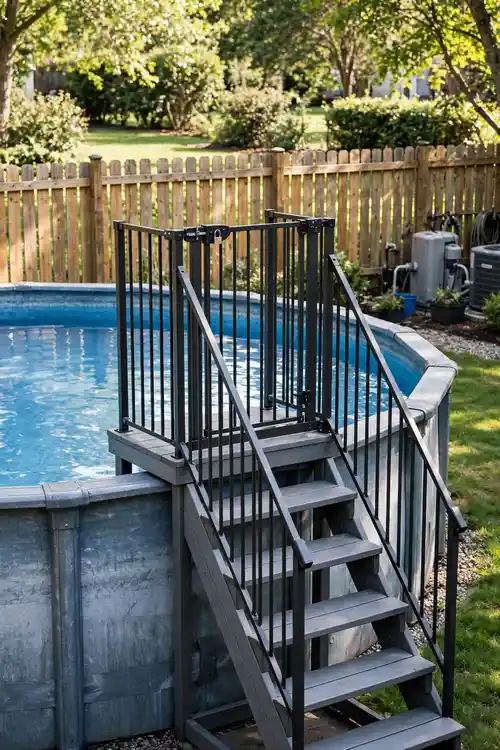
The hidden problem is the paperwork, not the pool. Many towns require permits, fencing, and setbacks even for above-ground pools, and some homeowner associations ban them outright.
Call the town office before you buy anything. Ask about barrier rules, electrical rules for the pump, and setbacks from the property line.
Renters face a second layer: the lease. A stock tank is the easiest pool to get approved, since it leaves no trace.
Get permission in writing, and look for renter-friendly pool setups that leave no trace. An hour on the phone now prevents a removal order later.
Shade You Can Move

Building a permanent pergola over the pool is the mistake to avoid early. Half of it shades the deck, the other half shades the water you wanted warm. Start with a cantilever umbrella or a shade sail on removable posts instead. Move it through one summer and note where it lands most days.
Then build permanent, if you still want to. A shade sail costs under $75 and teaches you the yard better than any plan. The one summer of testing also tells you whether you want shade at all. Some swimmers prefer full sun and a cold drink.
Above Ground Pool Steps, Not the Wobbly Ladder
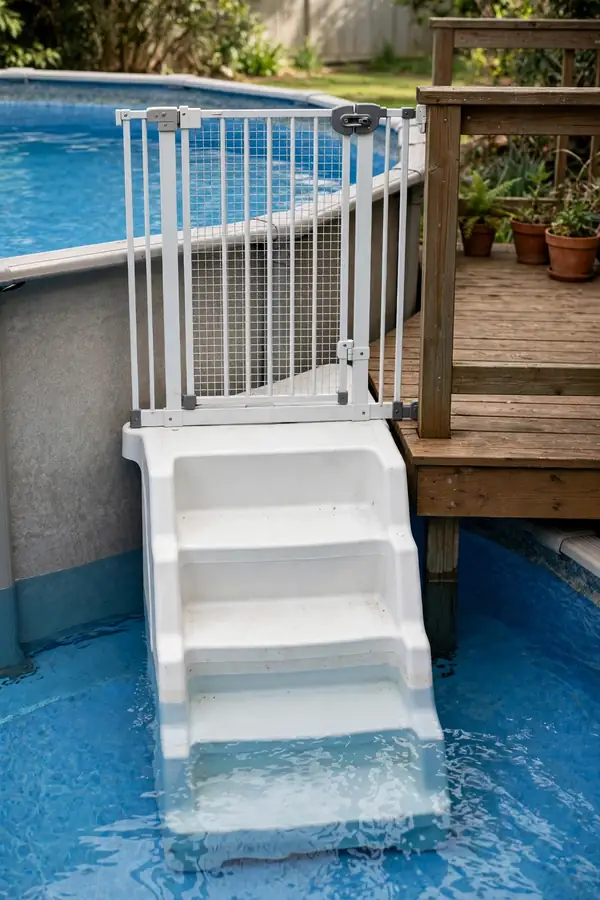
The A-frame ladder that ships with most kits fails in two ways. It wobbles, and it is a climbing frame for small children. Both problems get worse with age. What actually works is a set of dedicated pool steps.
In-pool steps with a locking gate or a removable outer staircase keep kids from wandering in. They also give adults a dignified entry, which matters more than it sounds. Check that the steps fit your pool’s wall height before ordering.
Whatever entry you choose, it should lock or lift away when the pool is closed. An unlocked ladder is an open invitation, and most local codes treat it that way. Intex sells the most common starter kits, and its stock ladder is the part most owners replace first.
A Bar Ledge for Dry Time

Pool furniture is the common advice. Chairs and loungers, arranged around the water. It is incomplete because people rarely stay in the pool the whole time, and wet swimsuits ruin good cushions.
What the space needs is a dry zone: a bar ledge on the deck for drinks, sunscreen, and phones. A simple counter along the deck rail gives the coastal feel of a swim-up bar, with no plumbing. Build it at elbow height for someone standing in the water. Add a foot rail underneath, and keep the surface sealed wood or composite.
Winter Is Part of the Design
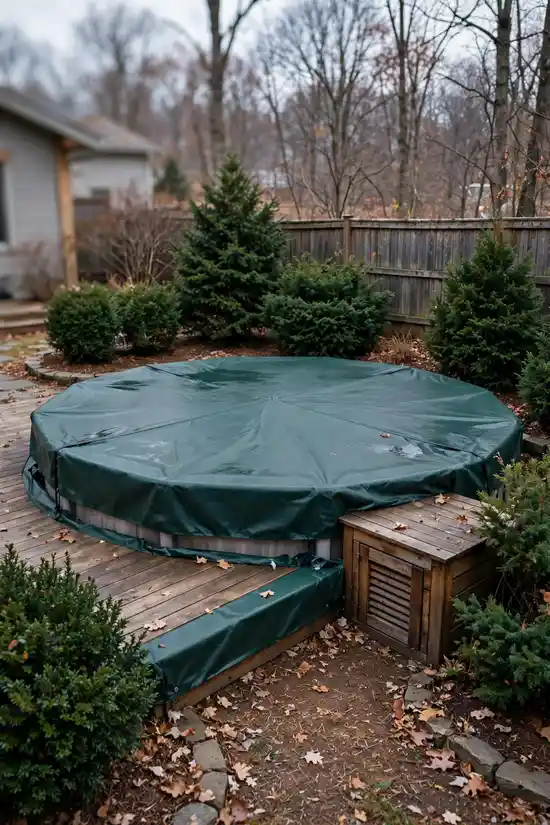
Before: the pool gets covered in October and the yard becomes a sad blue tarp for six months. After: the cover sits under the deck edge and the equipment hides in its box. The yard reads as a yard that happens to have a pool.
Design for the off-season on purpose. Plant evergreens where the eye lands in winter.
Choose a cover color that does not scream: dark green or tan beats bright blue. Tuck the cover edge under the deck so the tarp line disappears.
Drain below the skimmer, pull the pump indoors, and balance the chemistry before closing. A pool that opens clean in May gets used in May; one that opens green waits until July.
The Pump Gets a House
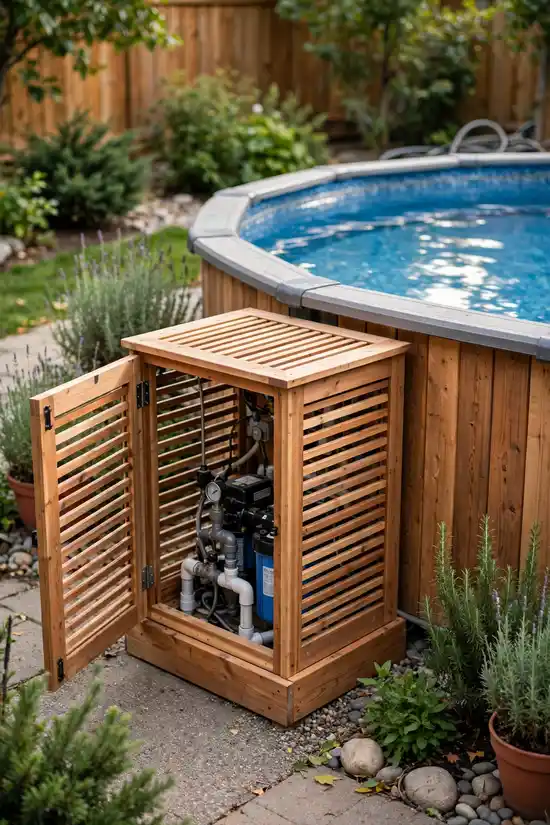
The pump and filter are the ugliest part of the setup, and they sit exactly where the eye lands. The solution is a small ventilated box or slatted screen that hides them. It must let air move, or the motor overheats. Build it from the same material as the pool skirt so it reads as one project.
A simple enclosure costs under $50 in lumber and an afternoon. Leave the front open or hinged for filter access. The hum drops too, which the neighbors will appreciate.
Set the box on a gravel pad, and leave six inches of clearance on all sides. You will thank yourself the first time you change the filter.
Keep the View From the Kitchen
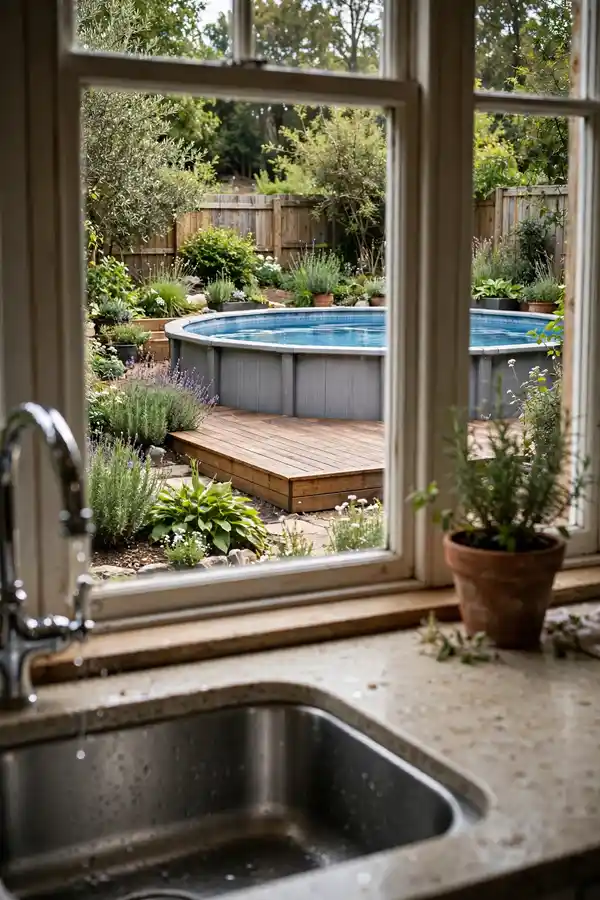
You will look at the pool from the kitchen window far more than from the water. That view decides whether the pool feels like an asset or an eyesore. Design for the window first, the swimmer second.
Frame the sightline: planting on the far side, the deck edge clean, the equipment hidden. What the window sees is what the house feels like.
Walk inside and look out before you finalize any placement. Move the loungers and shift the planting until the window view works. A pool that looks good from indoors gets maintained.
Final Thoughts on Above Ground Pool Ideas
The pool is the cheapest part of a good pool yard. Spend modestly on the water and seriously on everything around it. The skirt, the deck, the planting, the light: that is where the money shows.
Start this weekend by calling the town office about permits. It costs nothing and decides what you are allowed to build. Everything else follows that answer.
What this will not fix: a pool still needs weekly chemistry and cleaning, and no landscaping changes that. Expect a yard that looks deliberate, not a maintenance-free one. The work stays; the eyesore goes.
FAQ About Above Ground Pool Ideas
How much does it cost to maintain an above ground pool each year?
Chemicals, a replacement filter cartridge or sand, and extra water and electricity often run several hundred dollars a year. A stock tank with a small pump costs less, since there is less water to treat. Budget for a new liner after a few seasons on soft-sided kits, since sun and use wear them out.
Can I put an above ground pool on a sloped yard?
Small slopes can be leveled with a compacted pad of sand or stone dust. Steep grades need a retaining wall and professional help. Do not level by building up one side with loose fill; it settles unevenly and stresses the wall.
Do above ground pools need a fence?
Most towns require a barrier, which is often satisfied by a locking ladder or removable steps plus a yard fence. Above-ground walls themselves rarely count as the barrier, since the concern is unsupervised access. Check your local code before the pool arrives, not after.