A home office earns its keep between nine and five, not in the photoshoot. If the chair aches by noon and cables snag your feet, the prettiest styling cannot rescue the room.
These 15 aesthetic home office ideas build the workday first and the look second. You get window light that flatters calls, cable routes that stay put, and small-desk ergonomics built for eight hours.
Most of it costs under $100, and most fixes use what you already own. Start with the first idea and your Monday gets easier.
Your Window Is a Ring Light
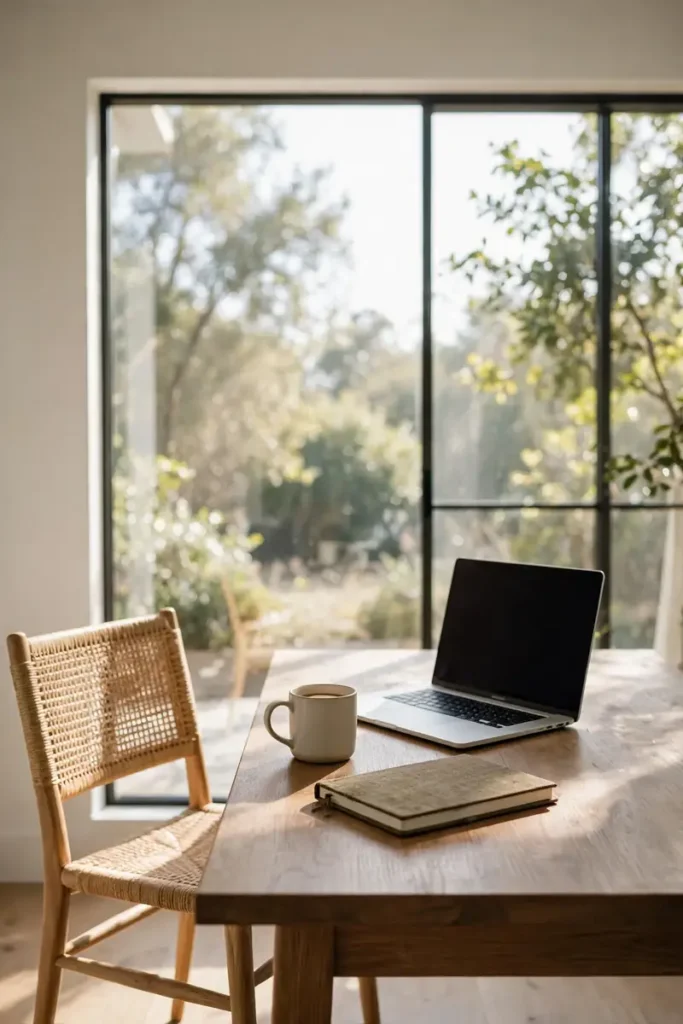
The usual mistake is putting your back to the window. Your camera exposes for the bright glass, and your face turns into a shadow with eyes. On calls you look tired before you say a word.
Turn the desk so the window faces you, slightly off to one side. Daylight from the front is flattering and costs nothing.
Angle the desk about 45 degrees if glare hits your screen. Test it the way coworkers see you: open your camera app and look.
If your face is evenly lit and the background reads clearly, you are done. That check takes thirty seconds and beats guessing about gear.
One Lamp to Your Left
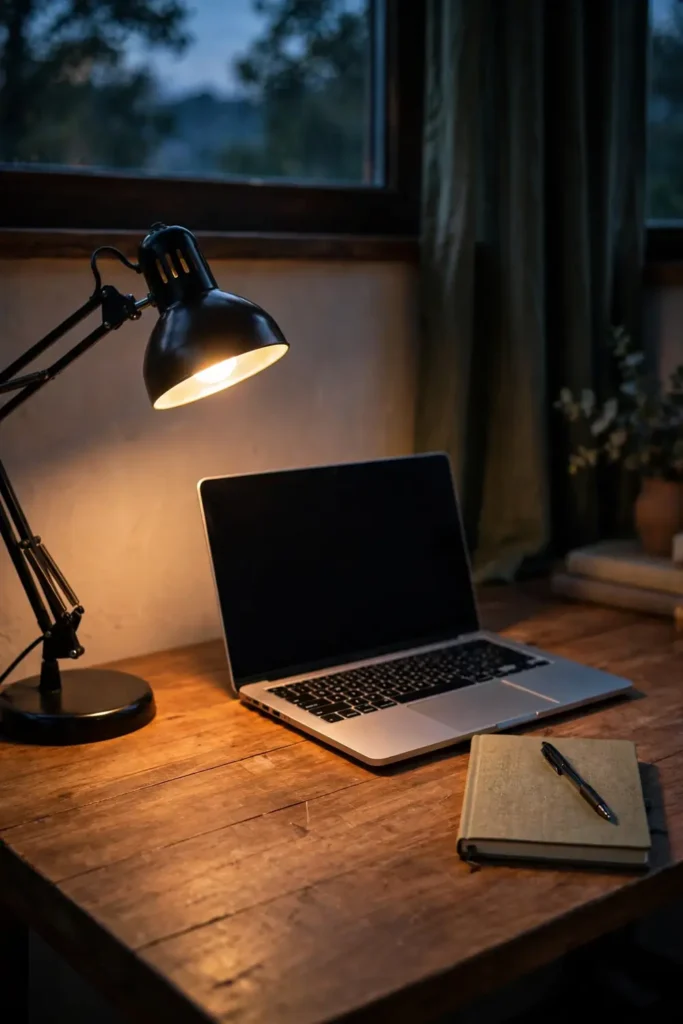
Overhead lights flatten your face on camera and tire your eyes by evening. The fix is one lamp placed to the side of your face, not behind the screen. Put it opposite your dominant hand, so your arm rarely throws a shadow while you write. A soft white bulb keeps paper readable without the blue glare of daylight LEDs.
A simple desk lamp with an adjustable arm handles this for under $75. Look for a weighted base that resists tipping, and aim it at your work, not at the camera. Position it roughly 10 or 2 o’clock relative to your webcam, about two feet from your face. Test the placement on a quick call before you settle on it.
Cable Hiding That Finishes a Home Office
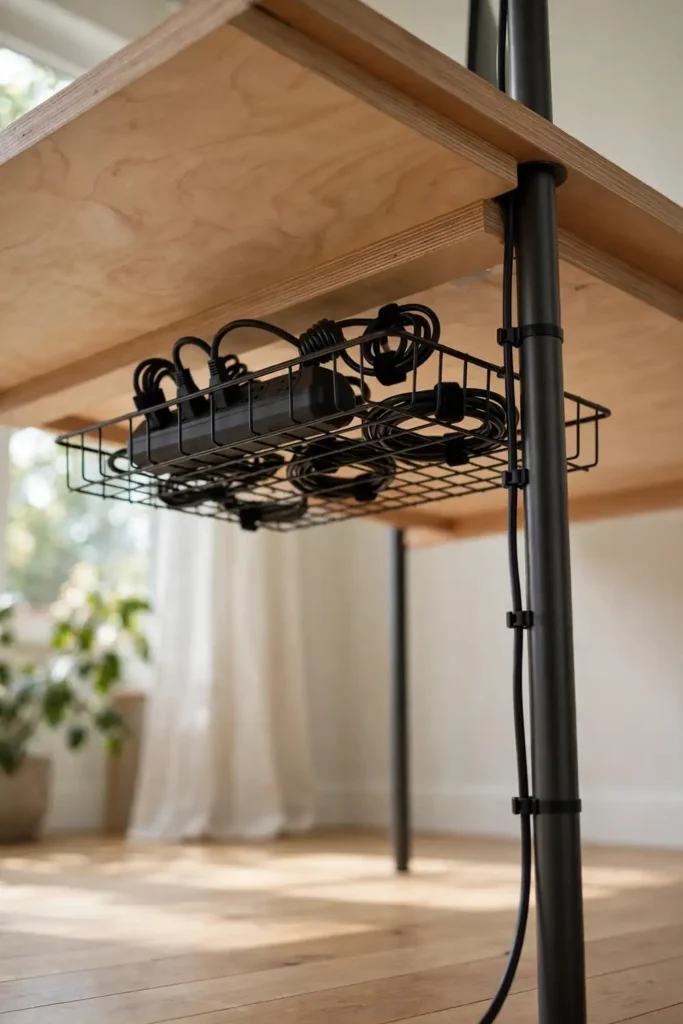
Look under any tidy desk and the mess is still there. Cables pool where your feet go, and the room feels chaotic even when the surface is clear.
Mount a shallow tray or a wire basket under the back edge of the desk. Plug a power strip into it, coil the slack, and drop chargers inside. The floor under your feet goes clear, and vacuuming stops being a negotiation. A fabric sleeve over the drop cable covers the one run that must reach the wall.
For the one cable that must travel, use adhesive cord clips along the desk leg. Command makes clips that hold a charging cable without drilling. Follow the package directions, including the wait time and weight limit. They fail on textured paint, so check your wall finish first.
Do this once and the floor stays clear on its own. Cables stop being a daily negotiation after that.
The 24-Inch Desk Test

Almost any table can hold a laptop. That does not make it a desk. A work surface shallower than about 24 inches pushes your keyboard to the edge, and your screen lands too close. Your eyes work harder than they should all day.
Measure from the wall to where your hands land before you commit. Two feet of depth fits a laptop, a notebook, and a coffee without stacking. In small rooms, a 20-inch desk can work if the monitor sits on an arm that pushes it back.
Depth matters more than width on a small desk. Measure first, then shop, because a shallow table cannot be fixed later.
Raise the Screen, Save Your Neck

A laptop flat on a desk puts the screen a foot below your eyes. Your neck bends down to meet it, and by 3 p.m. the ache sets in. A stack of books under the laptop raises the screen for free, and a separate keyboard keeps your hands low.
The keyboard is the part worth buying first, not the stand. Set the top of the screen at or slightly below eye level; that is the common guide. If you use two screens, the one you read most goes directly ahead. A basic stand under $30 beats a book stack for stability, but either works if the screen lands right.
The Standing Desk Can Wait
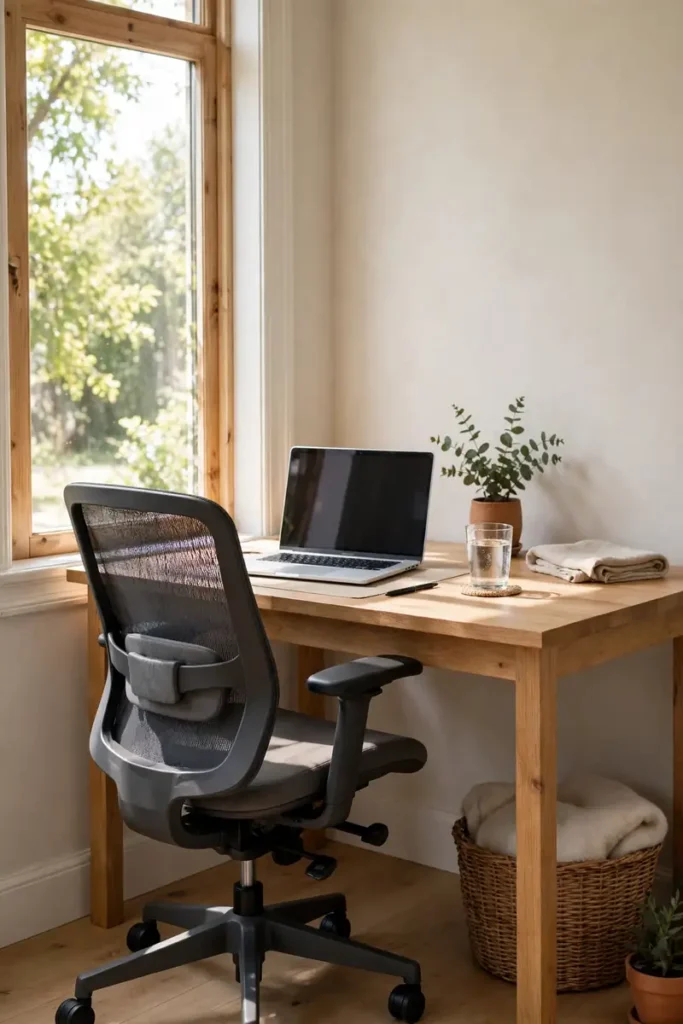
A standing desk will not fix a bad chair. People stand for two weeks, then sink back into the same unsupportive seat. The desk was rarely the problem.
Sit well first. A chair that supports your lower back changes more about your day than any motorized frame. Standing helps in short breaks; it does not rescue eight hours in a bad seat.
If you want movement, stand for calls and walk at lunch. That routine costs nothing, and it fits a $100 budget with room to spare.
Nearly everything on this list costs under $100, which leaves room for one real splurge. The chair is where your body lands, so that is where the money goes.
A Chair That Survives Eight Hours
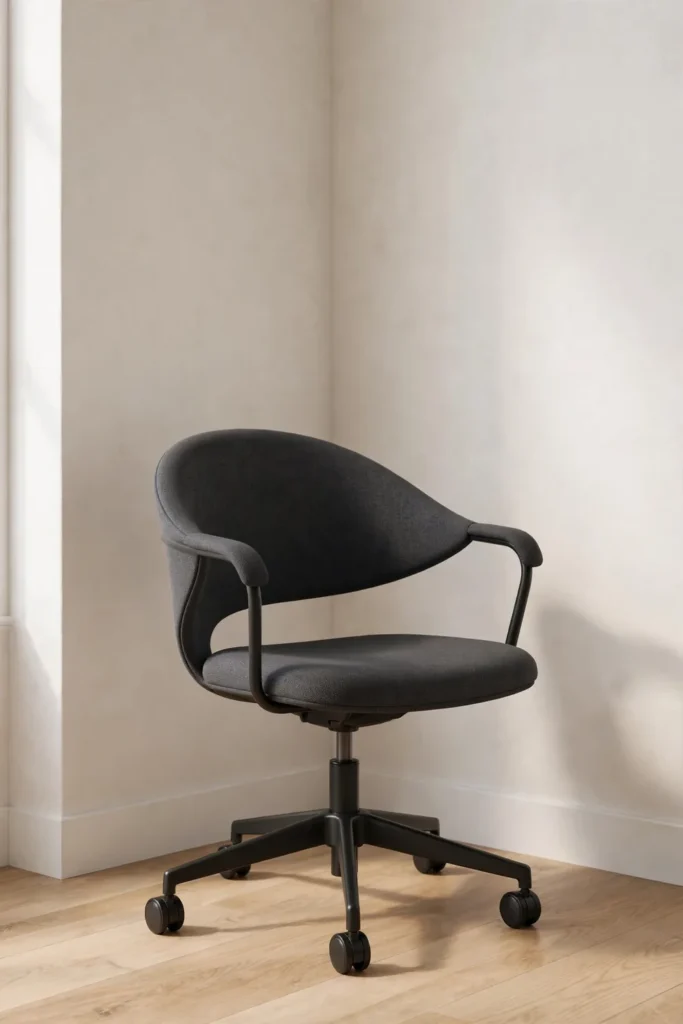
Pretty chairs fail at hour three. The dining chair, the vintage find, the sculptural seat: they all run out of support the same way. Your lower back does the compensating, and it bills you at night.
What works is adjustable lumbar support and a seat that fits your leg length. The Herman Miller Aeron suits people who sit most of the day and run hot. Skip it for short sessions; a mid-range task chair with lumbar support covers most sitters.
Test the seat depth before you commit: two fingers of space between the edge and the back of your knees. Armrests that clear the desk let you sit close enough to reach the keyboard.
One Tray for Loose Paper
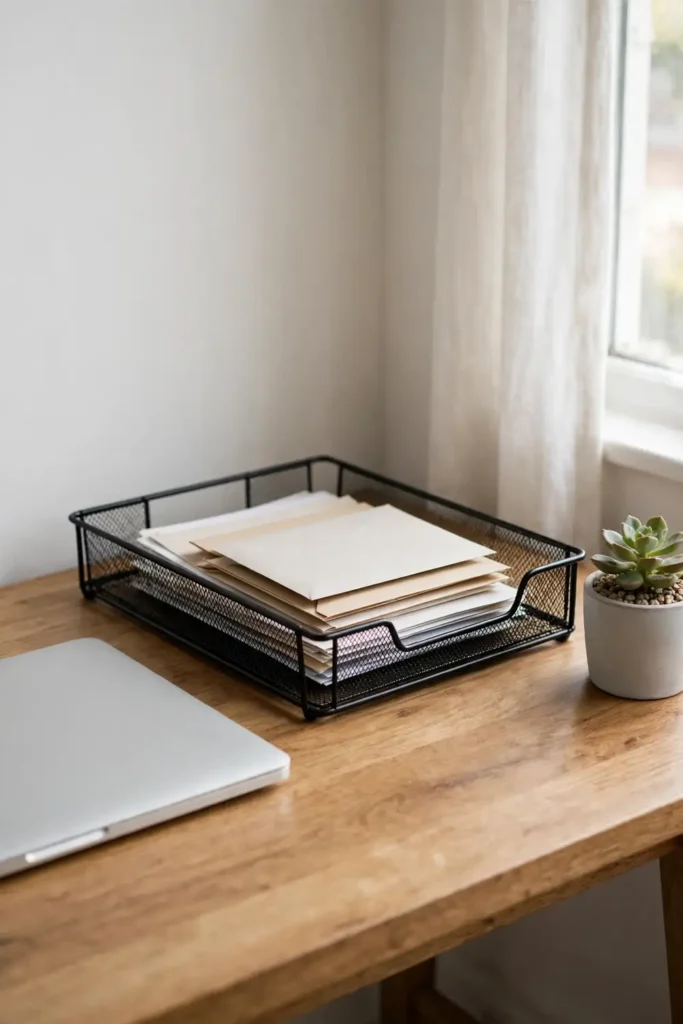
Paper spreads because it has no home. Mail, school forms, the notebook you swear you will file: they colonize the desk one sheet at a time. Give them a single tray at the desk corner and the spread stops.
Everything incoming lands in the tray. Once a week, process it: file, act, or recycle. A minimalist desk setup still holds objects; each one has a decision attached.
The tray itself should be shallow and boring. A lidded box hides the mess and lets it grow, while an open tray keeps the pile honest. Process the tray on Fridays and paper stops colonizing the desk.
A Home Office Rug Big Enough for the Chair
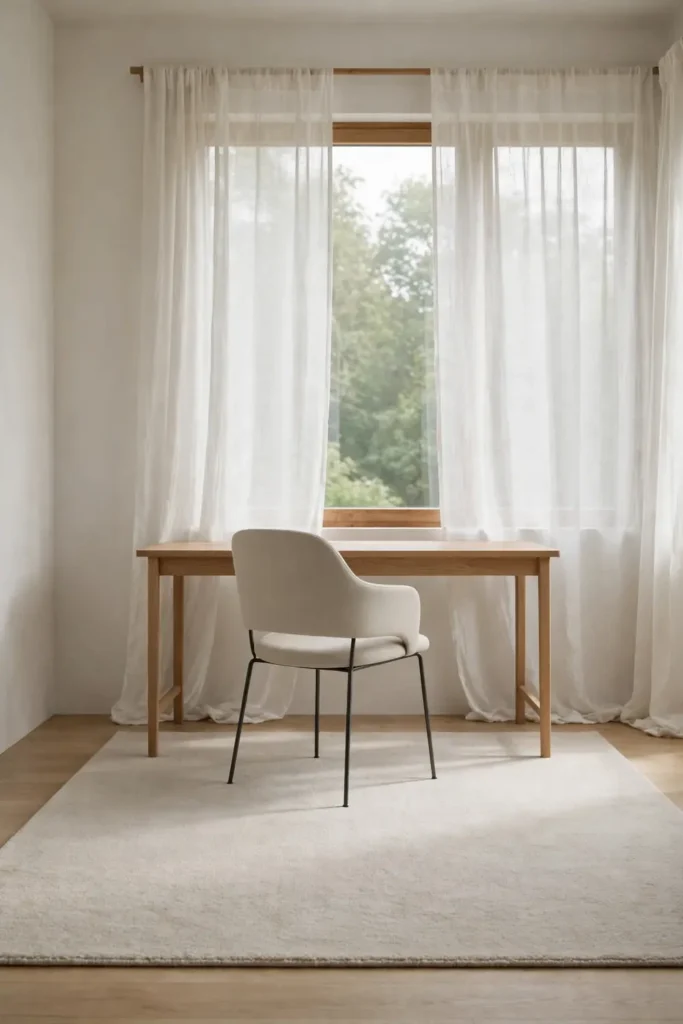
I keep seeing rugs that stop where the chair starts. The front legs sit on wool while the back wheels grind the bare floor.
The chair needs to roll on the rug, not off its edge. Size the rug so the chair stays on it when you push back from the desk. In most rooms that means the rug extends at least two feet behind the desk. Sit and push back hard in the store; if the wheels catch the edge, size up.
A low-pile rug rolls easier and traps less chair-wheel hair. If the desk lives in a bedroom corner, the rug also quiets the room for calls. If calls still sound hollow, a curtain panel behind you absorbs more echo than any foam tile.
This is a buy-once decision. A rug that fits the chair’s full travel keeps the room quiet and the wheels free.
Paint the Wall Behind You

Before: the wall behind you is builder beige, and your video background looks like a waiting room. After: one wall in a muted, dusty color, and the same desk looks considered. Choose a color with gray in it: sage, dusty blue, slate, or clay.
Strong colors fight your face for attention on camera; muted ones sit back. Paint a large sample on two walls and check it morning and evening. Light from different sides of the house changes how a color reads. Renters can hang a large framed textile or peel-and-stick panels instead, but check the lease first.
Shelves That Survive Daily Use
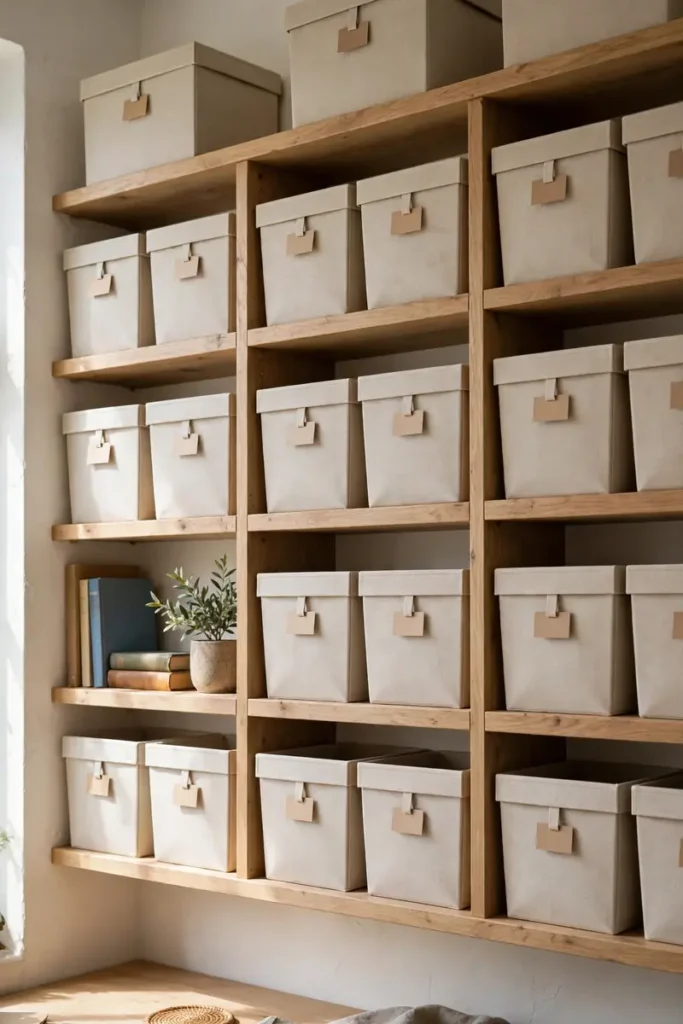
Styled shelves photograph beautifully and last until the first busy Tuesday. Then the shelf becomes a holding pen for chargers, half-read mail, and a dead plant.
Shelves you use need closed boxes for the ugly stuff, and open space only for what you grab daily.
If the desk shares a living room wall, matching boxes keep the whole corner looking calm.
One box per category beats a row of pretty baskets with no system behind them. A shelf with a system stays styled past Tuesday. Label each box with a strip of masking tape so the system survives anyone using it.
The Home Office Door Behind You
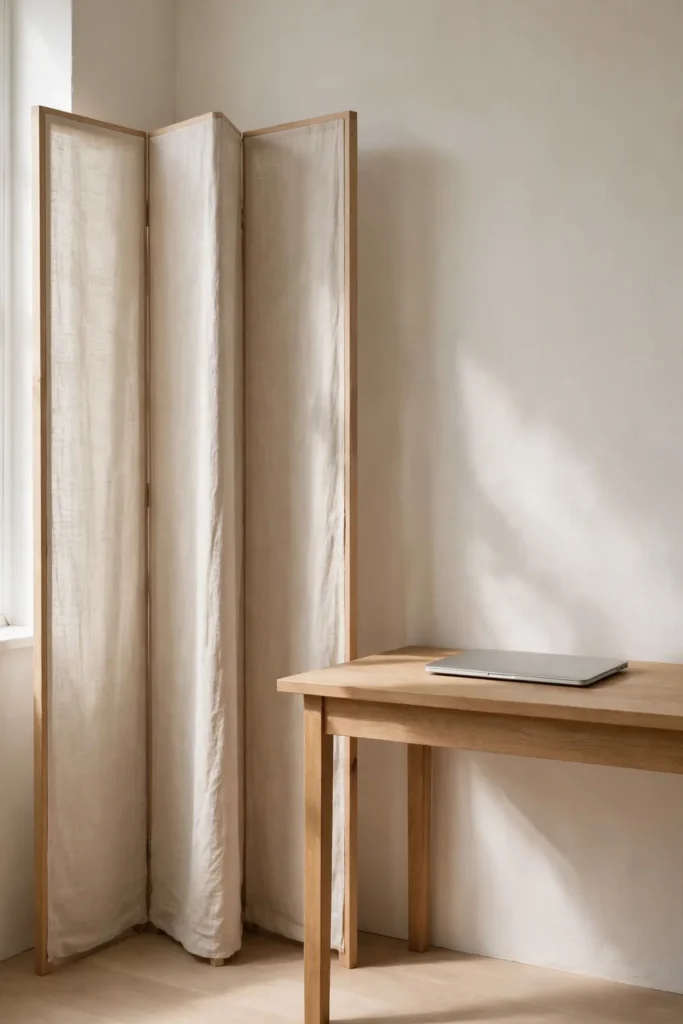
A door directly behind you is the worst video background in the house. People walk through mid-call, and the camera catches each entrance.
If you can, rotate the desk so the door sits to your side. You see people coming, and the camera sees a wall. In an office nook carved from a hallway or alcove, this one move fixes most of the background trouble.
When rotation is impossible, a folding screen or a tall bookcase closes the sightline. It does not need to be pretty; it needs to block the doorway from the camera. Check the camera view after any change, not the room, and style only the slice the lens sees.
Plug-In Sconces for Home Office Rental Walls

Renters cannot hardwire, and overhead lighting is usually one sad flush mount. The workaround is plug-in sconces. They mount on a bracket, plug into an outlet, and the cord hides in a fabric cover. Hang them with adhesive strips rated for the weight, and follow the package directions on wait time.
Command strips hold a light sconce on smooth paint. They fail on textured walls, so test a hidden spot first. Check your lease before anything adhesive touches the wall. Two sconces flanking the desk give the rental-friendly lighting most apartments lack, and they look built-in on camera.
Two Monitors on a Small Desk
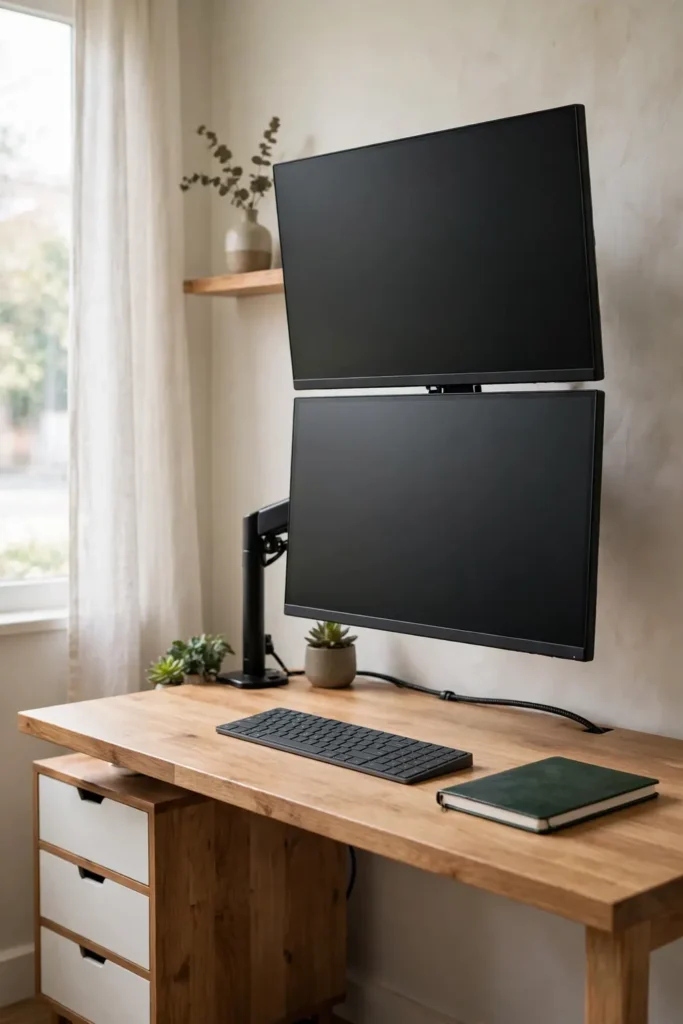
Side by side or stacked: that is the small-desk question. Side by side needs about 48 inches of width, which most small desks do not have. Stacked needs a monitor arm and about 24 inches of width.
A single arm clamped to the desk back frees the entire surface underneath. Cables route along the arm and off the desk.
IKEA’s ALEX drawer unit fits under a simple top and swallows supplies. Its drawers run shallow, so measure what you actually store first.
Assembling both is a weekend project for a free afternoon. Start with the arm; the storage can wait until you know what actually lives on the desk.
The Ten-Minute Shutdown
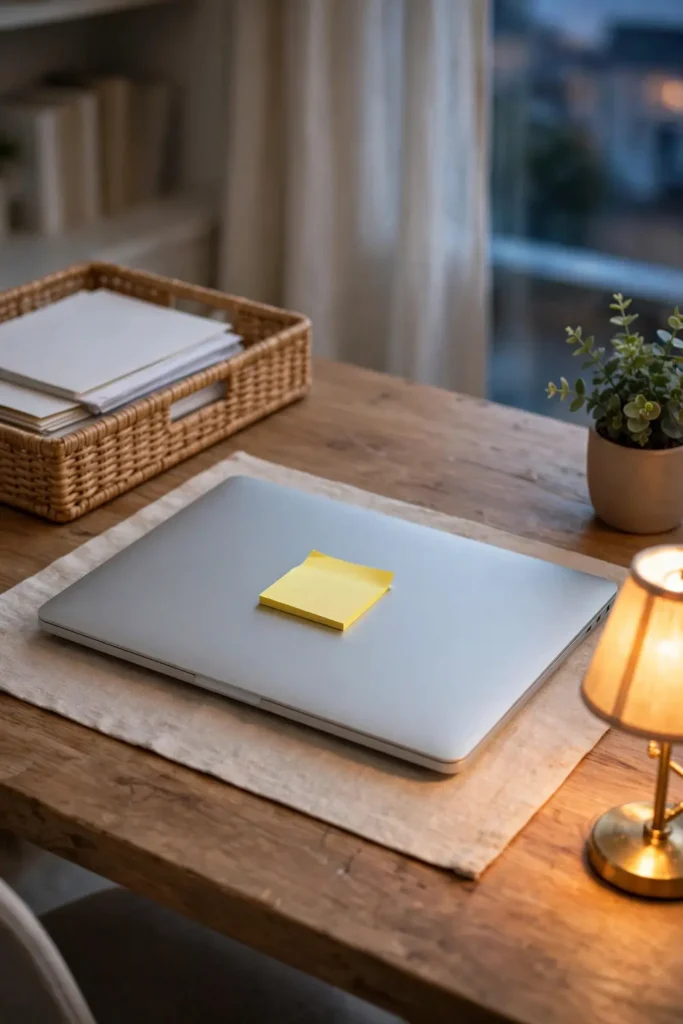
Offices that look good in photos and offices that feel good on Monday are different rooms. The difference is the shutdown: ten minutes at day’s end, daily. Clear the surface to the tray, the trash, or its home, then wipe the desk.
Crumbs and dust are what make a clean room feel dirty. Plug in what needs charging so morning starts ready. Write tomorrow’s first task on a sticky note and leave it on the keyboard. Reset the chair and the lamp position before you leave, so Monday starts fresh instead of continuing.
Final Thoughts on Aesthetic Home Office Ideas
Light and ergonomics decide whether an office works; everything else is styling on top. Get the window, the chair, and the screen height right, and a $30 lamp finishes the job.
Start today by moving your desk to face the window. It takes twenty minutes and changes each call you make this week.
What this will not fix: a job you dislike or a house too loud to think in. A good office removes friction; it does not supply motivation.
FAQ About Aesthetic Home Office Ideas
Which wall color flatters a face on video calls?
Muted colors with gray in them, like sage or dusty blue, keep the focus on your face. Bright white walls can blow out on cheap webcams and wash you out. Test any color on your actual camera first; webcams shift color more than eyes do.
How do I hide cables in a rental without drilling?
An under-desk tray hung from adhesive hooks keeps the power strip and slack off the floor. Route the drop cable down a desk leg with adhesive cord clips. Both come off cleanly at move-out; follow the package removal directions.
Can a small bedroom corner really work as a full-time office?
Yes, if the desk is at least 20 inches deep and the chair can push back without hitting the bed. A folding screen separates work from sleep, which matters more than square footage. The tradeoff is storage; keep office supplies to one drawer or box.