A black and green bedroom is built from light, not paint. The dark walls are the last decision, not the first, and that order changes everything.
These 15 black and green bedroom ideas follow the right sequence. Light sources first, then the green, then how much black the room can carry.
You also get rental-safe dark wall options and honest tradeoffs. That includes one popular pairing that photographs well and disappoints in a real bedroom. Work in order. Skipping ahead is how rooms go cave-like.
Paint Only the Headboard Wall in a Black and Green Bedroom
Four black walls in a 10 by 12 room with one window swallow daylight. By noon the room feels smaller, and the bed loses its shape against the dark. The ceiling presses down, and the corners go muddy.
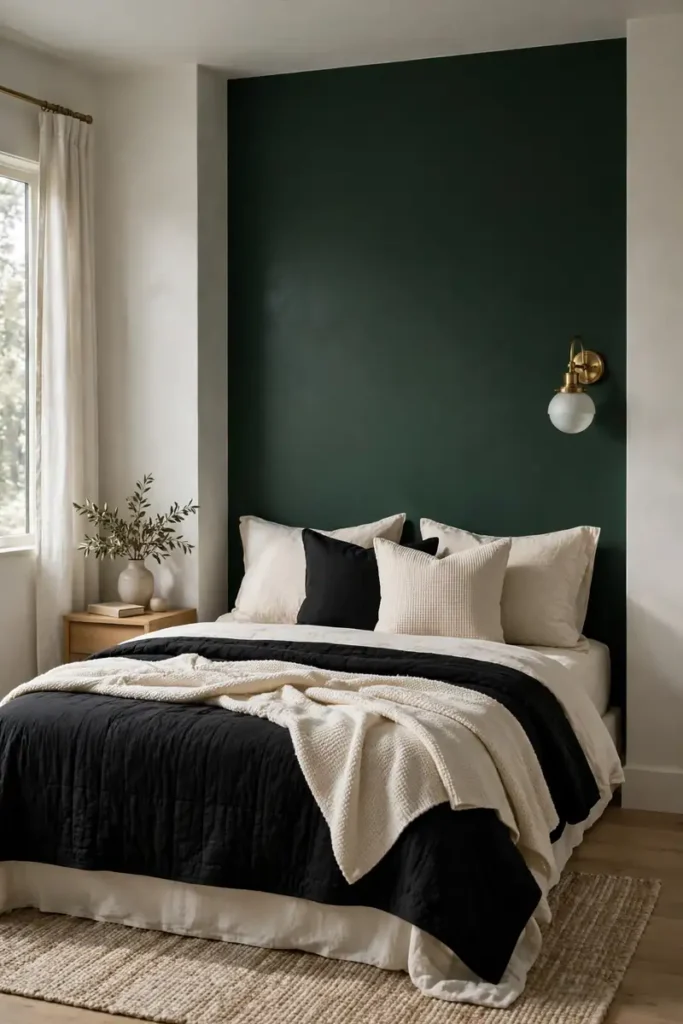
One dark wall behind the headboard gives the depth without the cave. Keep the other walls light and let that one wall hold the drama. A common guide: paint only the wall the bed anchors. Test it with fabric pinned up for a week before you buy paint.
Dark paint shows roller marks, so buy enough for two full coats and use a quality roller. Paint a large sample board, checking it morning and evening. A gallon runs 40 to 70 dollars and fits most under-$100 budgets.
The Greens That Sit Well With Black
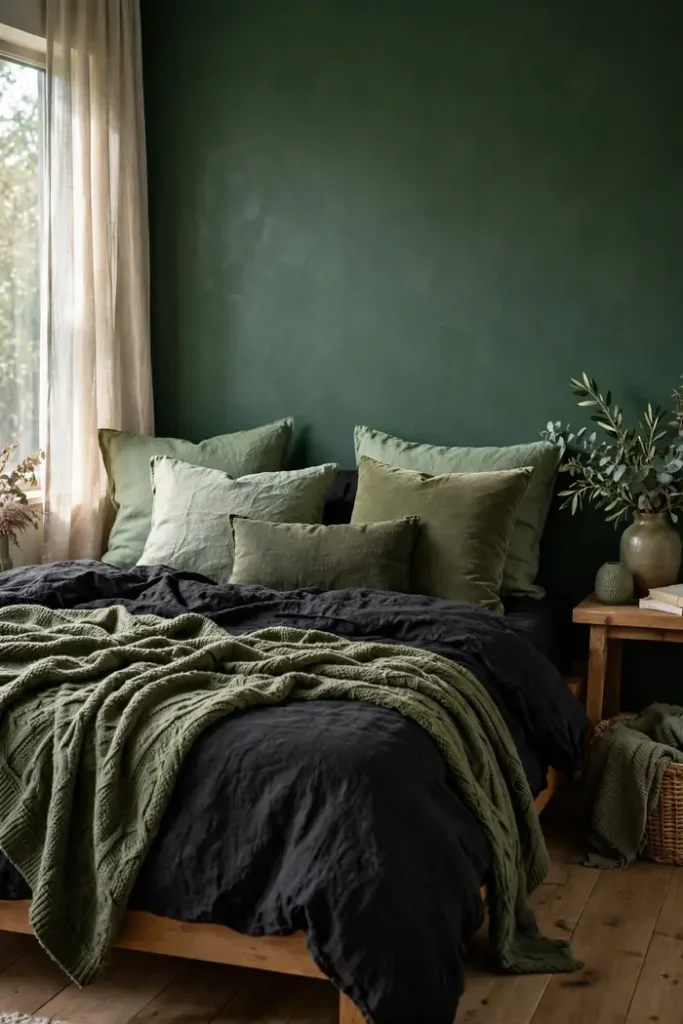
Deep forest, hunter, and olive greens share black’s weight, so they sit calmly beside it. Sage can work too, but it needs decent light or it turns chalky next to black.
Bright lime and kelly green vibrate against black and turn a bedroom into an arcade. Save the bright greens for a pillow you can remove in a week.
Undertone decides whether the pairing works. A green with gray in it sits quiet next to black; a green with yellow in it fights for attention. Check the swatch against true black, not the charcoal chip.
Skip the green hunt if your room gets little natural light. In a dim room, even forest green reads as almost-black after dusk. Put the money into lighting first, then come back for the green.
Layer Light Three Ways in a Black and Green Bedroom
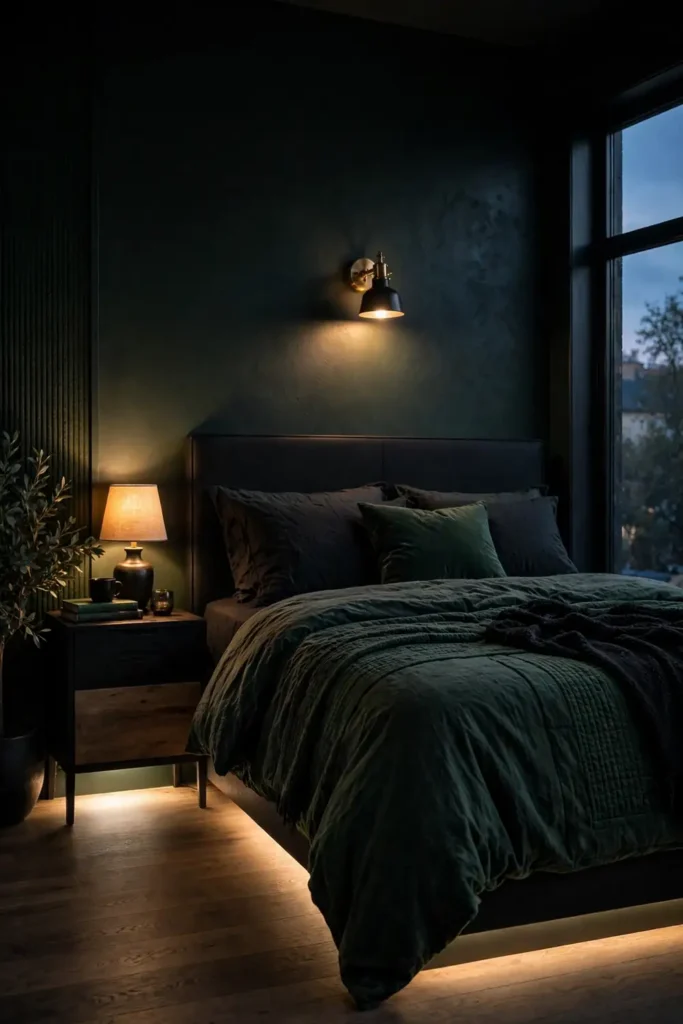
Overhead light alone flattens dark walls and makes green paint look dead. A dark bedroom needs three layers: overhead for general light, bedside for reading, accent to lift the corners. More bedroom lighting setups live on the bedroom hub.
Start with bedside lamps, 24 to 28 inches tall as a rule of thumb. Set the shade bottom near eye level when you sit up in bed. Dim the overheads on their own switch. Choose 2700K bulbs, since cool bulbs can make forest green read flat and clinical.
Two matching bedside lamps beat one overhead in a dark room. Dim them low for evenings, bright for cleaning.
Renters: Dark Walls Without a Paint Can
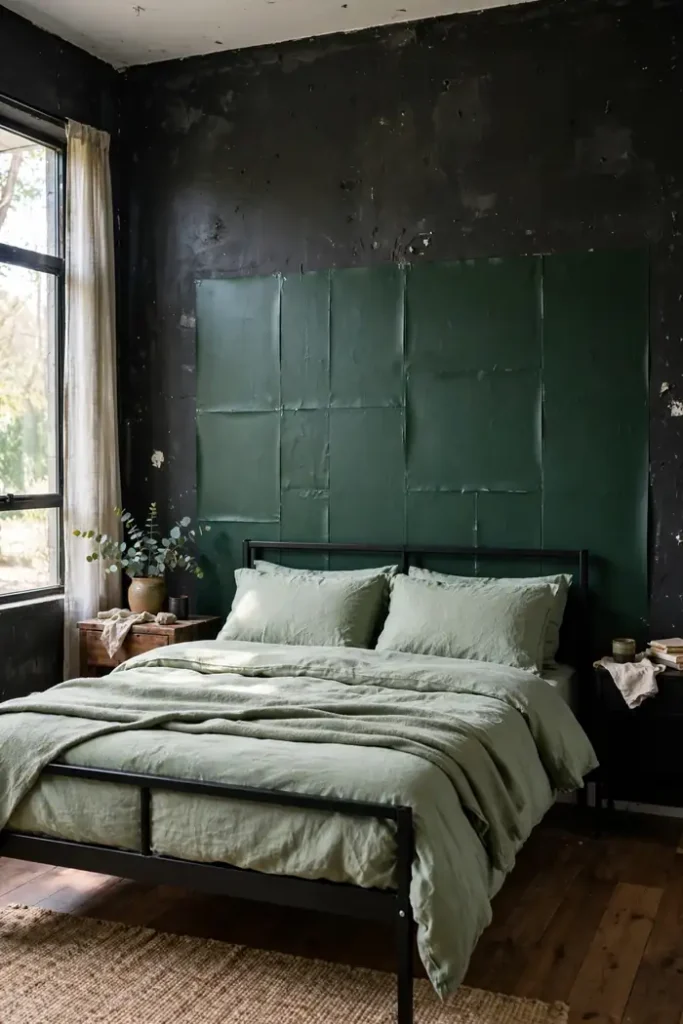
Check your lease before any adhesive goes on the wall. Peel-and-stick wallpaper in deep green behind the bed gives the look, though it has limits on textured paint. Landlords typically care about holes and paint, not fabric that hangs and leaves.
No wallpaper at all? Hang a wide dark textile or curtain panel behind the bed on Command strips. Command strips hold light frames and fabric panels, and they release clean when you move; see more renter-friendly options. It reads as a deliberate headboard wall and comes down without a repair bill.
Live with the textile for a week before you finalize the width. A panel that looked generous in the store can read skimpy over a made bed.
Black Sheets, Sage and Olive on Top
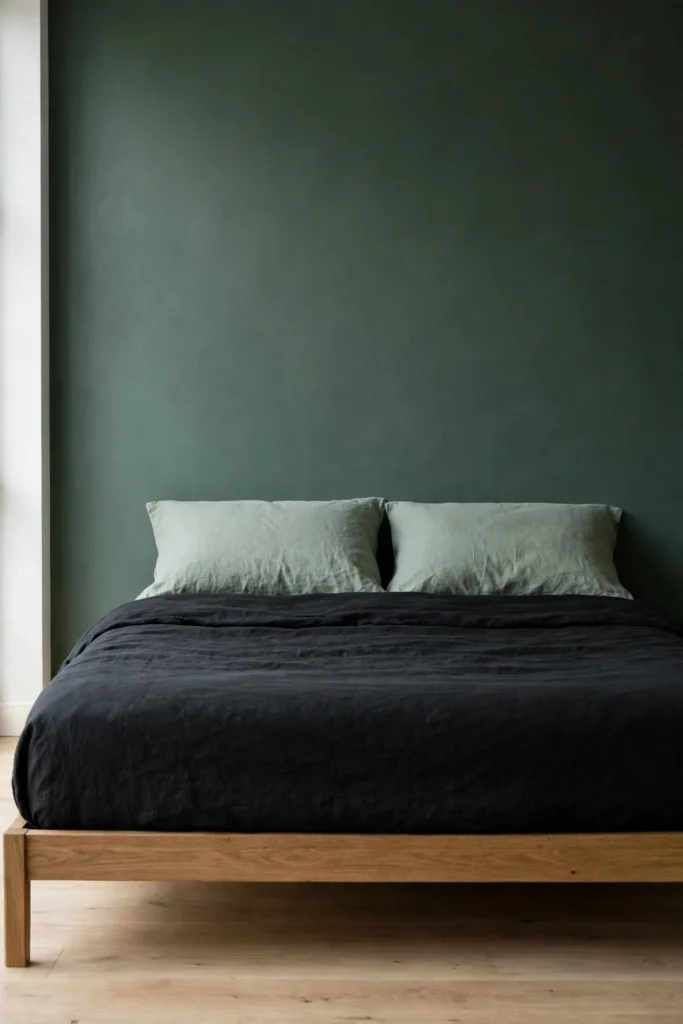
A black duvet cover sets the base and hides daily life. Layer olive and sage throws and pillows over it, and the bed stops looking flat. Black pillowcases show lint, so keep a roller in the nightstand drawer.
Wash the throws separately so the green stays green, and it fits most under-$50 budgets.
Fabric choice matters more than shade here. Washed linen and cotton wrinkle into the look; sateen shines against dark walls and shows creases.
Skip black sheets if you share the bed with a pet, since fur shows on black. Charcoal or deep olive sheets hide the evidence, and the green layers still carry the scheme.
Hang the Curtains Wider Than the Window
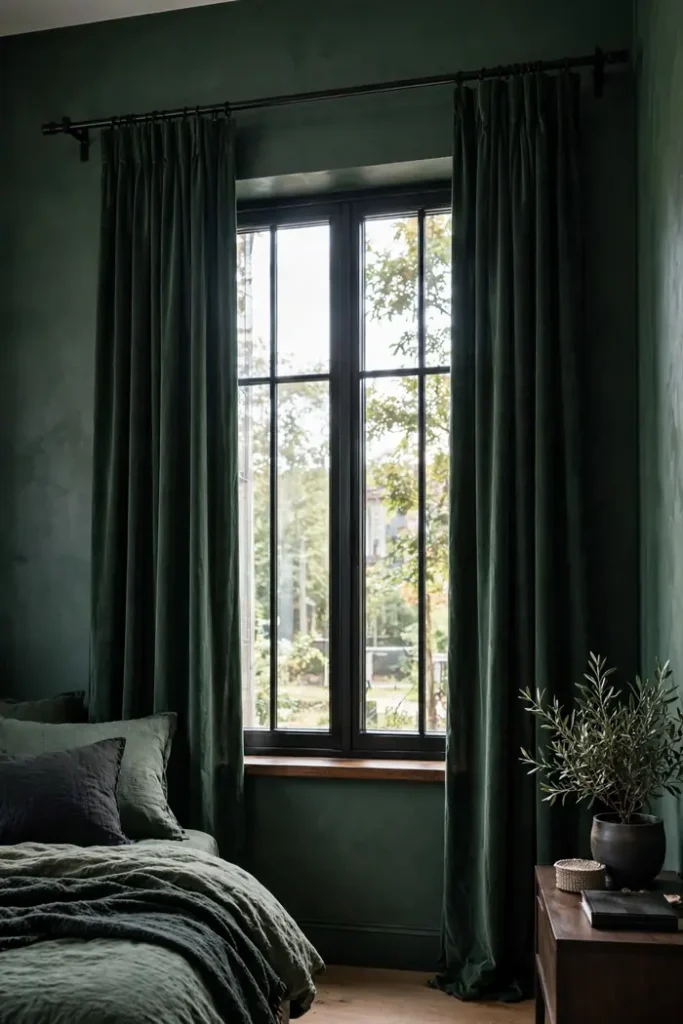
The usual mistake is a rod exactly as wide as the window. The curtains crowd the glass, steal morning light, and green fabric goes muddy in the gloom.
A common guide: mount the rod 4 to 6 inches above the frame. Extend it 8 to 12 inches wider on each side. The panels clear the glass, and the window looks bigger.
Deep green curtains drink light at night and glow at noon. Linen-look panels cost less than velvet and still read dark. Check the fabric in morning and evening light before hemming, a habit worth borrowing from weekend DIY projects.
Skip the Matching Black Furniture Set
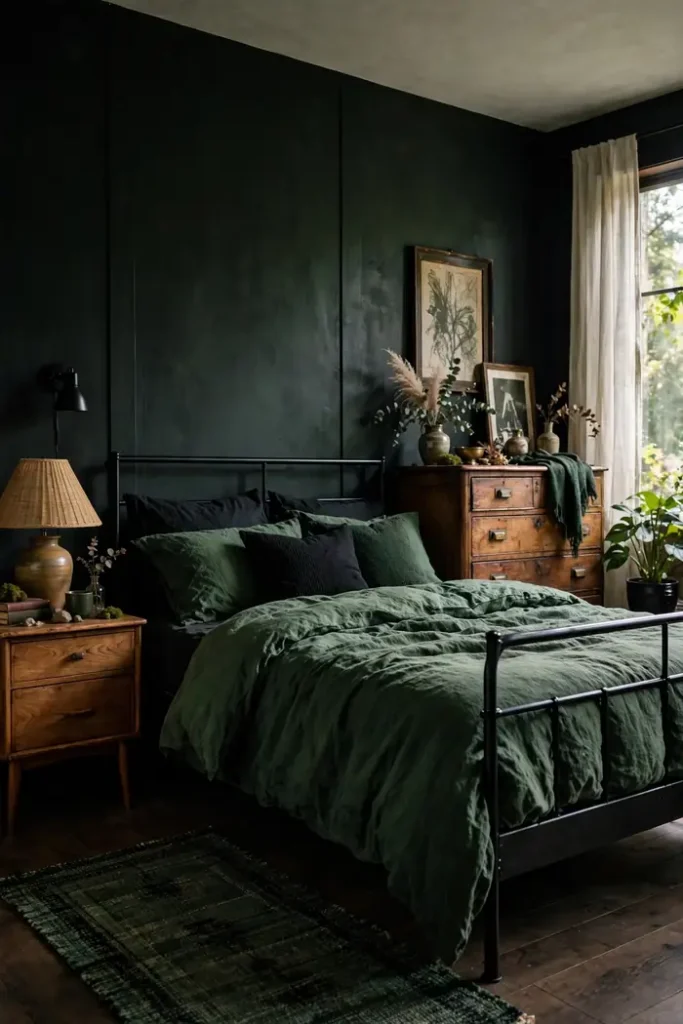
Matching black furniture sets look sharp in the store. Against dark walls they merge into one shapeless mass. You paid for three pieces and the room shows you none of them. Break the mass with wood.
A black bed frame plus walnut-stained nightstands from IKEA reads as layers instead of a blob. A secondhand wood dresser with black hardware splits the difference. Keep lamp bases black so wood pieces connect. The same mix-and-match logic helps in small rooms where edges matter.
The expensive mistake is buying the full matching set on day one. Shop the bed and nightstands on separate trips.
The Canopy Drape: Hotel Photo vs Tuesday Laundry
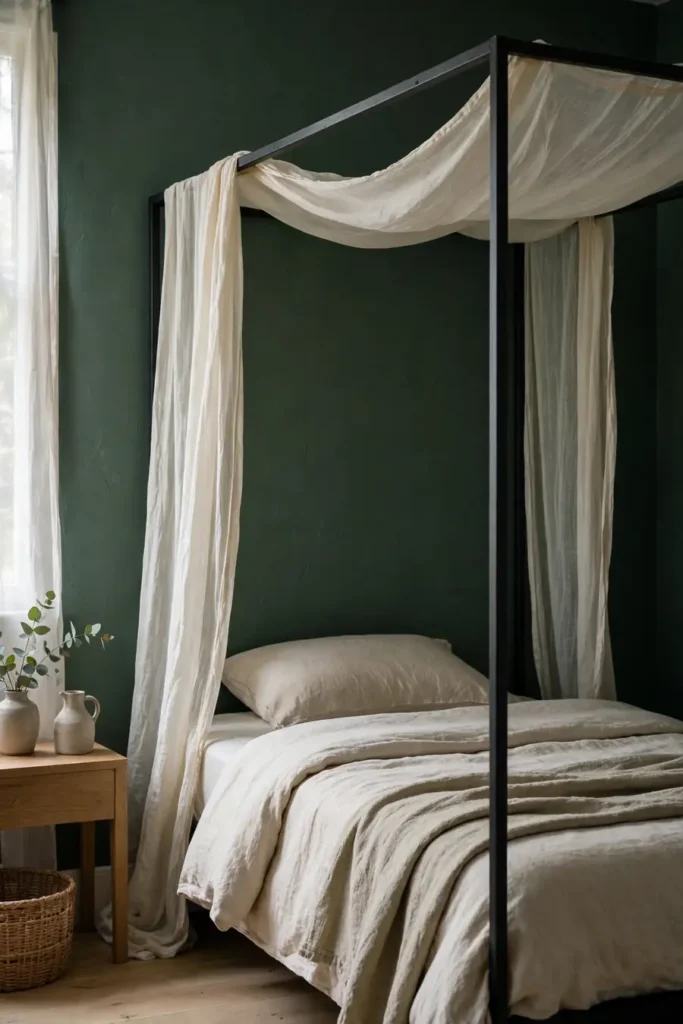
Scroll the photos: green fabric draped over a black canopy bed. It photographs like a boutique hotel suite. In a real room, the drape collects dust and snags on the ceiling fan. Changing the sheets becomes a wrestling match.
If you love the look, drape one side only, or hang a single green panel behind the headboard instead. You get the gesture without the maintenance. Test it for a week before committing to hardware.
It works well in rooms with nine-foot ceilings and no fan. Standard eight-foot ceilings put the fabric in the fan’s path, and that is a fight the fabric loses.
Black Frames on a Deep Green Wall
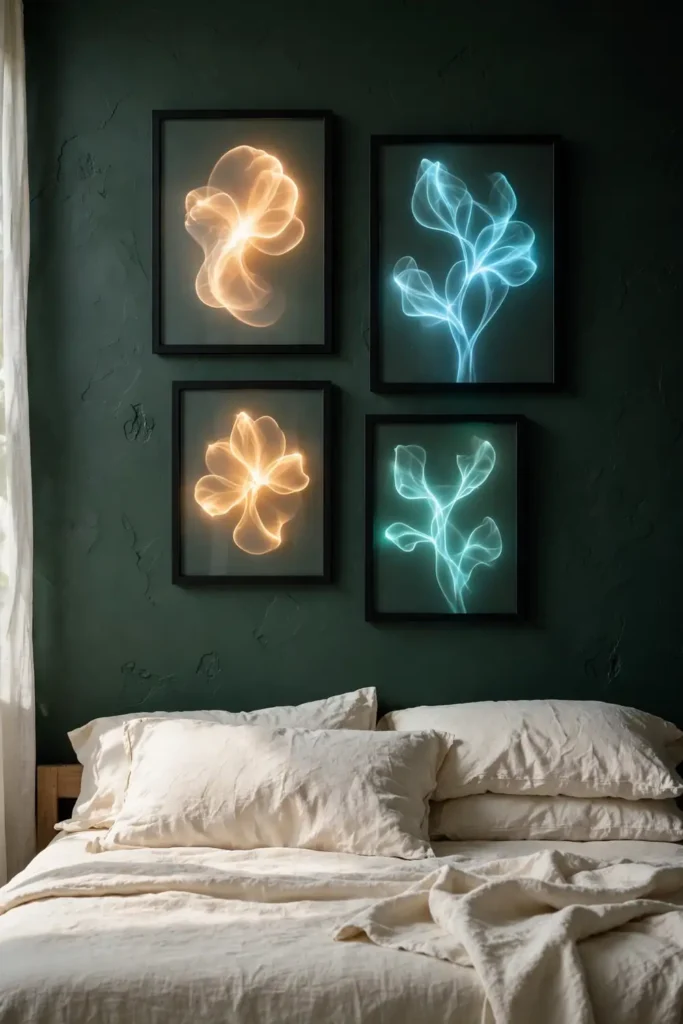
Thin black frames on a green wall let the wall do the matting. Hang a loose cluster instead of a rigid grid.
Center the group at 57 inches, a widely used gallery guideline. Mix one oversized piece with small ones so the wall breathes.
Skip glass on prints that sit under a lamp, since double glare kills the image. Matte prints in thin frames read clean against dark green. Thrift solid frames and unify them with matte black spray paint.
Space the frames two to three inches apart so the cluster reads as one whole piece. Odd numbers of frames balance better than even ones.
Put a Mirror Where the Light Lands
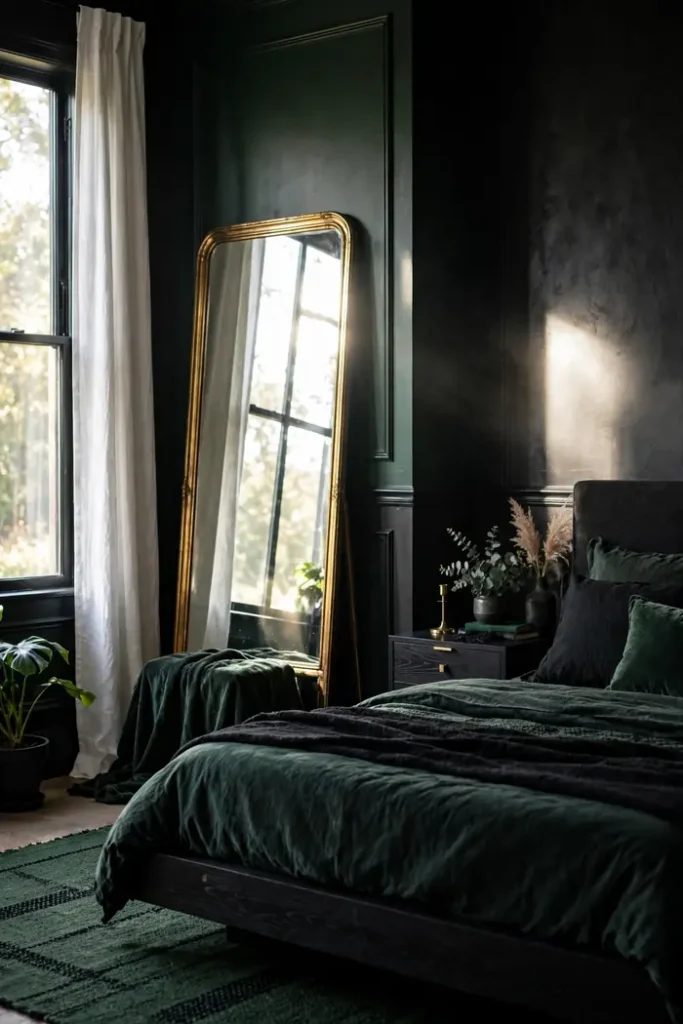
Before: one small window and dark walls, and by 6 in the evening the room eats its own shadows. Heavy mirrors need studs or rated anchors, so check the lease first. A leaning full-length mirror skips the holes and fits most under-$75 budgets.
After: a full-length mirror angled to catch the window or a lamp. Angle it slightly, since a flat mirror reflects the ceiling. The mirror gives the dark wall a bright double.
The room reads twice as lit for the price of one mirror. Hang it where you will see the reflection daily, not in a corner you rarely face. An unused mirror is a dark rectangle doing nothing. This is the single cheapest way to keep a dark scheme from going cave-like.
A Rug Big Enough to Land On
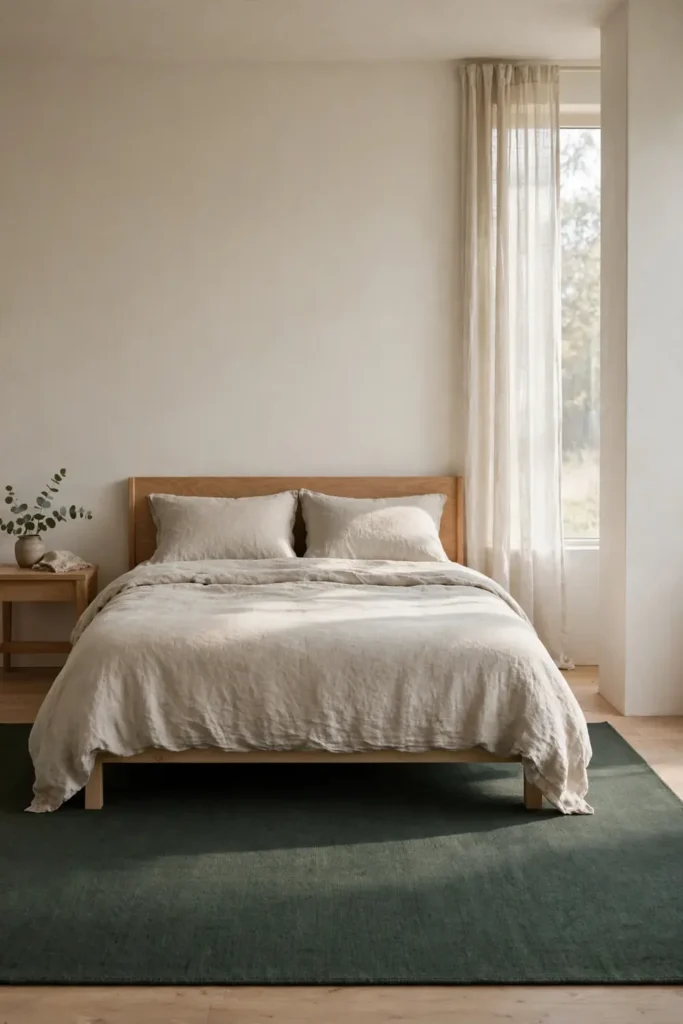
Common advice says add a rug, which is technically true and practically useless. A postage-stamp rug in a dark bedroom floats like a lost coaster. Dark floors make the problem worse, since rug edges disappear.
A rule of thumb: the bed’s front legs sit on the rug. In most queen rooms that means an 8 by 10. A patterned black-and-green wool hides wear for years. Measure the floor before you order, the way serious budget makeovers demand.
Layer a smaller green rug over the big one if the room feels too quiet. The overlap reads deliberate, not cluttered.
In a dark room, skip the black rug on dark floors. The edges vanish and the rug reads as a stain. A deep green or patterned rug holds its edges against dark wood.
Size the top rug to sit under the bottom two-thirds of the bed. Keep the base rug edges visible on at least two sides.
Plants That Survive Low Light
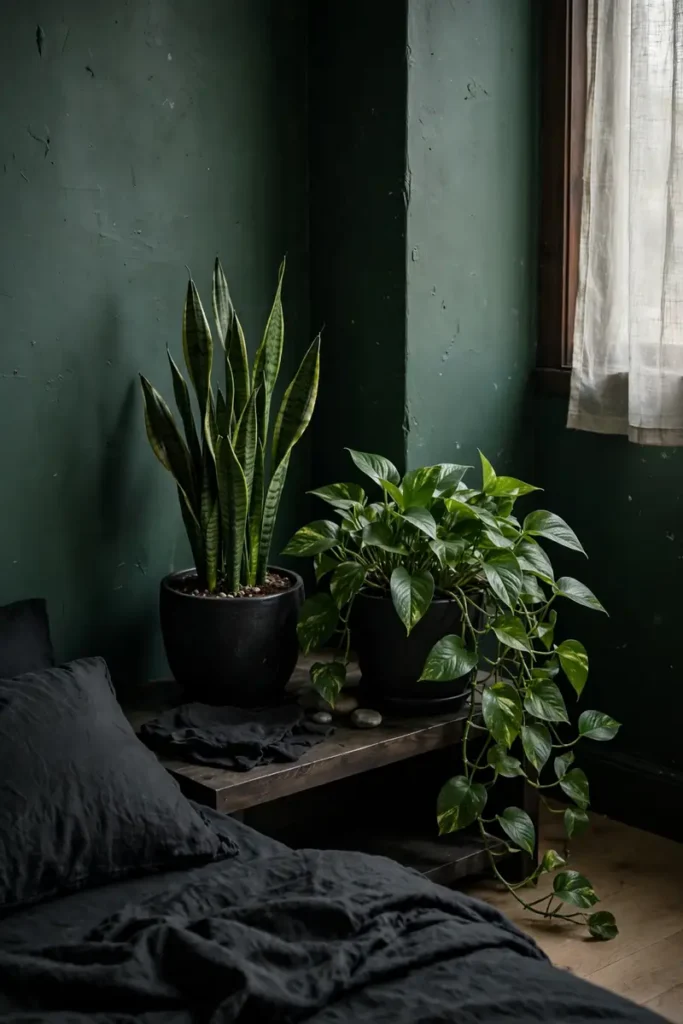
Your room is not the plant store’s greenhouse. A monstera in a dark corner stretches, yellows, and gives up. If your window faces a wall or another building, treat the room as low light.
Snake plants and ZZ plants tolerate low light and forgive a missed watering. In a dark room they grow slower and dry out slower, so water less than the tag says. Dust the leaves monthly, since dust blocks what little light they get.
One plant is enough in a bedroom this dark. Two or three small ones read as clutter once the leaves stretch. Pick the corner nearest the window and leave the rest alone.
Ceiling and Trim: the Fifth Wall
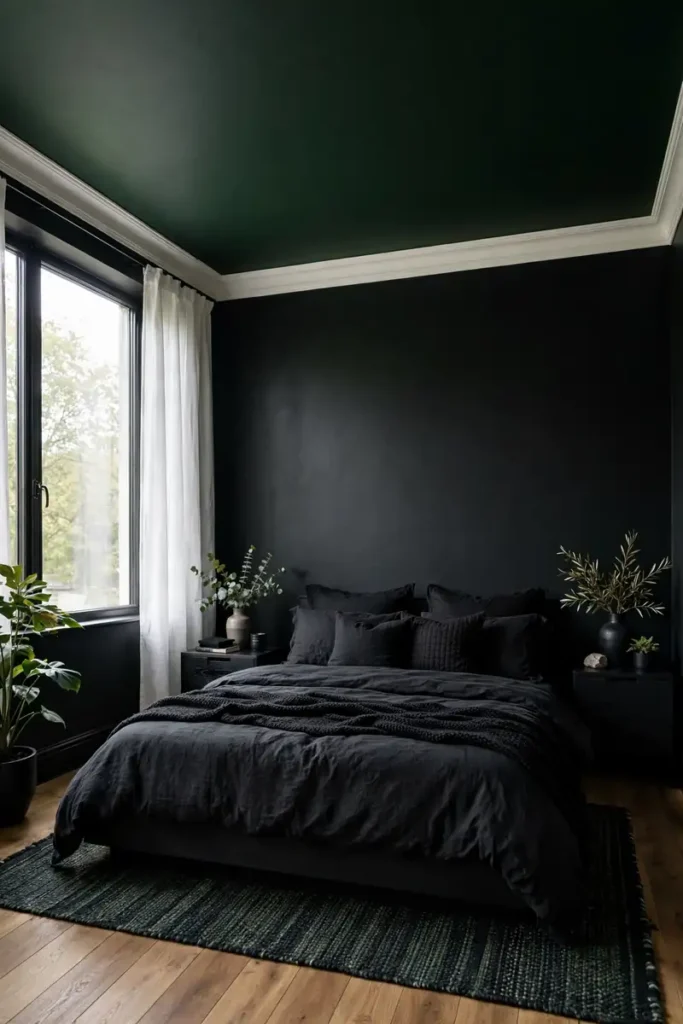
The fifth wall is the one most people skip. A dark ceiling over light walls sets the mood without touching the walls at all. It reads as a lid on the room.
Trim is the smaller commitment. Paint the baseboards, window trim, or closet doors deep green while the walls stay pale. You get the black-and-green read from all angles, and repainting trim is a weekend, not a project. A quart usually covers the trim in one room, which keeps this a small-budget project.
Tape black or green fabric to the ceiling for a week and live under it. If the room feels sheltered, commit the paint; if it feels low, leave the ceiling alone. Dark ceilings suit rooms with eight-foot-plus height and punish low ones.
Brass Fixtures Warm a Black and Green Bedroom
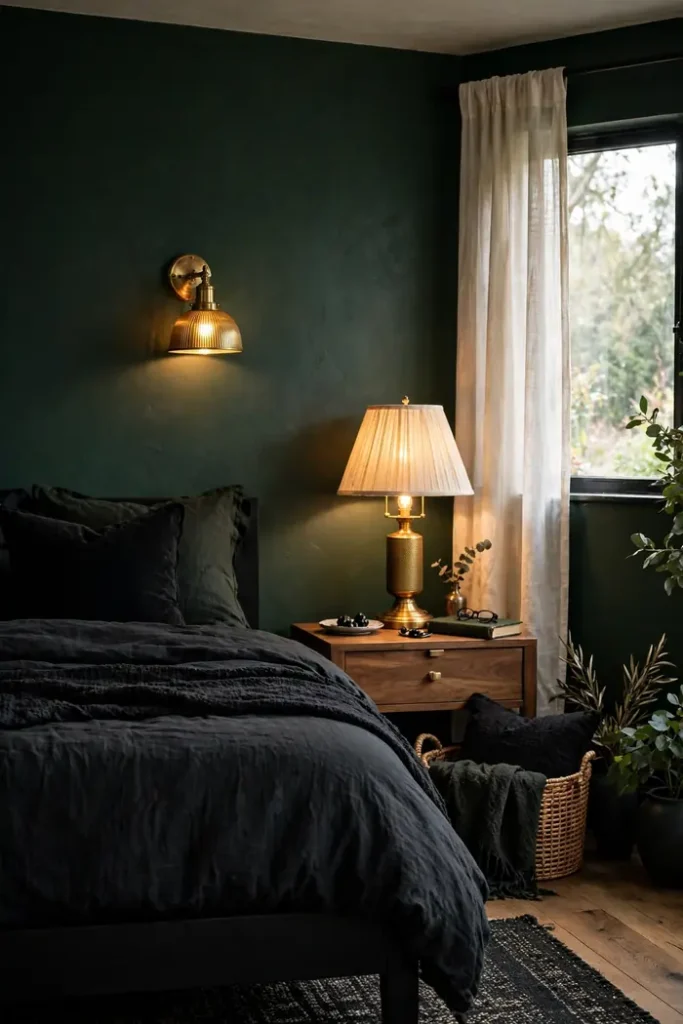
Brass sconces or black-and-brass table lamps bounce soft light onto green walls. In a dark room that small glow does more than a chandelier would. Pick one metal and stick with it, since mixed metals read as clutter when each finish catches the lamplight differently.
IKEA sells affordable black metal wall lamps that suit this scheme. In a rental, choose plug-in styles with cord covers, and check the lease before drilling. Hide the cord in a paintable cover.
The warmth is the point. Black and green can read flat and cold under cool bulbs. Brass and gold bounce warm tones onto both colors, so the pairing reads rich instead of chalky.
The Black and Green Bedroom With Kids and a Dog
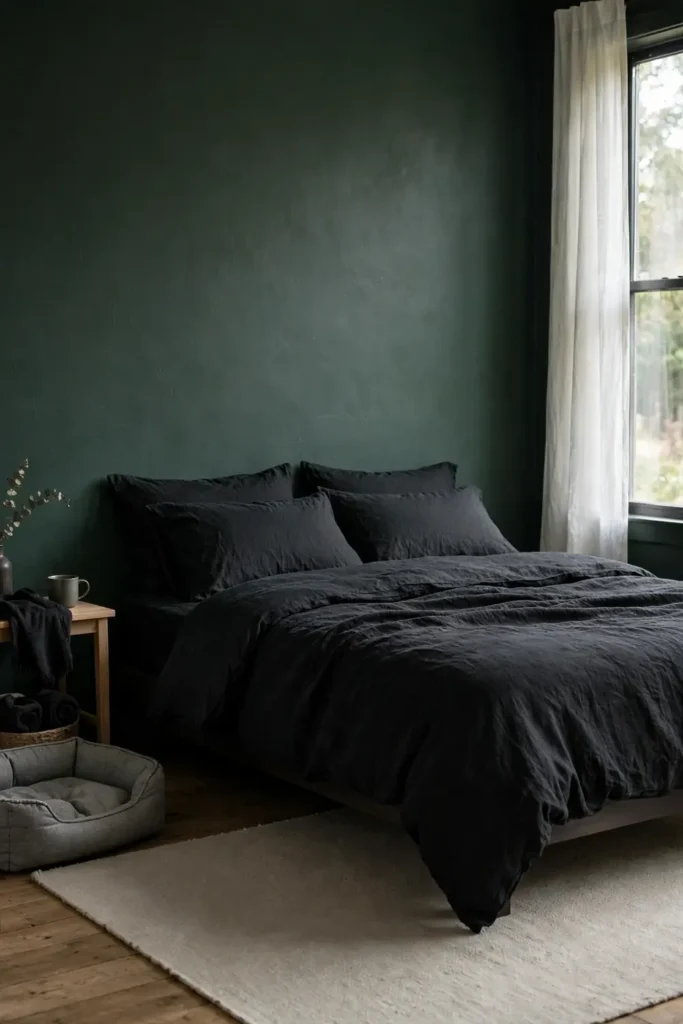
Dark velvet shows each paw print, and black lacquer scratches if a toy truck looks at it. A moody bedroom with a family in it needs forgiving surfaces.
Put the green on washable textiles: duvet covers, throws, pillow cases. Keep black on hard surfaces that wipe, like a satin-finish nightstand. A low-pile patterned rug in black and green hides crumbs and fur between vacuums.
This version will not look like the photos, and that is the point. It looks like your room on a Tuesday. Full-room makeovers on this theme belong in budget makeover territory.
Keep the lighting kid-proof too. A knocked-over table lamp is a fire worry on a dark rug. Choose plug-in wall sconces above reach, or a floor lamp with a heavy base. The moody look survives; the wobbly lamp does not.
Final Thoughts on Black and Green Bedrooms
Patience beats boldness with dark rooms. The people who love their black-and-green bedrooms sampled first, lit second, and painted last.
Start today. Swap the bulbs to 2700K and add a bedside lamp if you only have an overhead.
This will not fix a bedroom with one tiny window facing a brick wall. It will make your evenings feel settled, which is the part of the day this room is for.
FAQ About Black and Green Bedrooms
Will black and green walls make my small bedroom feel smaller?
Usually they make it feel enclosed rather than smaller, which reads restful when the light is layered. Keep the dark color behind the bed and leave the rest light.
Can I do this look in a rental with beige carpet?
Yes, and beige carpet actually softens the black-green contrast. Use peel-and-stick on one wall, dark textiles elsewhere, and check your lease first.
Which paint colors should I sample first?
Start with deep forest greens and olives from Benjamin Moore or Sherwin-Williams. Sample big on two walls and check morning and evening before you commit.