Small bedrooms punish guesswork. The wrong bed size shows up the morning it arrives, and no styling trick hides it.
These bedroom ideas for small rooms start with the floor plan. Layout decides whether the room works before a dollar gets spent. A roll of painter’s tape and an honest hour beat a shopping spree.
Fifteen ideas follow, each with a practical measurement or a test to run this weekend. Pick the one that fixes your worst pinch point first.
Tape the Bed Footprint in a Small Bedroom
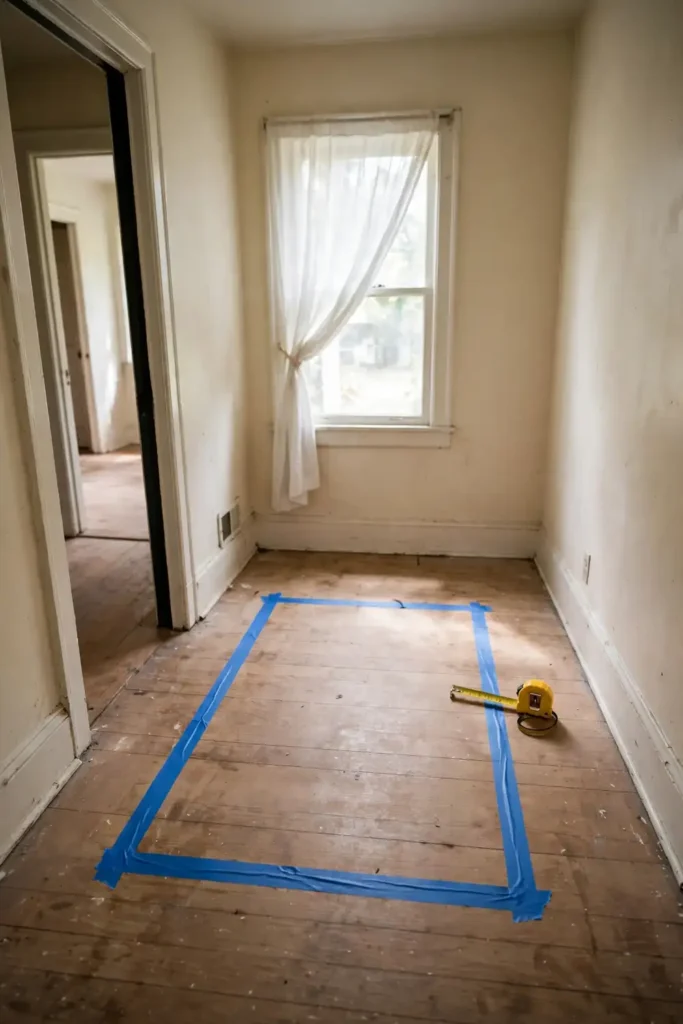
The tape measure stays in the drawer until after delivery, and that is the mistake. No throw pillow fixes a queen bed wedged into an 8-by-10 room.
Painter’s tape marks the bed’s footprint on the floor in ten minutes. A rule of thumb: tape a 60-by-80-inch rectangle for a queen. Live with the outline for a day, walking around it and opening the door.
A tape outline also ends arguments. Two people can see the same floor plan instead of debating it in the store aisle. The habit suits any of these small-space layouts.
Corner the Bed in a Small Bedroom
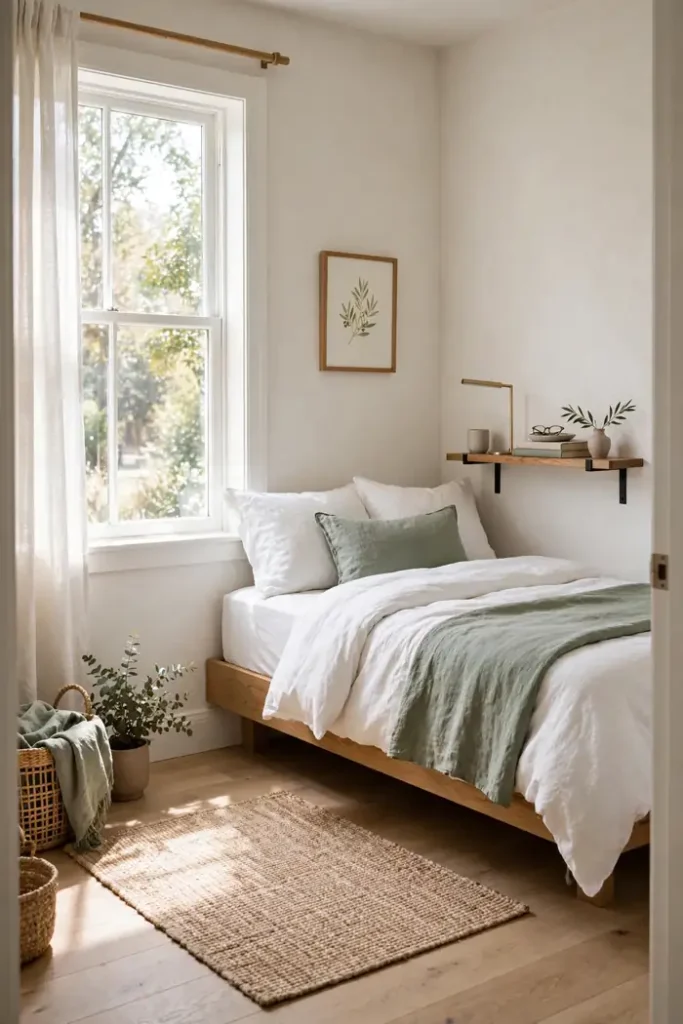
Centering the bed with a nightstand on each side is the default, and it eats walkway on both sides. In a room under 100 square feet, symmetry is a luxury the floor plan cannot afford.
Push the bed into the corner and a full strip of floor comes back. One sleeper gets the wall side, which bothers some people. I prefer the corner, because the gained space outweighs the lost nightstand. A wall shelf replaces the second one.
A cornered bed reads cozy rather than cramped, once the corner gets dressed on purpose. A wall-mounted sconce and one shelf turn the wall side into a nook, not a compromise. Guests and kids tend to like the tucked-in feeling.
Pick a Storage Bed, Skip the Dresser
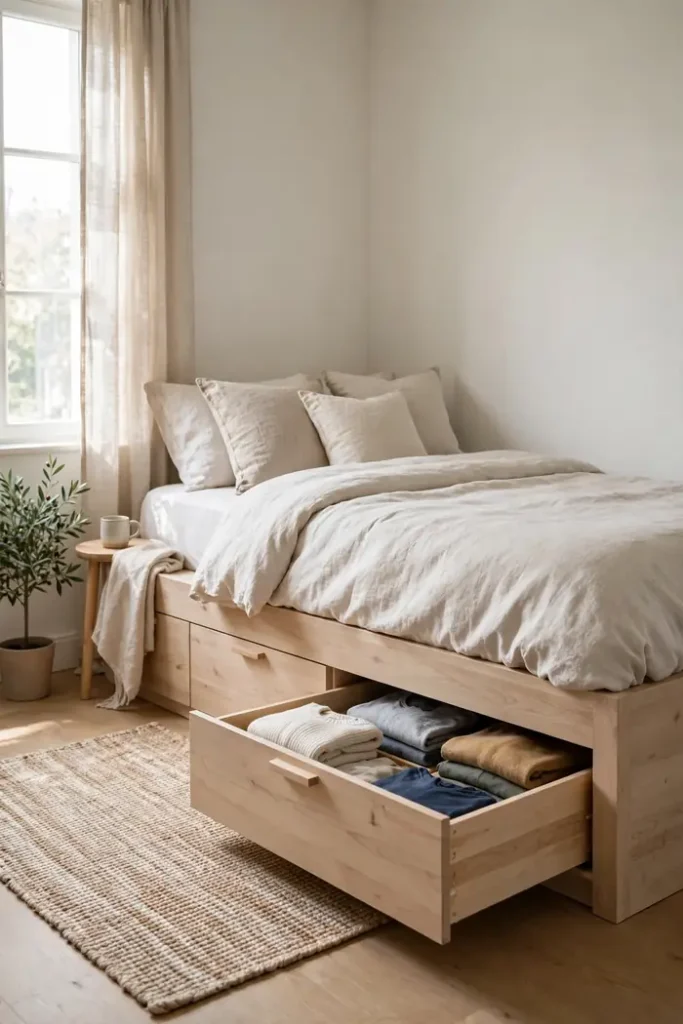
Treat the bed as the biggest box in the room, and make it work like one. A storage bed holds a dresser’s worth of clothes. Drawers or a lift-up base remove the second-biggest box from the floor plan.
IKEA’s MALM ottoman bed is the common pick. It suits renters and first-home buyers who need hidden storage without hiring a carpenter. Skip it if you move often, since the lift mechanism is heavy and the frame is awkward on stairs. It also costs noticeably more than a basic platform frame.
This swap rarely fits an under-$100 plan, since a storage bed is a bigger purchase. The tradeoff is honest: spend on the bed and skip the dresser entirely. The room gains floor it did not have.
Guard 24 Inches of Walkway
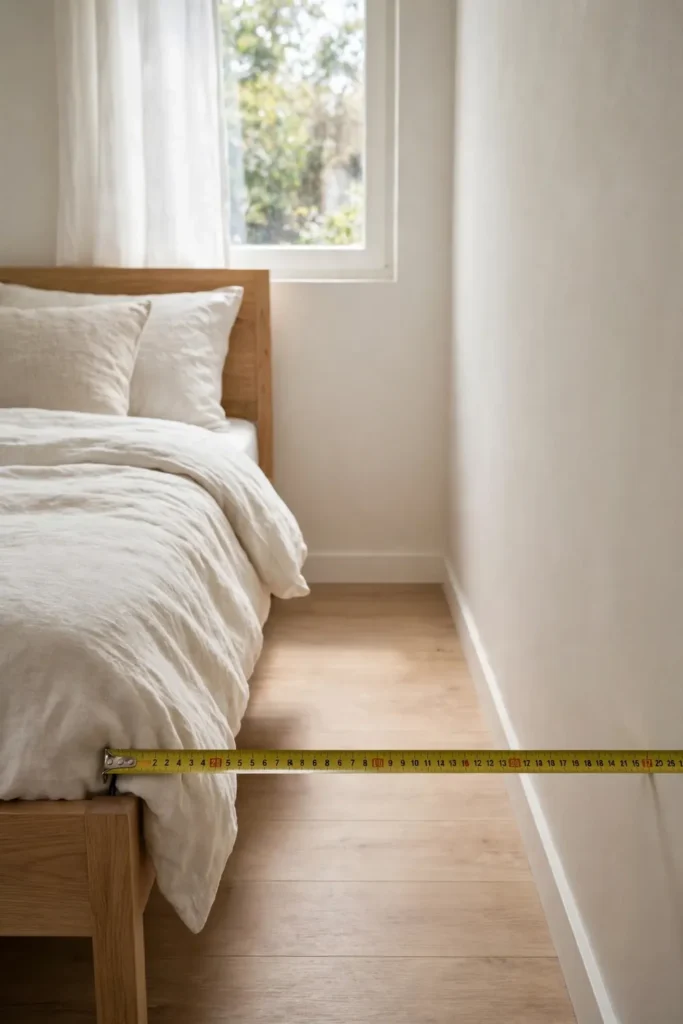
Clearance is the number behind each placement decision. A rule of thumb gives the bed 24 inches of walkway on each side you use. Thirty inches feels comfortable, and under 20 you will sidestep daily.
Measure these pinch points with a tape, not your eye:
- Bed side to wall: 24 inches minimum on the side you climb in from
- Bed foot to dresser or door swing: 30 inches so drawers open fully
- Door swing arc: mark it on the floor so no furniture lands inside it
The list takes five minutes and prevents the classic error: furniture that fits on paper but blocks a drawer. Rooms feel bigger when you can walk through them without turning sideways.
Tape the walkway lines too, then walk them carrying laundry. If your hips brush both sides, steal the inch from the bed zone, not the path. A walkway that only works empty is not a walkway.
Build Up With One Tall Piece
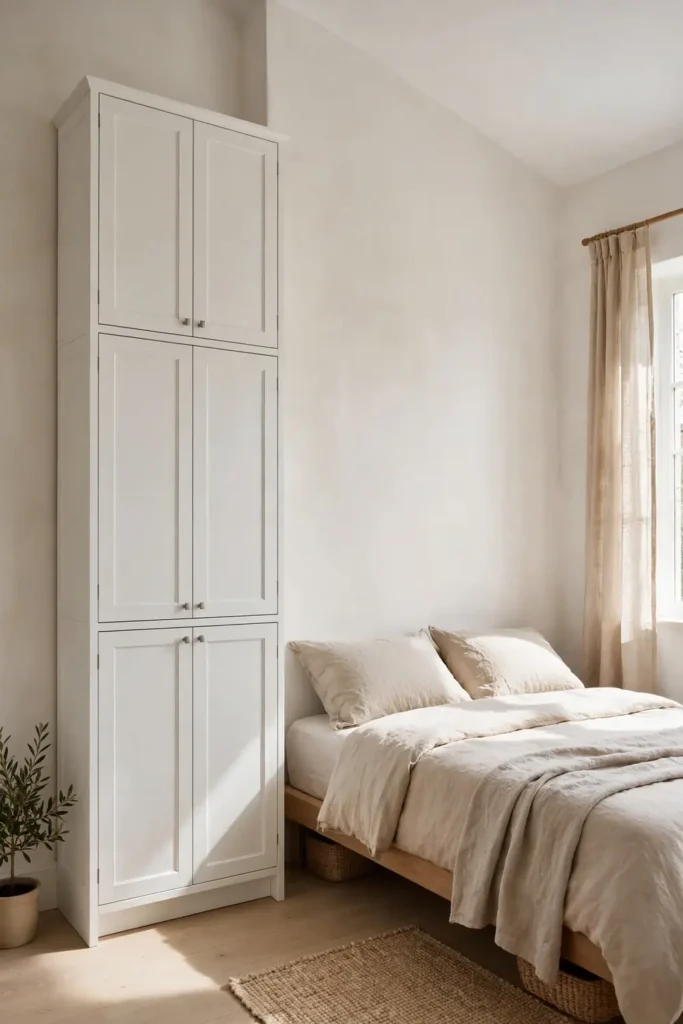
Small rooms collect short furniture, and a row of low pieces reads as clutter. One tall, narrow piece draws the eye up and leaves the floor alone.
A single bookcase or wardrobe reaching near the ceiling holds more than two low dressers. Keep it closed-front so the contents do not add visual noise. Moving the piece you already own is the whole job, a fine weekend project.
Aim for twelve to eighteen inches deep and at least seventy-two tall, anchored to the wall. Put daily items at arm height and archive the top shelf. One tall piece beats three short ones on both storage and sightlines.
Hang the Nightstand on the Wall

A nightstand sitting on the floor costs a square foot you do not have. In a room where inches matter, that is expensive ground. The usual fix of a smaller nightstand still sits on the floor.
Mount a shelf or a shallow drawer on the wall instead. Fix it at mattress height so the lamp, book, and glass sit within reach, and the floor stays visible underneath. Renters can use a sturdy floating shelf on rated brackets, but check the lease before drilling. Heavy shelves need studs or rated anchors, and the tiny stool or book stack only slides, wobbles, and gathers dust.
Test Paint in Your Light, Not the Store’s
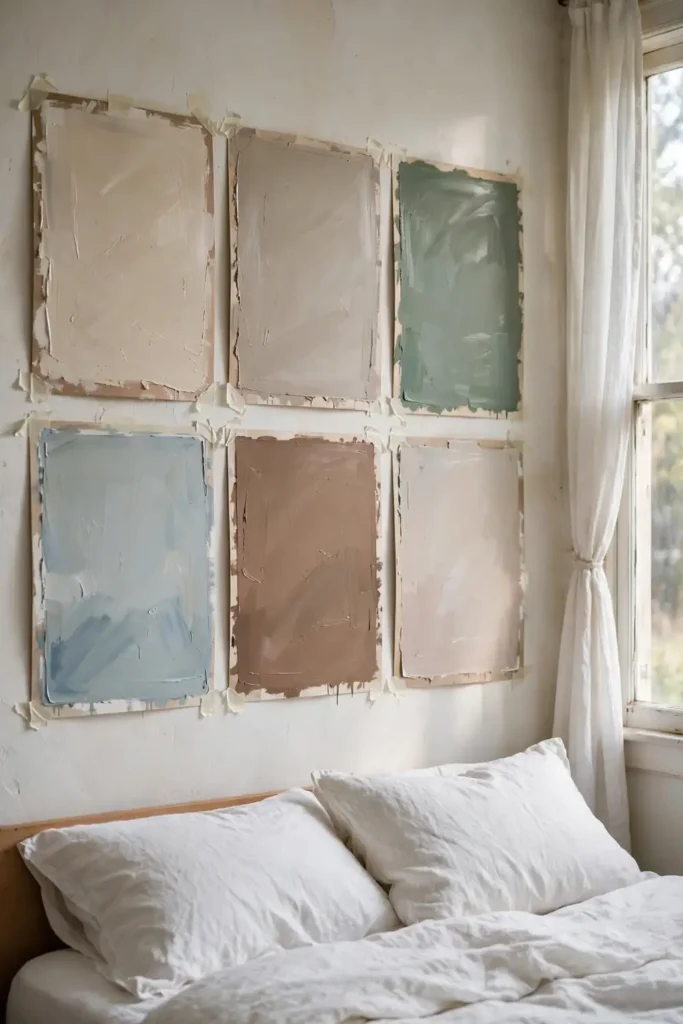
Light colors open up small rooms. That advice is true and incomplete. A pale gray that glows in a bright room can turn flat and cold in a dim one.
Undertones and light direction change how a color reads, so do not trust the store chip. Brush a generous sample on two walls, then check it in morning and evening light. I recently changed the paint color, which my wife liked, then lived with a shade I disliked. Repainting means pulling the whole house apart, and the cost is not the paint but moving everything twice.
Benjamin Moore and similar lines sell small sample pots for exactly this reason. The sample costs little, while skipping it costs a room you have to live with. Painting is one of those renter-friendly rules worth checking in the lease before you buy the gallon.
Keep the ceiling flat even when the walls go eggshell. Sheen overhead bounces light downward and makes a low ceiling feel lower, while flat paint lets it recede.
Try the Dark Wall People Warn You About

The case against dark paint in a small bedroom sounds airtight. Convention says it shrinks the room, and in most rooms that warning holds.
But a deep, flat color on all four walls can blur the corners. Blurred corners are exactly what make a small room feel less boxy. The eye stops hunting for edges and the walls recede.
The trick is commitment. One dark accent wall with white neighbors chops the room into pieces. All-over color reads as one continuous surface, especially in a flat finish.
It suits bedrooms, which want to feel enclosed at night. Skip it in rooms with almost no daylight, where it reads as a cave. Test one wall first and live with it for three evenings.
Curtains That Lift a Small Bedroom
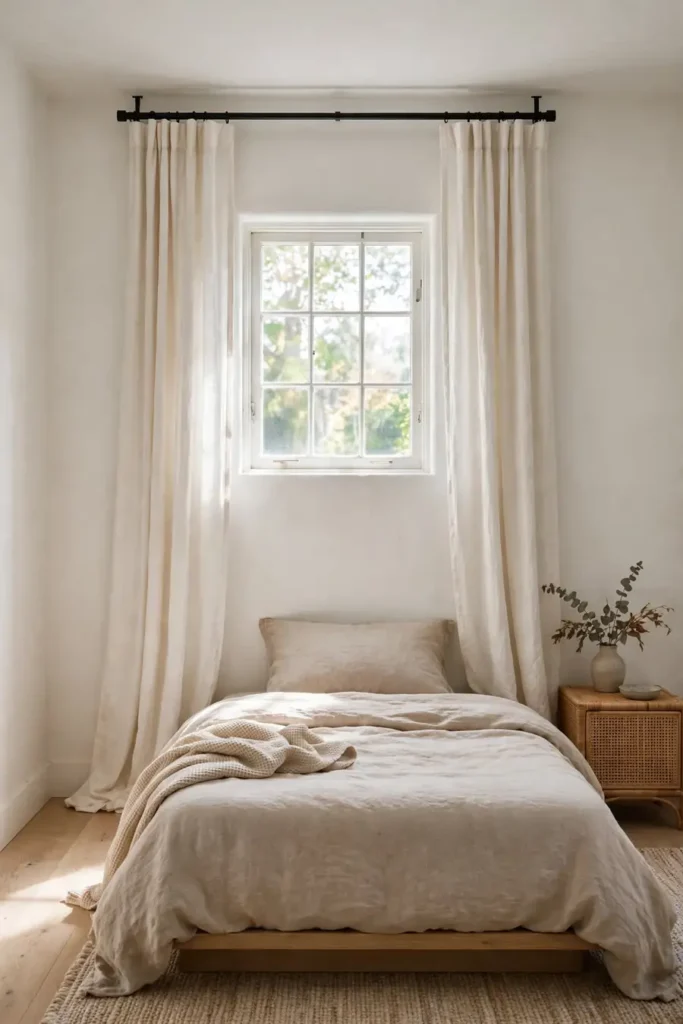
Before: curtains hung on the window frame, cut to sill length. The wall reads as two short stacked boxes. After: the rod sits a few inches above the frame and extends a few inches past each side. Panels fall to the floor, and the same window reads taller.
This is common practice for a reason. Keep the fabric light enough to let daylight through in a dim room, since heavy curtains undo the effect. For more bedroom styling notes, keep the panels simple and let the height do the work.
One Big Mirror in a Small Bedroom
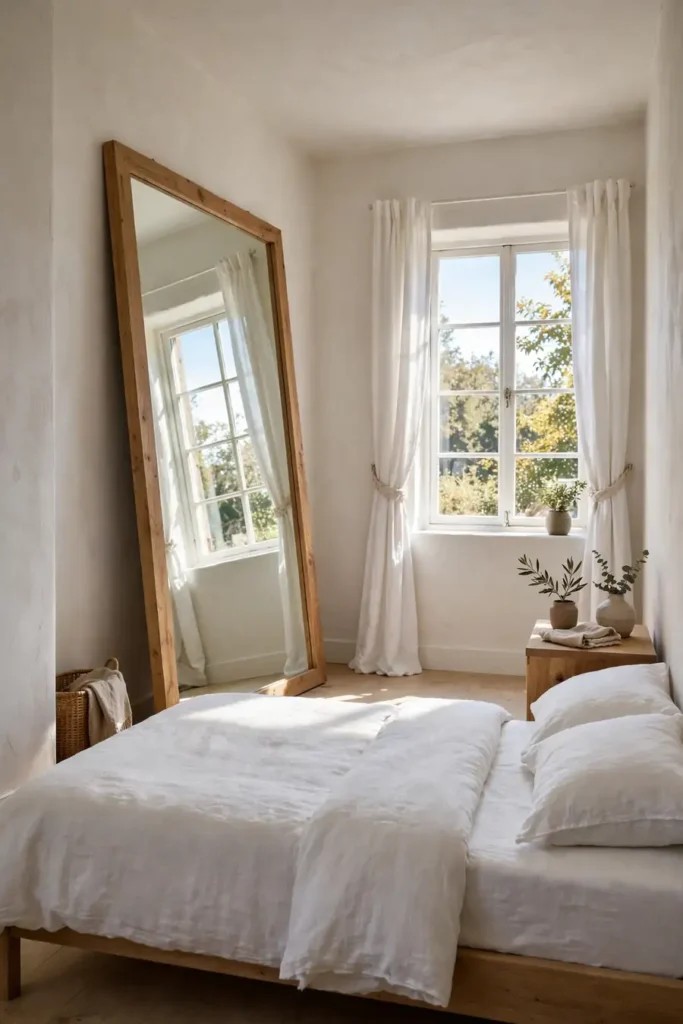
Small-mirror galleries look good in photos. In a real room, each frame chops the reflection into fragments, and dusting six frames gets old fast. One large mirror doubles the light and the view with a single clean edge.
Place it where it reflects the window, not the bed, ideally opposite or beside it. Heavy mirrors need studs or rated anchors.
For a lighter mirror in a rental, Command strips hold within their stated limit. Follow the package directions, and note they can fail on textured paint.
Size it with intent. A leaning floor mirror works near forty-eight inches tall; a wall mirror wants half the dresser width.
Skip the Matching Bedroom Set
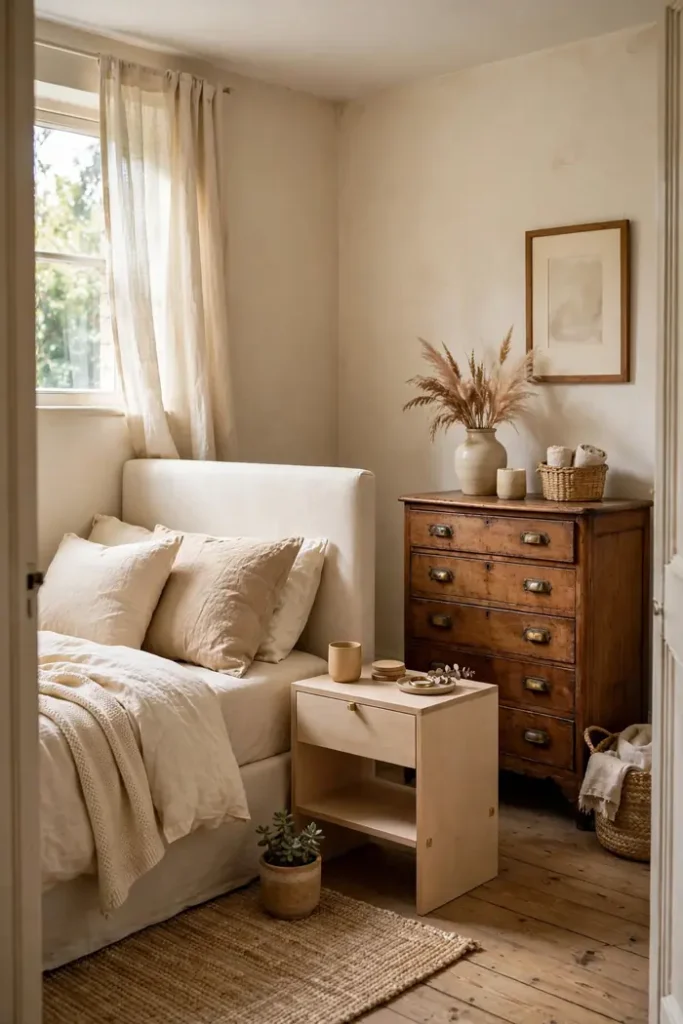
The usual mistake is buying the full matching set: bed, dresser, two nightstands, mirror. It fits the store floor, not your 10-by-11 room. The set dictates the layout instead of the room.
A mixed set lets each piece earn its place. A storage bed, one nightstand, and a dresser in the closet’s dead zone do the same job on less floor. Buy pieces one at a time, measuring each against the tape outline. This is where budget makeovers win: secondhand pieces cost less and fit better than showroom sets.
Small-Bedroom Rug Rule: Size to the Bed
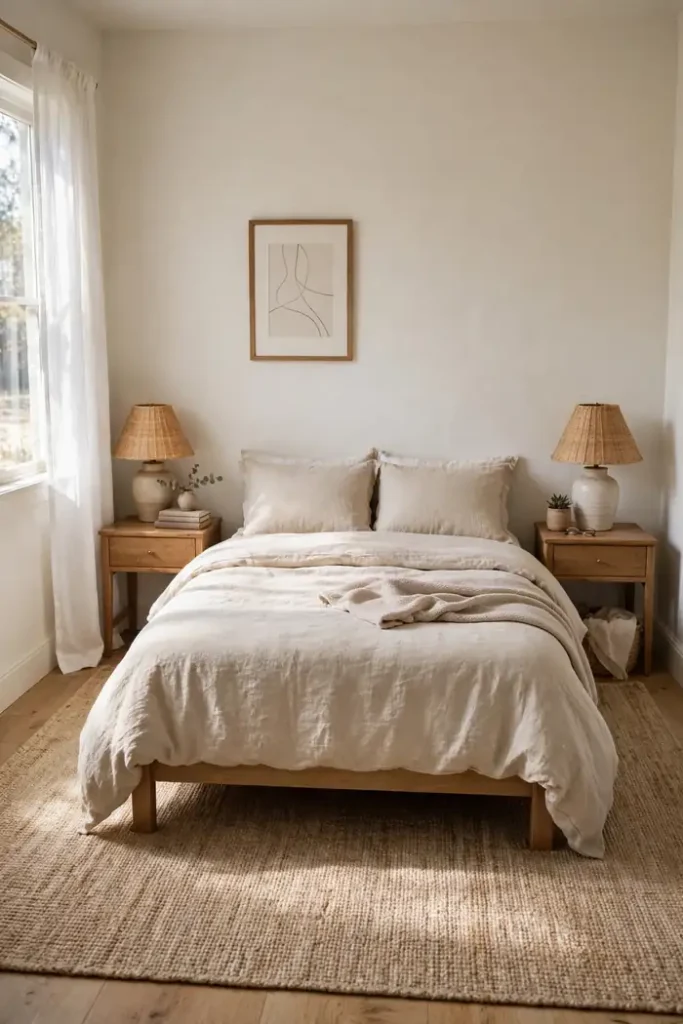
A tiny rug floating in the middle of the floor chops the room visually. The fix is counterintuitive: go bigger, with the rug sitting under the bed and extending past its sides and foot.
The common guide says the rug extends about 18 to 24 inches beyond the bed on three sides. For a queen, that usually means an 8-by-10 rug, which surprises people in small rooms.
It is a solid starting point for the whole layout. Skip thick pile in a small bedroom, since it eats drawer clearance and shows footprints. Low pile cleans easier and slides under storage drawers.
When an 8-by-10 will not clear the door swing, try a smaller flat-weave rug at the bedside. The rule is coverage underfoot, not one single rectangle.
Steal the Dead Corner and the Door Swing
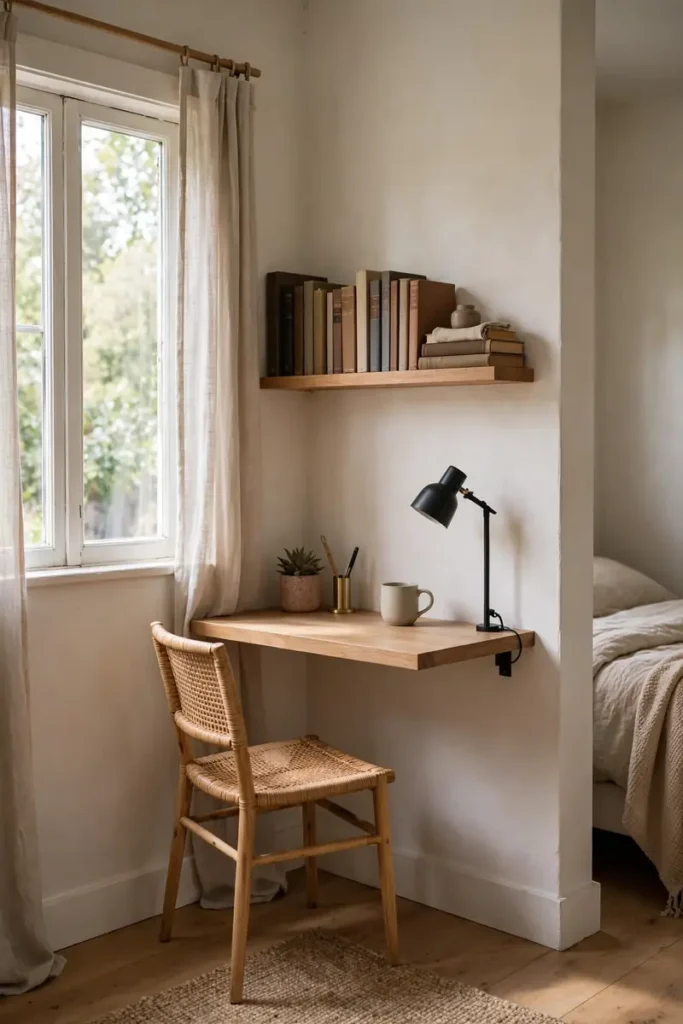
Two spots in a small bedroom go to waste. The corner beside the closet, and the arc of the door swing. Map the arc with tape and treat it as a no-furniture zone.
If the swing eats a third of the room, replace the door with a curtain panel on a tension rod. In a rental, get the landlord’s okay first. The dead corner fits a narrow dresser or a small desk. Either doubles as a nightstand with a lamp on it.
People working from home get an home office corner without needing a second room. The chair tucks under the desk, and the bedroom keeps its floor.
Hinged closet doors eat the same clearance. Sliding bypass doors reclaim the full swing, and a basic kit costs little at a hardware store. The doors stop blocking the dresser, the walkway, and your morning.
Layer the Light Instead of the Ceiling Glare
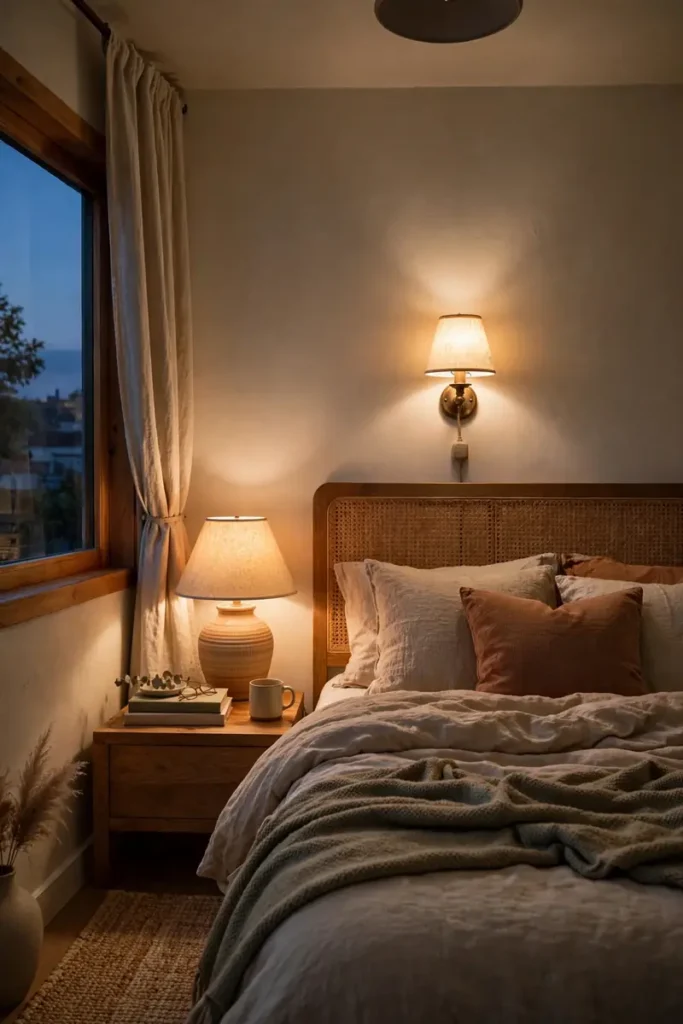
The ceiling fixture is the hardest-working and least flattering light in the room. One fixture casts hard shadows and lights the middle of the floor instead of the spots you use. Small bedrooms need light at three heights.
That means a bedside lamp for reading, a soft wash on the wall, and something low near the floor. Wall sconces or plug-in pendants free the nightstand surface. A plug-in sconce plus a floor-washing uplight often stays under $75, leaving the ceiling fixture off most nights.
Match bulb warmth across the lamps, around 2700K, so the room reads calm instead of mixed. One cold bulb next to two warm ones shows more than any fixture choice.
Enforce One Clear Surface
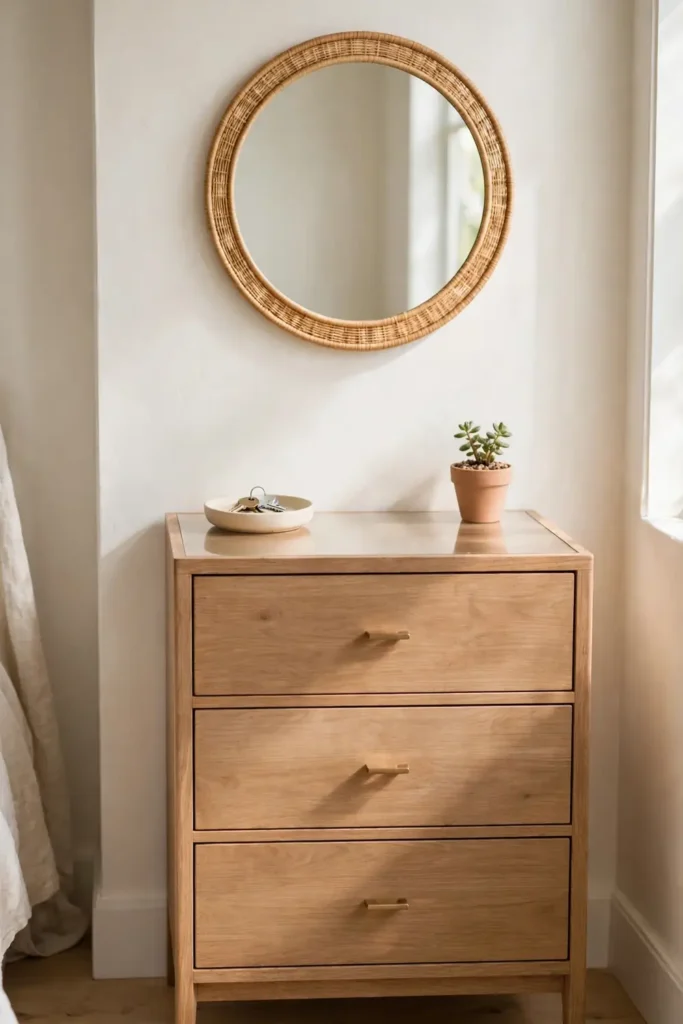
Clutter shrinks a small room faster than any furniture choice. The fix is a rule, not a product: one surface in the room stays completely clear.
Pick the dresser top or the nightstand. A clear surface gives the eye somewhere to rest, and it exposes new clutter immediately, which is the point.
When the rule slips, the surface tells you before the whole room does.
Start tonight: clear one surface and leave it empty for a week. If it stays clear, the room already feels bigger. The test is free, and the answer arrives in seven days.
Final Thoughts on Bedroom Ideas for Small Rooms
A small bedroom does not need to feel twice its size all day. It needs to work at night and stay out of your way in the morning. Layout does that. Paint and styling only dress it.
Start with the tape outline this weekend. It costs nothing and decides each purchase after it.
These bedroom ideas for small rooms will not add a single square foot. They stop the room from fighting you, and that friction is what makes small rooms feel small.
FAQ About Bedroom Ideas for Small Rooms
Is a headboard worth the space in a small bedroom?
Only a slim one. A wall-mounted upholstered panel takes about two inches, while a framed wooden headboard eats four to six. Skip chunky posts and let the bed sit close to the wall.
Where does the dresser go when the closet has no dead zone?
Try the wall at the foot of the bed with thirty inches of clearance for drawers. If that wall is short, a tall narrow chest in an unused corner often beats a wide low dresser.
Can a small bedroom handle wallpaper?
One wall of small-scale print adds depth without crowding the room. Keep the other walls plain and the contrast soft. Busy large prints shrink tight rooms fast.