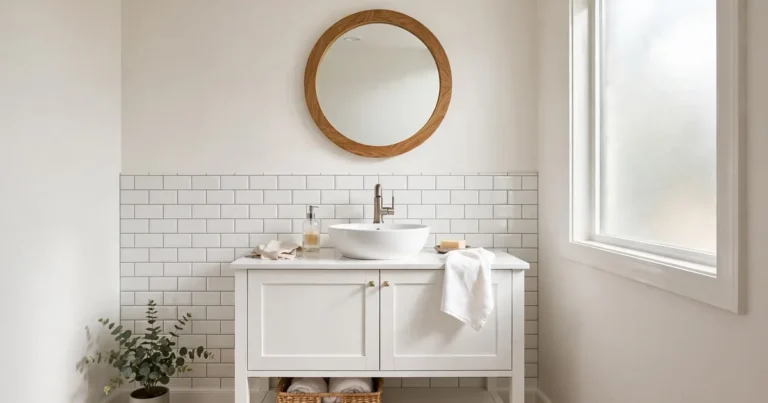
Bathrooms show their age in the small things: a spotted mirror, a sagging curtain, towels that do not match. A renovation is not the fix. A few deliberate swaps are.
These 15 bathroom decor ideas focus on the swaps that matter: mirror, light, textiles, and a clear sink. Most cost under $50, and each one states what can go wrong.
Small bathrooms get first attention, since scale and light do the heavy lifting in a tight room. Read the prices as starting points, then measure before you buy.
Start Your Bathroom Decor With the Mirror
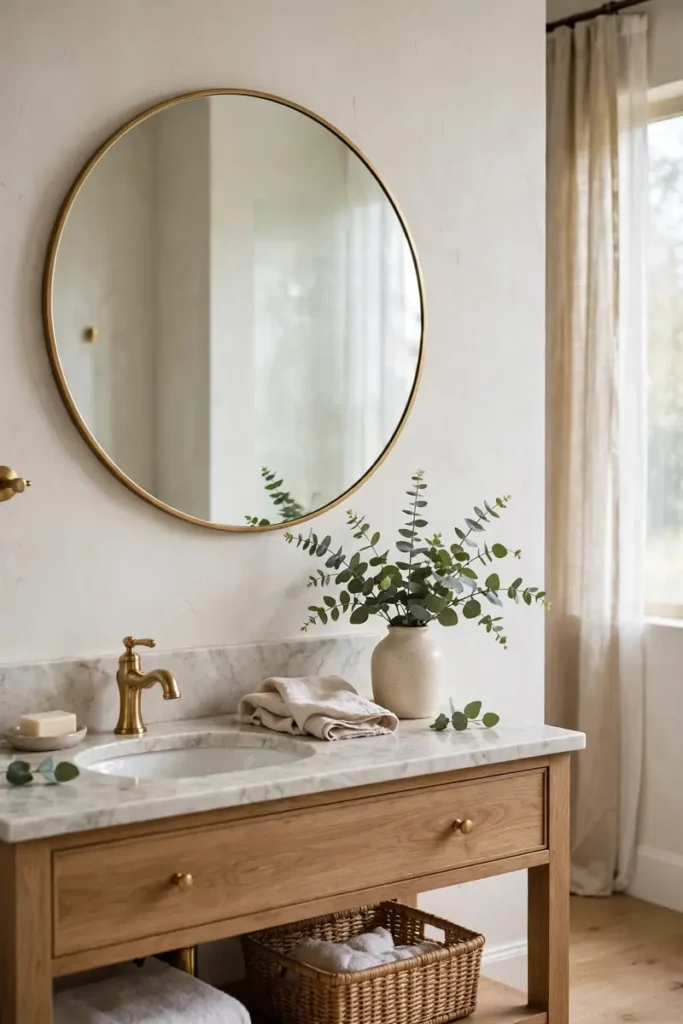
A builder-grade flat mirror makes the whole bathroom feel cheap, even when everything else is fine. Replacing it is the highest-impact move under sixty dollars.
Size it two to four inches narrower than the vanity, centered at eye level. A mirror wider than the vanity looks like a mistake, not a statement. Too narrow and it looks lost.
Round mirrors soften a boxy bathroom, and arched ones add height without new tile. IKEA and Target both carry framed options that beat the flat builder sheet.
Hang it with proper anchors, since a falling mirror is the wrong kind of dramatic. A hollow-wall anchor or a stud keeps it put for years.
New Pulls on Tired Cabinets

Dated brass or plastic knobs age a vanity faster than anything else. Swapping them takes a screwdriver and twenty minutes. Pulls run about four to twelve dollars each at most hardware stores. Work top to bottom, then step back after the first three and check the look.
Measure the hole spacing before you shop; most vanity pulls use three-inch or three-and-three-quarter-inch centers. Bring one old knob to the store for matching. Matte black or brushed nickel both read current without chasing trends.
Keep the old hardware in a labeled bag for move-out day. Renters, check your lease before drilling; many allow it, some do not. A full vanity refresh lands under thirty dollars. More renter-friendly swaps follow the same keep-the-originals rule.
The Light Swap That Lies
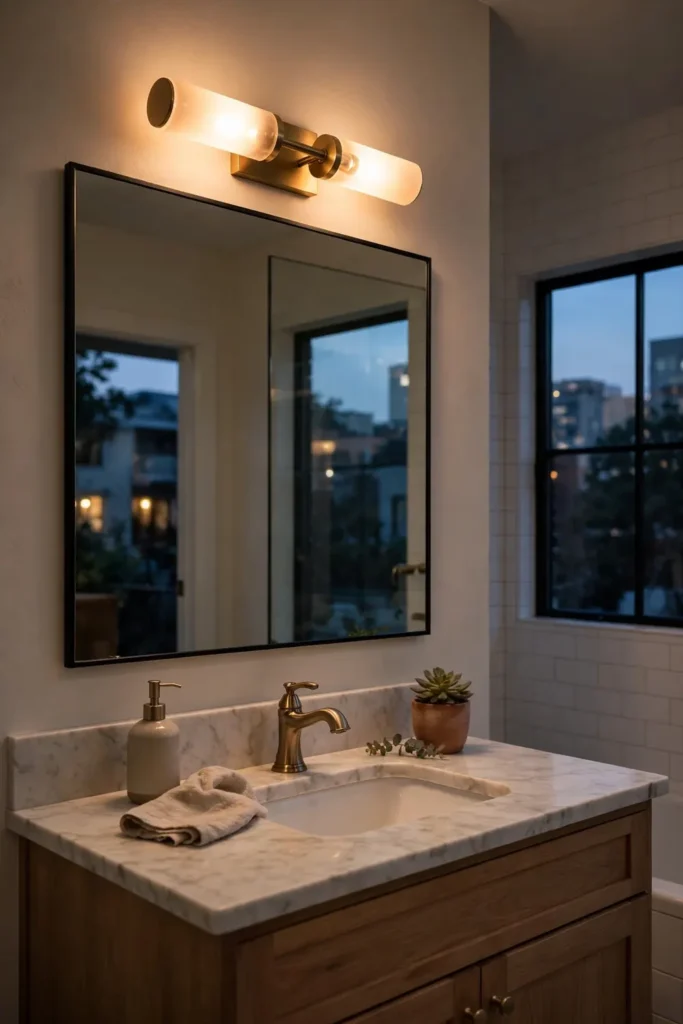
A brighter bulb does not fix a bad fixture. One harsh overhead bar throws shadows under your eyes and chin, and no bulb wattage fixes the angle. The mistake is shopping for lumens instead of placement. Renters can swap shades without touching wiring, and a fabric drum shade over an ugly bar changes the whole mood.
Two sconces at face height beat one bar above the mirror in most bathrooms. A common guide: center sconces around sixty to sixty-six inches from the floor, roughly eye level. Shades that point up and down soften the light further. Warm-toned bulbs around 2700K flatter skin, while daylight bulbs near 5000K show each pore and flaw.
Patterned or Solid Shower Curtain

Patterned curtains hide water spots and add the room’s biggest block of color. A solid curtain in white or natural linen makes a small bathroom feel larger.
Both cost twenty to forty dollars at Target or IKEA. The curtain is the cheapest large color block in the room, so choose it like paint, not like an afterthought.
Hang the rod as high as the liner allows, near the ceiling if possible. The extra inches of fabric make the ceiling read taller. A curved rod, about twenty-five dollars, adds elbow room without moving any plumbing.
A curtain plus a curved rod lands in updates under seventy-five dollars territory. That pairing buys height and elbow room in one trip.
Towels Are the Bathroom Decor Color Scheme
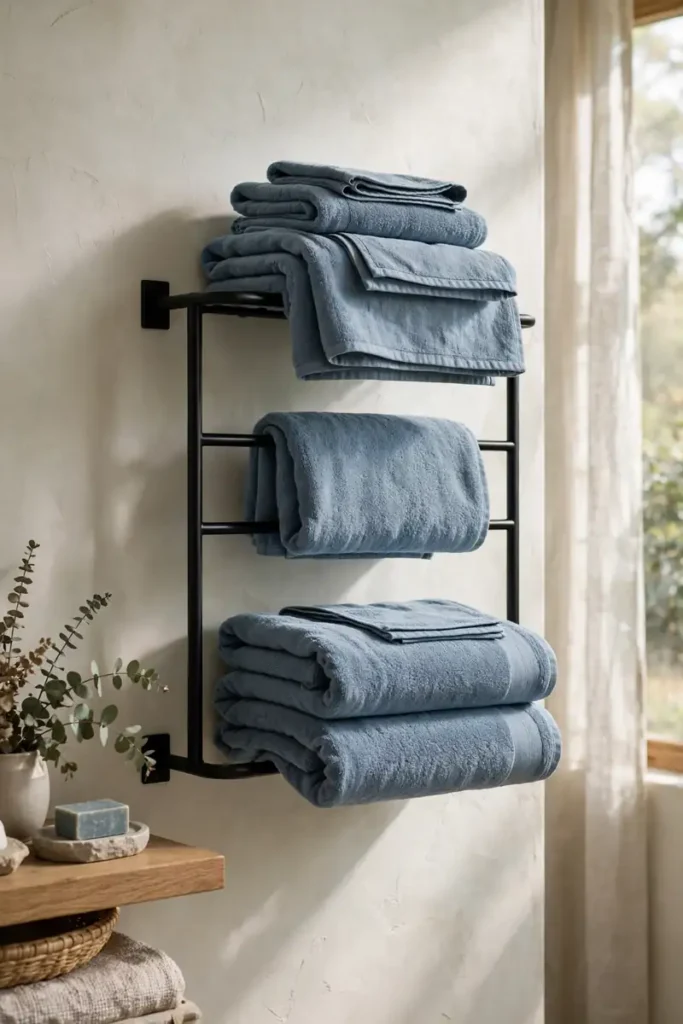
Two matching bath towels do more for a bathroom than a shelf of small decor. Color lives in textiles here, since tile and fixtures are fixed. Pick one towel color and repeat it through the room.
White towels read crisp but show each stain, while deep tones hide wear but can dull a small room. Mid-tones like sage, clay, or slate split the difference at about ten to twenty dollars per bath towel. Fold them the same way, thirds then halves, and the shelf looks styled for free. More towel math lives in our budget bathroom picks.
Plants Are Not the Answer

Most bathroom photos online show a thriving plant on the vanity. In a windowless bathroom, that plant has about three weeks. The photos skip the part where it gets replaced.
Skip live plants without a real window. Humidity helps, but light is the non-negotiable, and no amount of misting replaces a window. A good faux stem in a glass vase gives the shape without the slow death.
If you have the window, pothos and ferns tolerate bathroom humidity well; keep them out of direct shower spray. The rule is one plant per window, or none at all. In a boho bathroom, the one-plant rule still applies.
The Peel-and-Stick Tile Truth
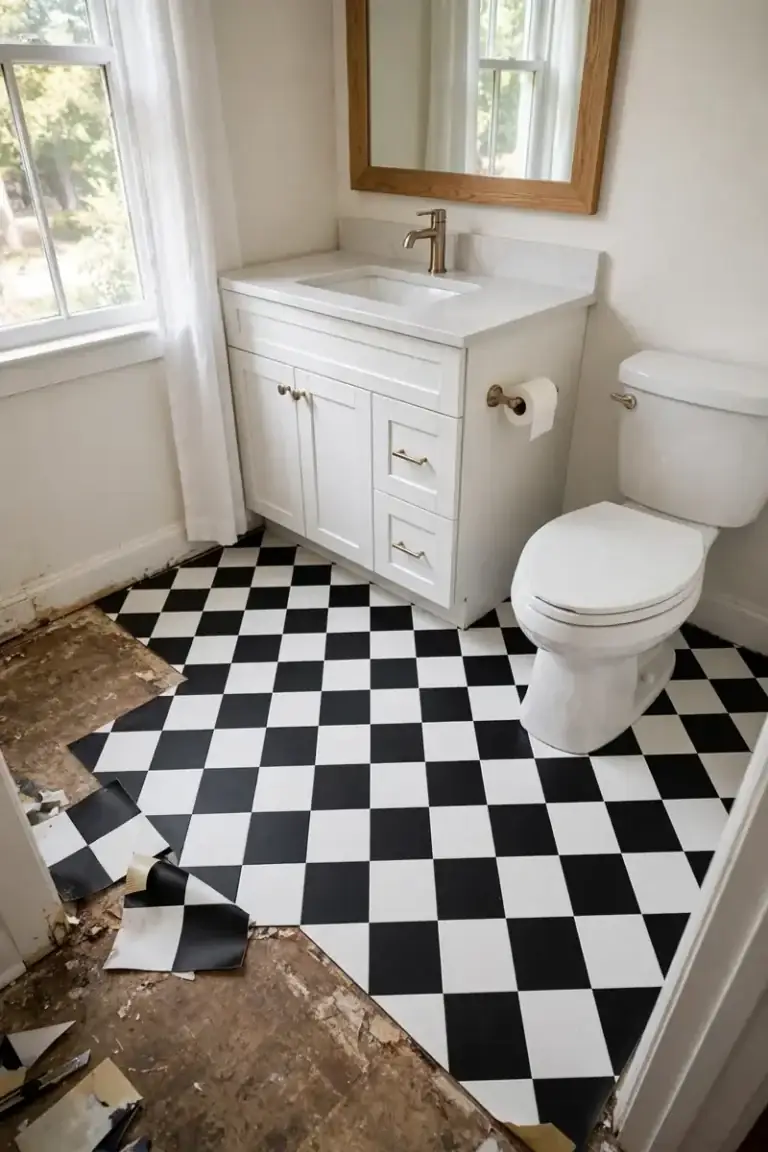
Peel-and-stick tile gets pitched as the renter’s miracle. The advice is incomplete.
It adheres well to smooth, clean surfaces and fails on textured walls, in steamy showers, and over old grout lines. The marketing shows the good wall, not the bad one.
Use it on a flat backsplash area behind the sink, not inside the shower. A twelve-pack covering a small area runs about twenty to thirty dollars. Check your lease first and test one tile in a hidden spot for a week.
Some adhesives pull paint on removal, which landlords care about more than the tile itself. The test tile tells you the truth before the whole wall does.
Storage With No Vanity
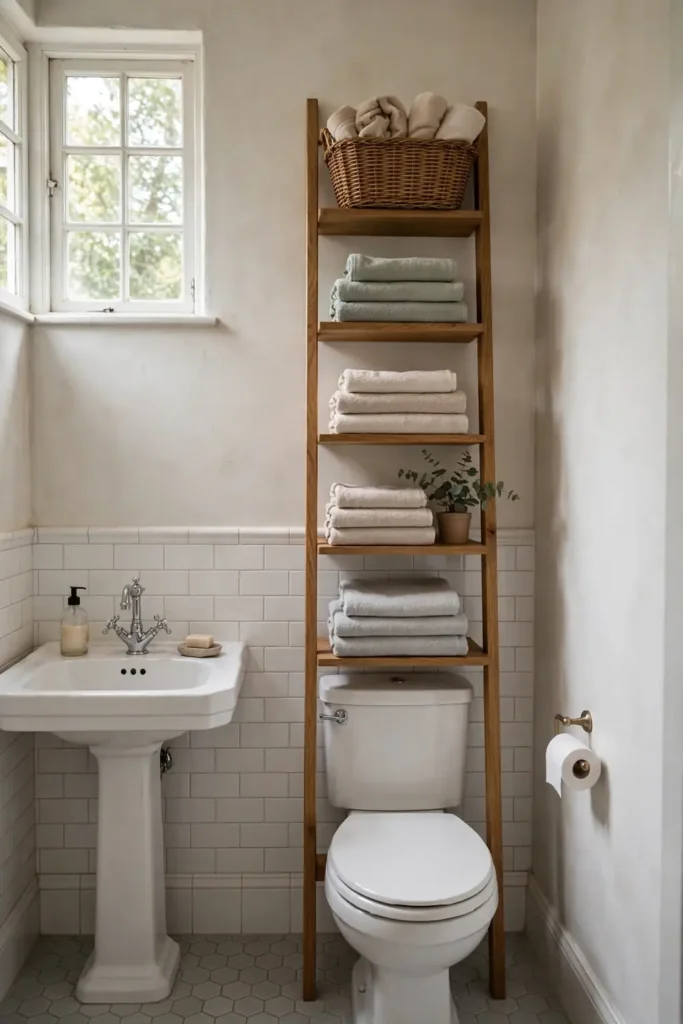
Pedestal sinks leave nowhere for the clutter. The workaround is vertical: a slim rolling cart, about twenty-five to forty dollars, tucks beside the toilet. Over-the-toilet shelving uses dead air without touching the floor.
Baskets corral the visual mess: one for cleaning supplies, one for spare toilet paper. Keep open shelves two-thirds full so they read styled, not stuffed, and let closed storage hide the rest. This is classic small bathroom on a budget thinking.
Measure the gap beside the toilet before you buy the cart, since most need eight to ten inches of clearance. Anchor tall shelving to the wall, because a loaded shelf tips fast. Leave one shelf half empty; cramming defeats the styled look.
Grout Is Making It Look Old
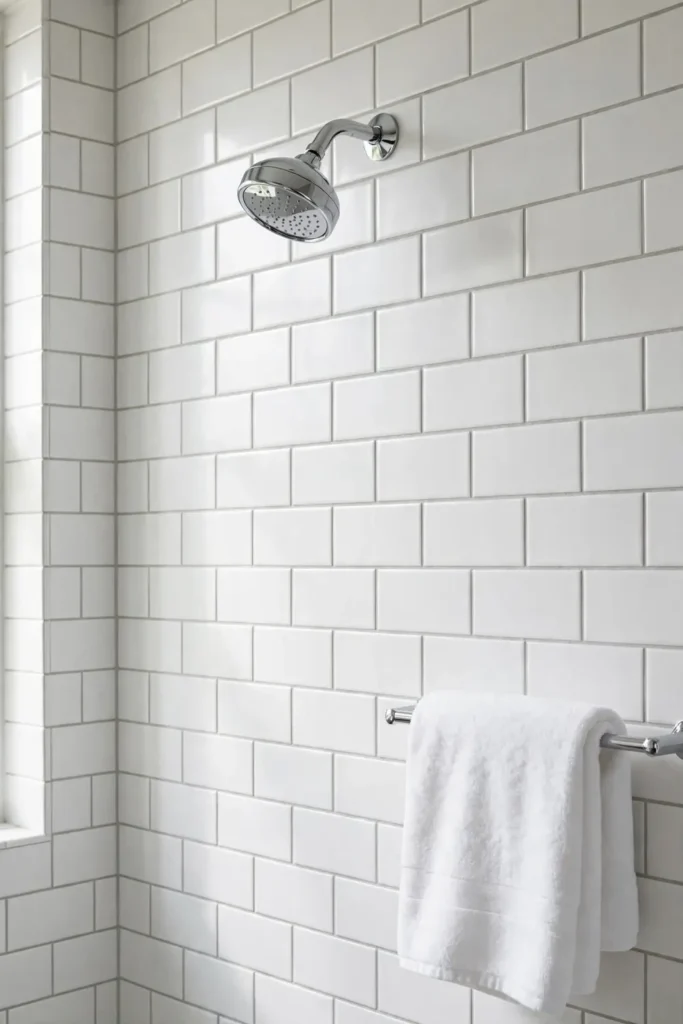
Dingy grout ages a bathroom faster than dated fixtures. Bleach the grout lines and the tile you already have looks noticeably newer. A grout pen costs about five to ten dollars and covers a surprising amount.
Scrub first with a stiff brush and a paste of baking soda and water. Rinse, let it dry fully, then apply the pen in smooth strokes. Rushing this step is why most grout pens look patchy.
Seal the grout after whitening if the room gets daily shower steam. Grout color sets the room’s tone, so choose it with the same care as the tile. A weekend grout refresh is the highest-return chore on this list.
The Forty-Dollar Sink Reset
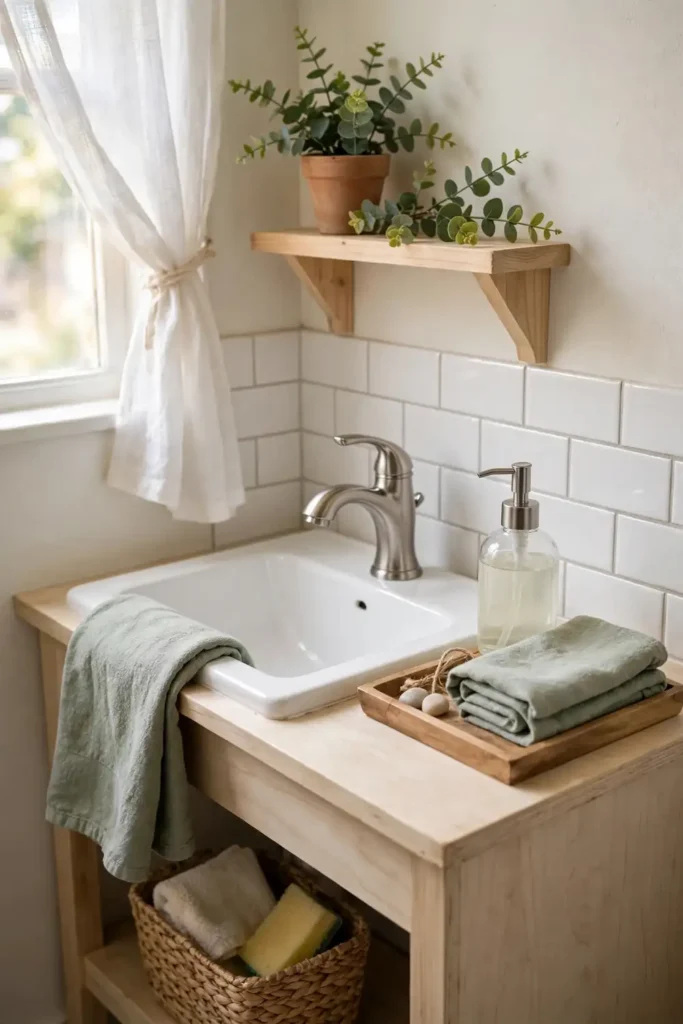
Before: six plastic bottles, a chipped soap dish, and a toothbrush cup from a hotel. The sink area looked like a pharmacy shelf. Nothing matched because nothing was chosen.
After: two matching pump bottles, about twelve dollars for the pair, one small tray, and a folded hand towel. Decant the shampoo and soap into glass or ceramic dispensers; it is the fastest visual calm at the sink. The labels were the visual noise. The whole reset stays under forty dollars.
The tray is the trick: it groups the bottles into one object. A common guide: keep the sink clear except the tray, the soap, and one towel. Everything else lives in a drawer or cabinet, which is pure minimalist bathroom thinking. Wipe the tray weekly when you wipe the sink, since dust collects under bottles fast.
Art Above the Toilet

Framed prints above the toilet look great in photos and warp in steam. Paper art in a humid bathroom curls within months. Blame the placement, not the art.
What works: canvas prints, sealed wood frames, or art hung on the wall opposite the shower. Keep pieces small, eight by ten or eleven by fourteen inches, so steam has less surface to attack. Or skip art and hang a woven wall piece that shrugs off moisture. The far wall is usually the safer bet.
If you must hang above the toilet, pick a spot at least two feet from the shower spray. Seal a wood frame with two coats of polyurethane before it goes up. Check the back of the frame each spring; warped backing means the spot is too steamy.
Small Bathroom Decor That Feels Bigger
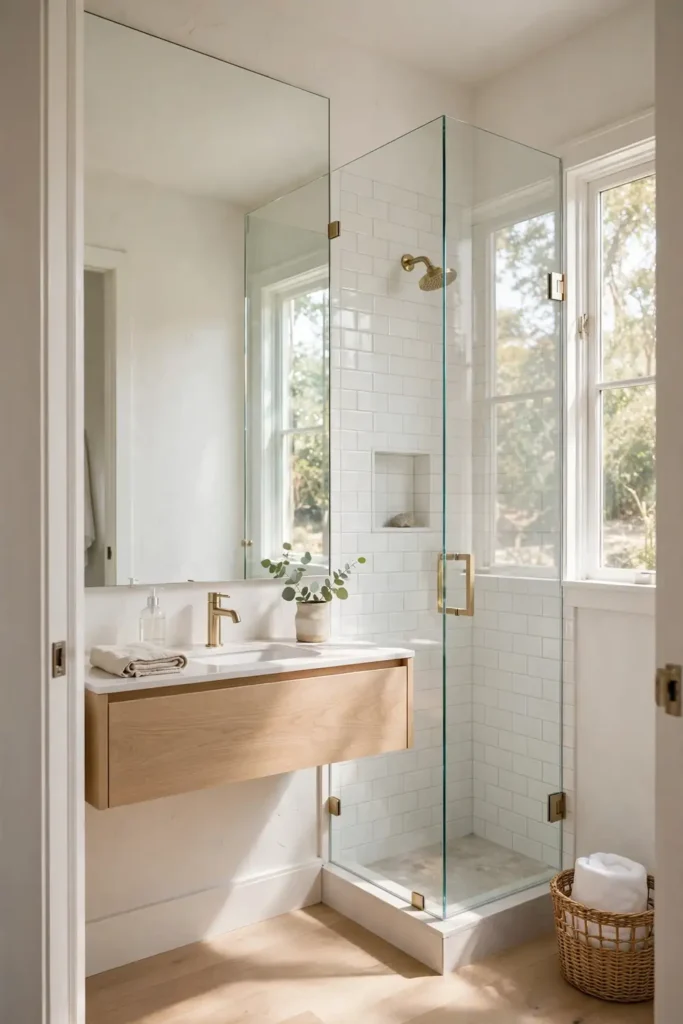
Small bathrooms feel cramped for two fixable reasons: broken sightlines and too many small objects. The floor disappears under clutter, and the eye stops at each bottle.
Fewer, larger choices open the room. One large mirror beats three small decorations, and one big piece of art beats a gallery wall.
A single bath mat, not two, keeps the floor line clean. Pick a low-pile washable rug with a rubber pad underneath. Plush bath mats stay damp for hours and slide underfoot; a thin rug dries fast and stays put.
Keep the palette to two or three shades repeated through the room, and wall-mount what you can. Visible floor reads as space, so lift the clutter off it. The same logic fills our small bathrooms guide.
A Better Showerhead in Ten Minutes

A weak showerhead makes the whole bathroom feel tired. A new one costs twenty-five to forty-five dollars and installs with a wrench and thread tape.
Renters, check your lease; most allow this swap since it reverses in minutes. Look for a model with a pause button to save hot water. Test the spray before tossing the packaging.
Teflon tape on the threads prevents drips. Wrap it clockwise three or four times before screwing the head on. Hand-tighten, then give it a quarter turn with the wrench. Save the receipt until you have tested it for a week, in case the building’s pressure is the actual problem.
One Shelf Above the Toilet
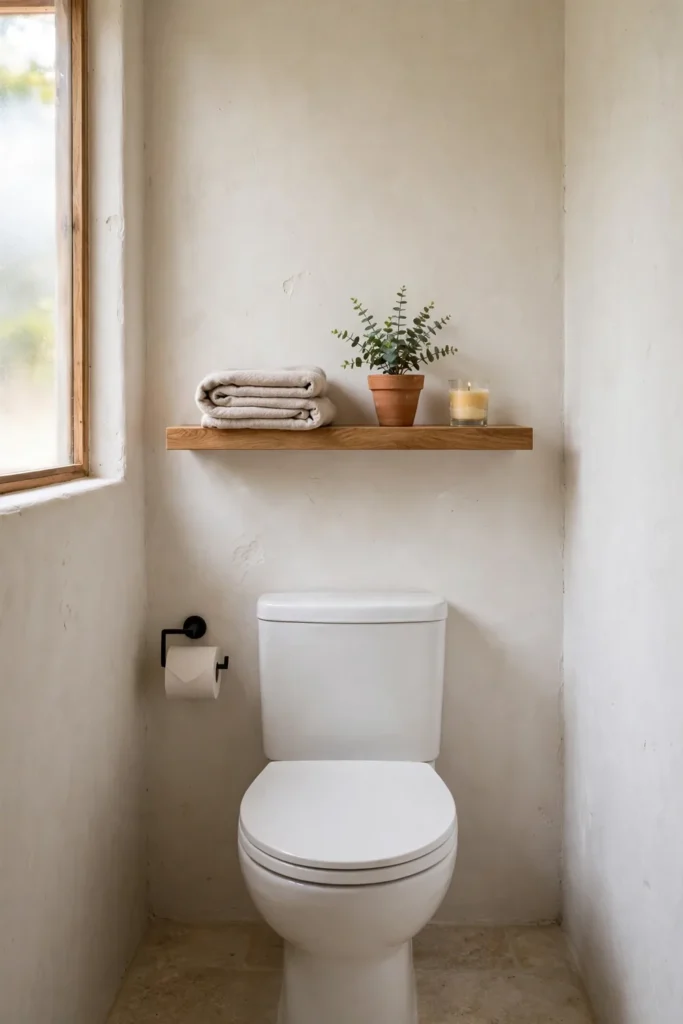
The wall above the toilet is the most wasted space in a small bathroom. One shelf there holds what the vanity cannot. Keep it shallow, eight to ten inches deep, so no one knocks their head standing up.
Anchor it into a stud; a shelf of towels and jars is heavier than it looks. No stud where you need it, use rated toggle anchors and follow the package rating. A twelve-inch pine board and two brackets cost under twenty dollars at a hardware store. A weekend shelf project fits a slow Saturday.
What $50 of Bathroom Decor Buys First

Spreading fifty dollars across ten small items is the mistake. Ten five-dollar upgrades read as clutter; two twenty-five-dollar moves read as design.
Concentration beats coverage. Spend it in this order: mirror first, lighting second, textiles third.
Those three change how the room looks in photos and in person. Hardware and accessories come after, only if money remains. Price the mirror first, then fit lighting and towels into what remains.
This order follows the eye: reflection, light, then color. Skip the scented candle until the big three are done. A candle cannot fix a bad mirror.
Final Thoughts on Bathroom Decor Ideas
A bathroom feels like a retreat when everything in it was chosen, not accumulated. That is the whole insight: fewer decisions, made on purpose, beat a cart full of maybe.
Today, price one mirror that fits your vanity. Measure the vanity width, subtract a few inches, and write the number down. That is the entire first step.
Decor will not fix bad plumbing, mold, or a layout that fights you. It will make the room you have feel calmer each morning. Expect that, and the fifty dollars is well spent.
FAQ About Bathroom Decor Ideas
Can you really decorate a bathroom for under $50?
Yes, if the money goes to one focused purchase instead of ten tiny ones. A forty-dollar mirror or a twenty-five-dollar showerhead changes the room more than fifty dollars of small accessories. Price the mirror first; it sets the ceiling for everything else.
What bathroom updates are safe for renters?
Anything that reverses without damage qualifies: showerheads, curtains, mirrors hung on existing hooks, and freestanding storage. Adhesive hooks count too, within their weight rating. Keep all original parts in a labeled box.
Will a dark color work in a small bathroom?
Dark walls can work in a small bathroom if the lighting is strong and the mirror is large. The room reads moody rather than cramped. Keep the ceiling and trim light so the dark color has a boundary. This is one case where sampling the paint on a board first really pays off.