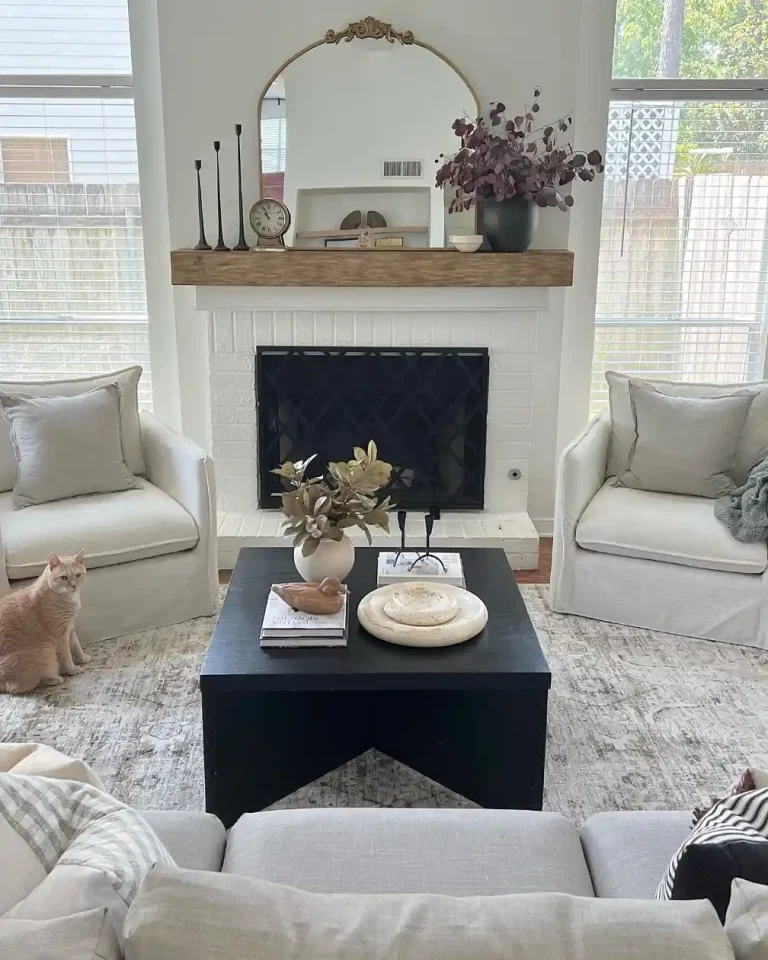
15 Minimalist Living Room Decor Ideas That Feel Warm for Renters
Minimalist rooms often look cold in photos, yet they feel warm in real homes. That gap rarely comes from money, and it rarely comes from buying more things.
Warmth comes from texture, wood, warm light, and one clear focal point in each room. You do not need to throw out everything you own for a calmer room.
A white room that no one dares to sit in is not the goal here. The fifteen rooms below show minimalist living room decor ideas that keep less, but keep it well.
Each room pairs a low sofa you can sit on with a rug, soft light, and one strong material. Pick one idea from this set, remove one thing first, and watch how the room responds.
Calm can still feel lived in, and a smaller set of good pieces often serves a home better. Start with light or texture, not with a shopping list, and let each change settle before the next one.
Small edits add up, and they cost less than replacing a whole room at once.
1. Start with light, then add almost nothing

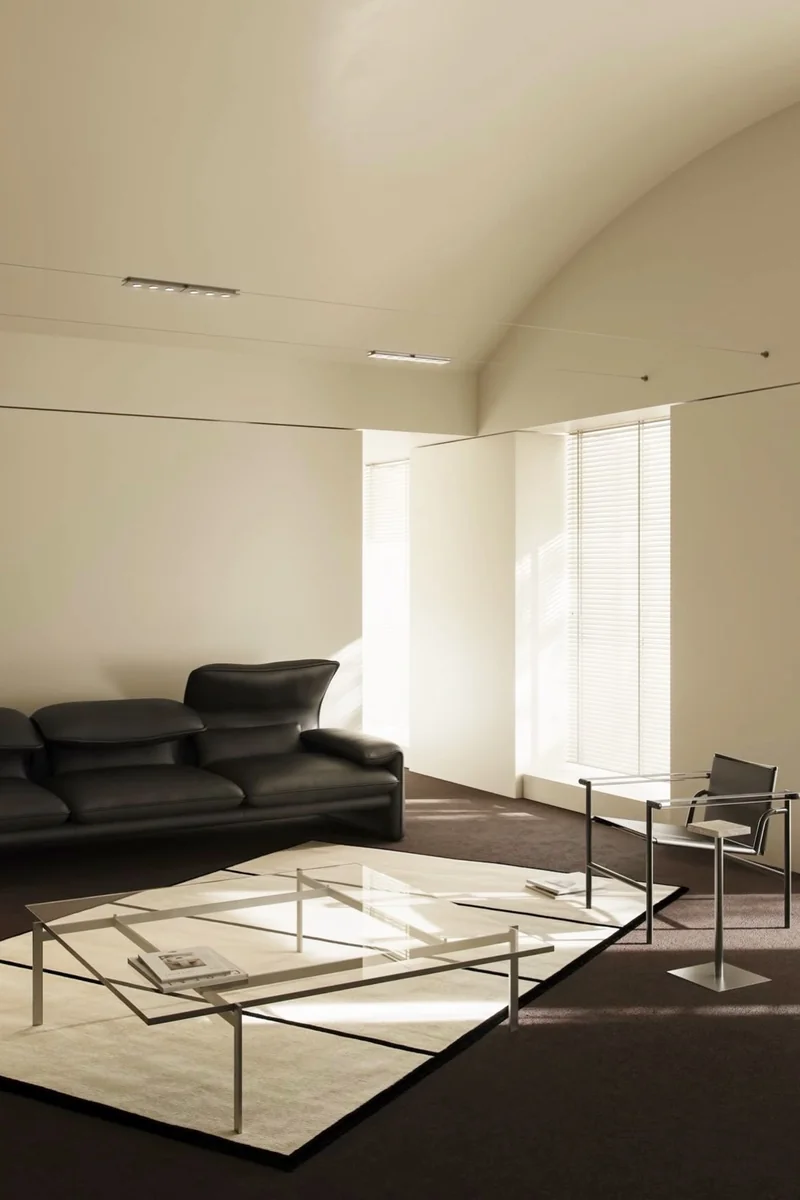
Daylight pours through tall windows with white blinds in this spacious minimalist room. High vaulted cream ceilings and linear track lighting keep the space feeling open and calm.
A black sofa, a glass coffee table, and a dark rug sit low in the room. A simple side chair completes the seating, without crowding the floor or blocking the light.
The lesson is not the size of the room at all. It is the order: light first, furniture second, and decoration last, every single time.
In a smaller room, keep window treatments light and the ceiling clear of heavy fixtures. Choose a low sofa, so more wall stays visible, and choose a glass or open table.
An open table keeps the floor visible, which helps a calm room feel larger than it is. If the room still feels bare after that, add texture, not objects, to warm it.
💡 Quick Tip
Put light first, then furniture, then decoration. Texture warms a bare room without filling it with objects.
2. Give a light room one dark anchor

Cream walls, ornate crown molding, and a modern stainless steel fireplace frame this elegant room. A black abstract painting, black velvet seating, and a round glass table complete the scene.
Dark pieces stop a light room from floating away, and that rule guides a warm minimalist living room. Use one dark anchor, not a dark room, and let the rest stay light.
It could be a black sofa, a dark coffee table, or a large dark artwork on the wall. Keep the dark piece simple in shape, and choose a velvet or matte finish for warmth.
A round table softens the contrast between light walls and dark seating, which keeps the room gentle. In a rental, a dark sofa or a large dark print gives the same anchor effect.
You get that grounded feeling without changing the walls at all, which suits renters well.
- Choose one dark piece, and keep the rest of the room light and simple.
- Pick a simple shape with a matte or velvet finish for warmth.
- Add one round shape, so the contrast between light and dark feels soft.
One dark anchor check
3. Let two modular sofas do the whole job

Modular seating suits minimalism because it removes the need for extra chairs and fillers. Two light beige modular sofas sit side by side here, facing a wall mounted television.
A small round wooden table sits between them, and a softly lit wall panel glows behind the screen. Nothing else competes for attention in this calm and focused room.
Choose modules that fit your wall, and leave a clear path behind the seating for walking. Keep the table small and round, so the center stays open and easy to use.
The television wall works because it is lit and plain, not because it is decorated heavily. Hide cords, keep the console low, and let the sofas set the tone for the room.
If you need a place for books or a drink, one small table is enough for daily use. Extra tables around modular seating only crowd the floor again, so stop there.
Measure the wall, then choose modules that fit it.
Leave a clear walking path behind the seating.
Add one small round table, and stop there.
4. Can one chair be the whole seating plan?

Seen from the side, a rounded light gray armchair sits on a textured gray rug. Dark side tables stand beside it, in front of a glass wall looking out to trees and water.
It is not a full seating set, and it does not need to be complete to work well. In a small minimalist living room, one truly comfortable chair near light can beat a crowded set.
A sofa, two chairs, and a loveseat crowded together leave little room to move or breathe. Choose a chair with soft curves, a fabric you like to touch, and a comfortable height.
That height should let you see out of the window with ease while you sit and rest. Add one side table for a book and a drink, and keep the rest of the corner empty.
- Pick a chair with soft curves and a fabric you enjoy touching daily.
- Set it near light, with a clear view out of the window.
- Add one side table, and leave the rest of the corner empty.
A chair you sit in every day justifies itself in a small room. A set you walk around does not, however complete it looks in a photo.
| One comfortable chair | A full set in a small room |
|---|---|
| Leaves floor space open for moving around. | Fills the floor and leaves no breathing room. |
| Sits near light, where daily use feels good. | Forces daily walking around unused seating pieces. |
5. Warm it with wood and one warm accent

A light sofa and a wooden armchair with floral patterned cushions sit around a wooden coffee table. A red table lamp, a framed painting, and a green plant complete this warm scene.
The room stays minimal because color is controlled with care, not spread across every surface. Light neutrals, warm wood, and one warm red accent carry the whole scheme together.
Wood is key to a minimalist living room on a budget, because it adds warmth without adding objects. A wooden chair, a wooden table, or wooden frames can carry a whole room alone.
Keep the accent to one item, a lamp, a throw, or a cushion, and nothing more. Repeat the wood tone through the room, not the accent color, so the scheme stays calm.
If the room still feels plain after that, add a plant for life and shape. Its green shape decorates the room without dusting, styling, or extra clutter to manage.
- ▸Light neutrals for the large pieces in the room.
- ▸One warm wood tone, repeated through the room.
- ▸One warm accent, used on one item only.
6. Use a light floor and one large rug

Light wood herringbone flooring, a plush off white rug, and a large light beige sectional fill this bright room. Sheer curtains, a round white table, a tall mirror, and a small lamp complete the scene.
The floor and rug do most of the work here, so the furniture can stay simple. A light floor reflects daylight well, and one large rug anchors the seating area clearly.
Choose a rug large enough for the front legs of the sofa to sit on it. Keep the pattern quiet, a texture rather than a picture, so the rug stays calm underfoot.
Sheer curtains soften the window without blocking light from entering the room. A tall mirror adds depth without adding furniture to the floor, which keeps space open.
- Pick one large rug, with the front legs of the sofa resting on it.
- Keep the rug pattern quiet, like a texture rather than a picture.
- Use sheer curtains, and keep the center table round and low.
Keep the table round and low, so the room keeps its open center for walking. An open center is what makes minimalism feel generous rather than strict.
7. Let the material be the decoration

Exposed concrete walls and ceiling, linear recessed lighting, and a floor to ceiling window define this room. Beige sofas, a brown leather chair, and a black marble coffee table sit within it.
There is almost no decoration on the walls, because concrete, light, and the view already give character. That restraint is the point of the room, and it works because nothing competes.
Most homes lack concrete walls, but the principle transfers to other materials with ease. Choose one honest material and let it show, whether wood, linen, stone, or textured plaster.
Keep furniture simple and low, so the material stays visible from across the room. Avoid covering it with art, shelves, and objects that hide its texture and shape.
One leather chair adds warmth against a cool material, just as wood warms concrete here. Warmth comes from contrast in this room, not from extra decor piled on top.
A strong material hidden under art, shelves, and objects piled across the wall.
One material left visible, low furniture, and one warm piece for contrast.
8. Soften the light, then allow one colour

Floor to ceiling sheer white curtains soften this minimalist room from edge to edge. A yellow chair, a white daybed platform, a light rug, and a wood floor complete the scene.
The curtains turn hard daylight into a glow, which calms the room at once. That glow is why the room feels calm, even though it is almost empty of objects.
Sheer curtains are a cheap warmth tool in minimalist living room decor ideas, and they work fast. They hide a plain window frame, soften shadows, and make a room feel finished.
Allow exactly one colour after that, here a warm yellow chair standing out gently. Keep it to one piece, and keep everything else in white, cream, or light wood tones.
- Hang sheer curtains that reach the floor, for a soft glow.
- Keep the rest white, cream, or light wood, with no competing color.
- Add one colour, on one piece only, and stop there.
A daybed or low platform works here because it reads as one clean block. It does not read as a collection of furniture pieces fighting for attention.
9. Use texture instead of colour and objects

Texture carries this room, and color stays quiet throughout the whole space. A low sofa in speckled beige and brown boucle sits at the center of the room.
Matching throw pillows, a round marble topped table, a dark wood wall, and a textured rug complete it. The room has almost no strong colour, yet it does not feel flat at all.
Every surface has a texture you can see: boucle, marble, wood, and a nubby rug. Texture is the safest way to warm minimalism, especially on a budget, because it needs no new scheme.
Mix three textures, for example boucle, smooth marble, and warm wood, in one quiet palette. Keep the palette to beige, cream, and brown, so textures stay the focus of the room.
Keep the sofa low, so the wall and rug stay visible from the doorway. Let one round table be the only hard centerpiece, and let texture do the rest.
Mix boucle, marble, wood, and a textured rug together.
Keep the palette beige, cream, and brown throughout.
One smooth beige on every surface in the room.
Flat surfaces with no texture to catch the eye.
10. Make the television wall calm, not blank

A flat screen television sits on a light accent wall with vertical slat paneling here. Warm LED backlighting glows behind it, above a low wood console, in a bright room.
The television does not dominate, because the wall is designed around it with care. The console stays low and uncluttered, which keeps the focus soft and calm.
A slat wall, a painted panel, or a simple light wood backing gives the same effect. In a smaller room, scale the panel down, and keep the console closed and low.
Renters can use removable panels, or a tall bookcase on each side of the screen. Keep the console to closed storage, hide cords out of sight, and keep the table round.
Keep the coffee table round and low, so nothing competes with the wall for attention. The goal is not to hide the television from view at all.
It is to make it look like it belongs, so the rest of the room can stay quiet.
A designed wall makes the screen feel planned, so the rest of the room stays quiet.
11. Keep one throw, one shelf, and mostly empty walls

In this bright minimalist room, a beige sofa shows a soft throw draped across it. A glass topped coffee table, a geometric rug, a tall open shelf, and an oval mirror complete it.
The shelf holds a few books and objects, but the walls stay mostly empty throughout. That emptiness is intentional, not unfinished, and it gives the room breathing space.
One throw adds softness without a pile of pillows crowding the sofa. One shelf gives a home to the few things you actually want to see each day.
An oval mirror adds shape without colour or clutter, and it reflects light well. It helps a pale room feel alive, without adding dust.
- Keep one throw, not a pile of pillows on the sofa.
- Keep one shelf, partly empty, for things you love.
- Add one mirror for shape, and leave the walls mostly bare.
If your shelf starts to fill up, that is the signal to edit it soon. Keep what you use or love, store the rest, and leave one shelf partly empty.
Minimalism is not about having nothing in a room at all. It is about having a place for what you keep, and nothing extra.
📌 Good To Know
One throw, one shelf, and one mirror are enough here. Extra pieces only crowd a calm room again.
12. Let one strong rug colour carry the room

Sunlight fills a spacious room with high ceilings and cream walls in this photo. A deep red rug sits under a dark wood table, setting the mood for the whole space.
A light armchair, a white sofa, and a stack of books sit nearby, all kept quiet. The rug is the only strong colour, and that is why the scheme works so well.
In a minimalist room, one strong rug is easier to live with than strong colour everywhere. Strong colour on walls, sofas, and art all at once fights for attention constantly.
A rug can be changed, and it does not dominate the whole wall of a room. Keep walls cream, keep the sofa light, and let the rug set the mood alone.
Herringbone wood underneath adds warmth without competing with the rug at all. Wood and rug together give depth, while walls stay quiet and calm.
If deep red feels too strong, the same rule works with sage, clay, or navy. Use that colour on the rug only, with everything else kept quiet and light.
One rug colour check
13. Keep walls nearly bare, and let plants and tables do the work

Plants and round tables carry this room, while the walls stay nearly bare throughout. A low brown sectional with a wooden frame sits against white walls, calm and grounded.
Overlapping round metallic coffee tables, a tall leafy plant, and a small green artwork complete it. The walls are almost bare, yet the room still feels alive and welcoming.
The plant gives height, and round tables give shape, without a collection of objects. Plants are a minimalist staple for a reason, adding life, height, and softness at once.
Choose one tall plant, not five small ones, and place it where it gets light. Round tables are easier to walk around than a large rectangular table in a small room.
Two small tables can move when guests arrive, which keeps the room flexible. Keep art to one small piece, and keep the sofa low, so the plant stays tallest. That height balance keeps the seating area calm, and the plant becomes the natural focus.
Choose one tall plant for height and life.
Use round tables that you can move easily.
Keep art to one small piece, and leave walls bare.
14. Let one focal material lead, and keep seating soft

A marble fireplace with a dark brick interior anchors this minimalist room with strength. A low stone table, linen ottomans, a woven basket, a light wood floor, and a tall glass door surround it.
The fireplace is the focal point, and everything else stays soft and low around it. That balance is a good model for modern minimalist living room decor that needs one anchor.
One strong material, such as marble, stone, or wood, leads the room with confidence. Soft seating then supports it, without fighting for attention or crowding the floor.
Linen ottomans suit minimalism because they serve many roles without a heavy frame. They can be seating, a footrest, or a side table, as the day requires.
A woven basket adds texture and hides throws or toys out of sight. Keep the mantel and table almost empty, so the material itself stays the decoration.
| One focal material, kept clear | A focal point plus clutter |
|---|---|
| Mantel and table stay almost empty throughout the room. | Full mantel plus a busy table compete. |
| Soft low seating supports the focal material well. | Heavy seating fights the focal material for attention. |
15. Use beams, one print, and plain furniture

Beams give this room warmth and structure, so the furniture can stay plain and simple. A light sofa with dark and light throw pillows sits against a pale wall beneath them.
A framed bird print, a wooden coffee table, a black chair, and a floor lamp complete it. The beams do the warming work, which frees the rest of the room to stay quiet.
If your home has beams, do not cover them up with paint or decor. If it lacks beams, a wooden coffee table or wooden frames give similar warmth instead.
You get that effect without a renovation or a structural change to the room. One framed print is enough on a sofa wall, especially when frame and subject stay simple.
Keep pillows to dark and light versions of one neutral family, for a calm look. Keep the floor lamp simple and black, so it reads as a shape, not as decoration.
Plain furniture, one print, and warm wood give minimalism a pulse that lasts. That simple set proves a quiet room can still feel warm and lived in.
- ▸Warm wood, repeated once or twice in the room.
- ▸One simple framed print, on the sofa wall.
- ▸Plain furniture, with pillows in one neutral family.
Related reading
If you want more ideas in the same style, start here. These Decor With Purpose articles cover layout, essentials, cozy styling, and modern rooms.
Read living room design. Read living room decor ideas.
Conclusion
A minimalist room does not need to feel empty, and it does not need to cost a lot. It needs a clear choice about what stays, with light, texture, warm wood, and one focal point.
Start by removing one thing, not by buying one thing, and live with the clearer room for a week. Add back only what you missed, in a warm material and a quiet color that suits the room.
Save these minimalist living room decor ideas for your next refresh. Pick the one idea that fits your room best today.