Light is the first decorating decision in a coastal bedroom, and it has nothing to do with paint or pillows. Everything else follows from it.
These 15 coastal bedroom ideas start with light and layer in texture, restraint, and one blue used with discipline.
They work in rentals and owned homes, on real budgets. Each idea solves one specific problem, from washed-out walls to curtains that steal sleep. Start at the top. Follow it in sequence and the room builds itself.
Start Your Coastal Bedroom With Light, Not Color
Walk into your bedroom at 10 in the morning and stand there quietly. Notice where the light lands, where it pools, and which corners stay dim past noon. That map decides everything else in a coastal room.
Coastal style lives or dies on brightness. A north-facing bedroom with one small window will not glow like the photos. No amount of white paint changes that.
Work with what you have. A dim room wants creamy whites and reflective surfaces. A bright room can handle deeper blues and heavier linen. Browse the bedroom ideas hub before you buy anything.

The 60-30-10 Rule for a Calm Coastal Bedroom
Here is the palette that keeps coastal bedrooms calm instead of chaotic. Sixty percent soft white, thirty percent sandy neutrals, ten percent blue. That is the whole formula.
The usual mistake is flipping it. Blue walls, blue bedding, blue rug, and suddenly the room shouts. Blue is the accent, not the base. It should appear in maybe three places, then stop.
Pick your one blue early and commit. A dusty slate reads sophisticated. A clear aqua reads playful. Mixing three blues is what makes a room feel busy, so choose one and repeat it sparingly.
Test the blue on a pillow first, not the wall. Fabric is cheap to swap and shows the undertone in your light. Paint comes later, if at all. If flat white paint looks sterile on your walls, a limewash finish adds the depth that flat paint cannot.

Linen Bedding Does the Heavy Lifting in a Coastal Bedroom
If your budget covers one upgrade, make it the bedding. The bed fills half the visual space in most bedrooms. Linen or washed cotton in white or oatmeal changes the room more than any decor object could.
Linen wrinkles, and that is the point. The relaxed creases read as breezy instead of sloppy, which is exactly the coastal trick. Ironed-to-crisp sheets belong to hotels, not to this look.
Wash new linen before judging it. It softens after two or three washes and the color settles. Buy it a month before you want the “after” photo.

One Coastal Motif Is Enough
The seashells are the problem. Most coastal bedrooms do not fail from too little theme. They fail from too much of it, five motifs competing in one small room.
Pick one coastal reference and let it stand alone: a rope detail, one driftwood print, or one striped throw. One motif reads as deliberate, five read as a souvenir stand. Renters win here too, since a carried-in motif needs no nails, no paint, no negotiation. Find more in the renter-friendly ideas.
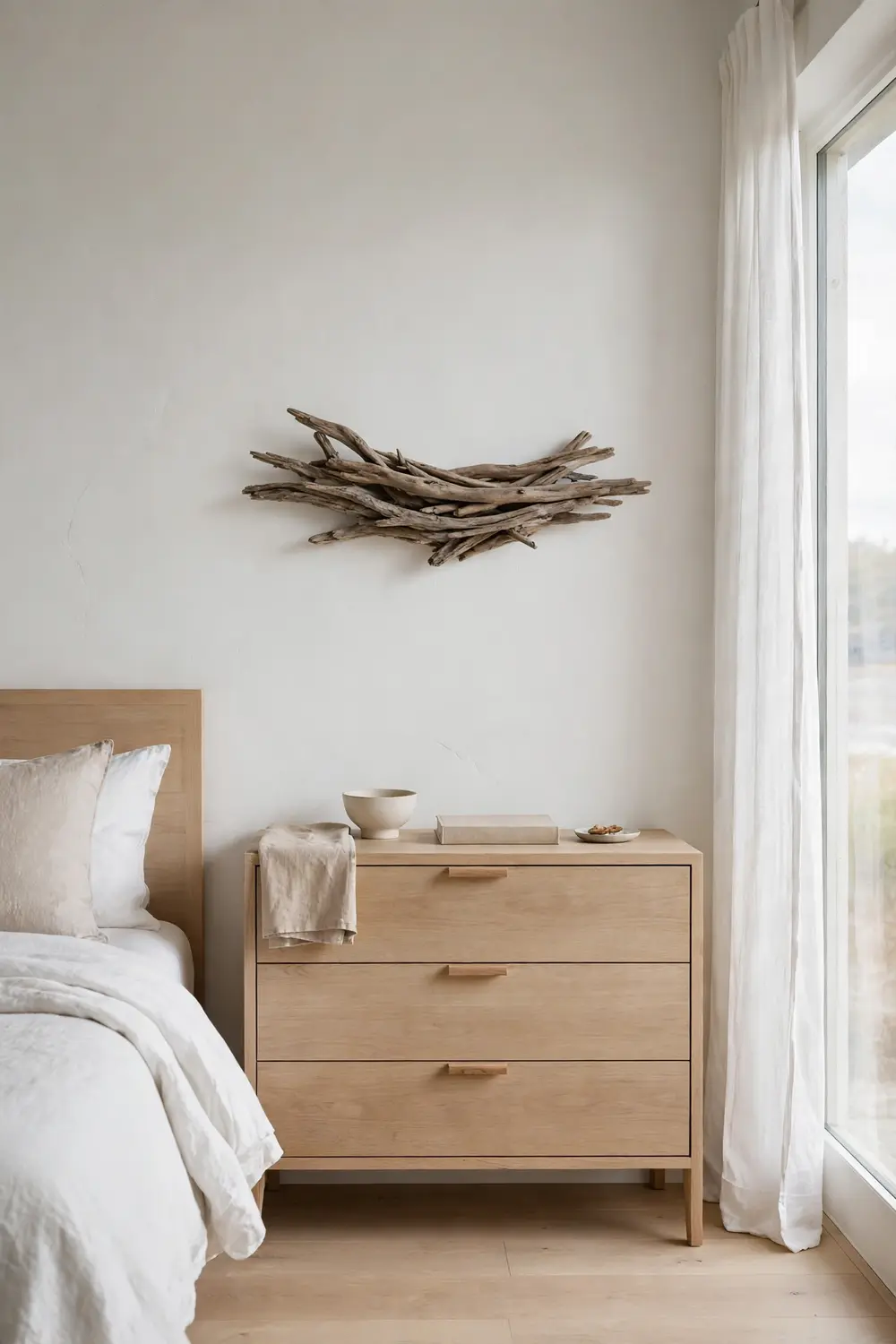
Nod at the coast instead of shouting it. One striped textile or a single piece of driftwood does more than a shelf of anchors. Beach signs and shell collections turn the reference into a costume.
Wood Tone Makes or Breaks Your Coastal Bedroom
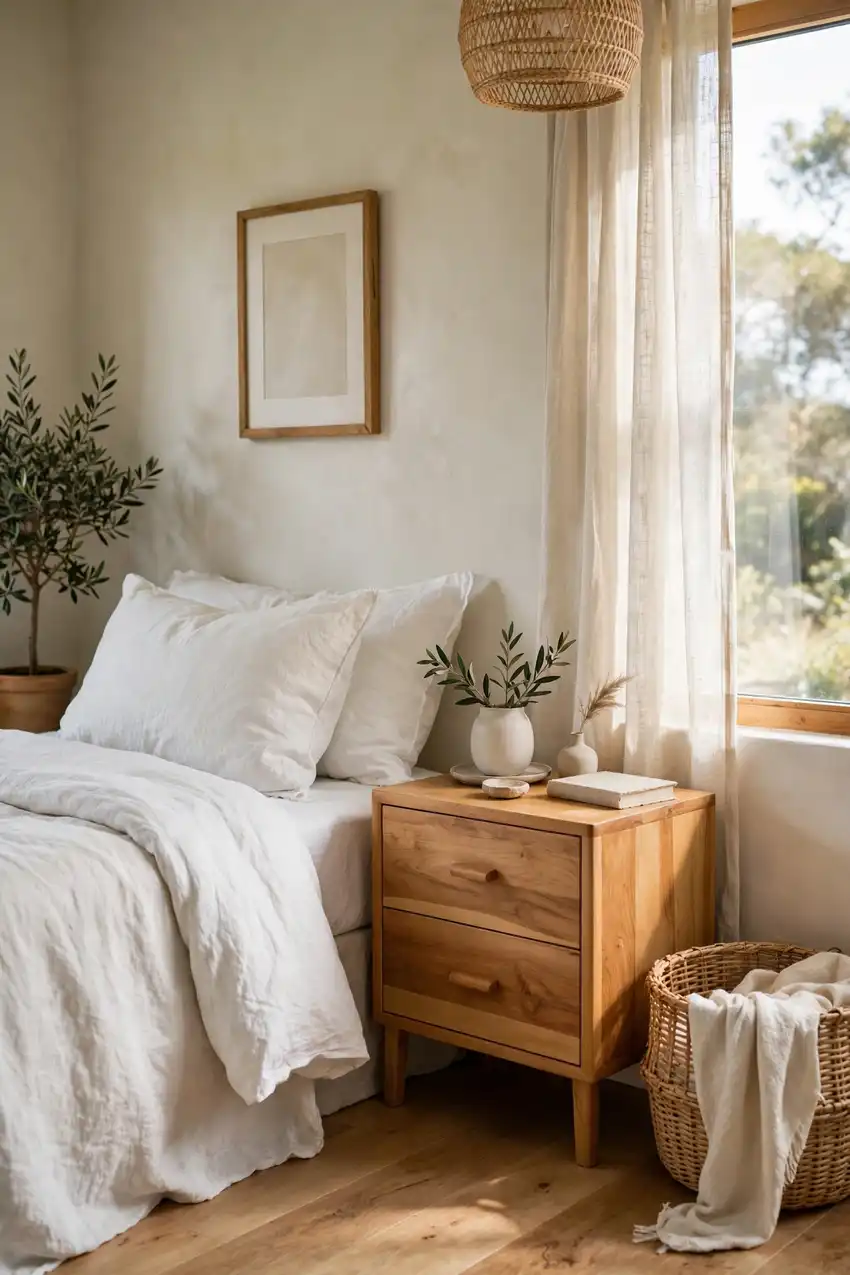
Look at your wood furniture before buying anything coastal. Honey oak and warm pine sit beautifully with sand tones. Gray-washed or very dark wood fights the palette and makes the room feel heavy.
You do not need to replace furniture to fix this. A light wood tray, a rattan basket, or natural bedside tables pull the eye toward the lighter tones. Two or three light pieces can rebalance a whole room.
Driftwood gray usually works better as an accent than as the main wood. A gray bench at the foot of the bed is fine. Gray floors, gray dresser, and gray nightstands together drain the airiness out. For the full style breakdown, see the coastal style guide.
When in doubt, go lighter than you think. Wood reads darker in bedrooms than in showrooms.
A Focal Wall Without Paint or Nails
The wall behind your bed is the focal point whether you decorate it or not. Renters have options: a large textile on two adhesive hooks, a leaning frame, or a peel-and-stick mural. Follow package directions for weight limits, and check your lease first. Leaving the wall blank makes the bed look temporary.
Scale matters more than the method. Whatever you hang should span roughly two-thirds the width of the bed. A small frame centered over a queen bed looks lost, no matter how pretty the art is. If you want a weekend-sized version of this, the weekend DIY ideas include renter-safe wall projects.

The Jute Rug Under Your Feet
A jute or sisal rug is the fastest way to make a bedroom feel coastal. The natural fiber reads as sand underfoot. It grounds all that white bedding so the room does not float away visually.
Size it like any bedroom rug. It should extend past the bed by a couple of feet, so your feet land on fiber each morning. In a small room, a rug that fits under only the bottom two-thirds of the bed still works.
Jute sheds at first and feels rough to some feet. Layer a soft flat-weave rug on top if texture bothers you, or keep jute in a guest room. Target and similar stores sell affordable jute rugs; a small space bedroom can use a runner along one side instead. Skip jute where pets sleep on the floor, since pet claws shred natural fiber fast.

Nightstands Styled in Threes
Each nightstand wants three things: something tall, something low, something living or lit. A lamp, a small stack of books, and a tiny plant. That trio fills the surface without cluttering it.
The usual mistake is treating nightstands as storage overflow. Chargers and random papers creep in and kill the calm. Give the clutter a drawer or a lidded box.
Match the lamp to the nightstand, not the other way around. A 22 to 26 inch lamp suits most bedside tables. Keep the shade bottom near eye level when you sit up in bed. A shade wider than the table looks clownish.

Sheers by Day, Darkness by Night
This is the tradeoff rarely mentioned in the bright, airy photos. A coastal bedroom needs glorious daylight and pitch darkness, and those two wants fight each other at the window.
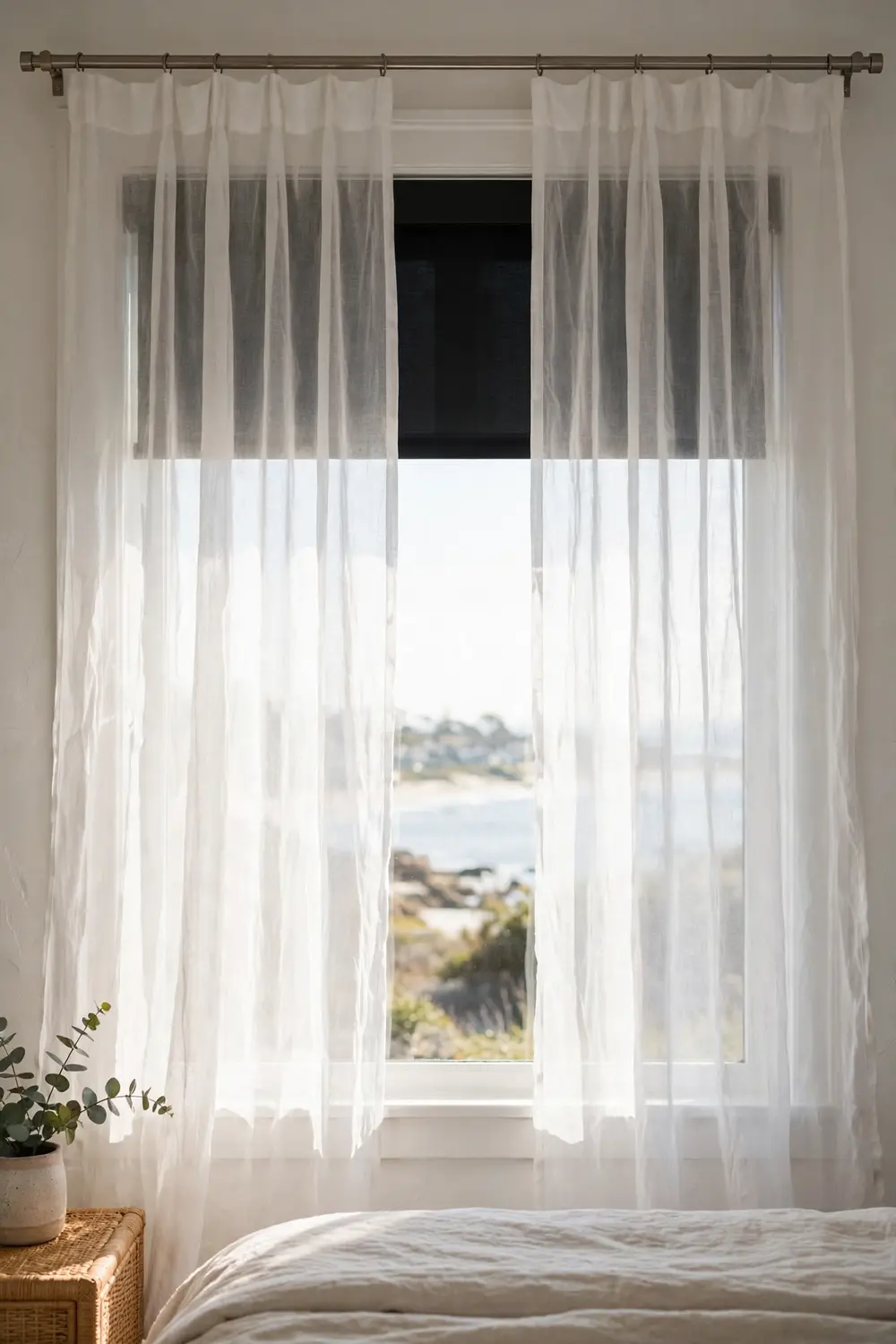
The fix is layers. Sheer white panels on the rod give daytime airiness. A separate blackout blind behind them handles sleep. Hang the rod high and wide, a few inches above the frame and past each side, which is common practice.
Looks good online versus works in a real room: the photos show bare sheers billowing beautifully. In a bedroom facing a streetlight, you will close the blackout layer each night and be glad you did. IKEA’s sheer panels are affordable enough to double up for fullness.
Test your darkness before guests arrive. Lie in bed at your usual bedtime with everything closed. If light leaks around the edges, add wraparound rods or wider panels.
Choose linen sheers over heavy cotton or polyester panels. Linen diffuses light instead of blocking it, which is the whole coastal trick. The weave softens glare while the room stays bright.
Texture Beats Theme, Hands Down
Run your hand across the room in your mind. Linen, rattan, jute, washed wood, nubby cotton. That layering is what reads as coastal, far more than any anchor or shell ever could.
Theme decor dates fast. Texture does not. A rattan chair looks right for a decade, while a “beach” sign looks tired by next summer. Spend your money where time is kind to it.
Aim for four or five textures you can name. If everything is smooth cotton and painted wood, the room feels flat. Fewer objects, more touchable surfaces. The minimalist approach to layering works the same way.

Where the One Blue Goes
You chose one blue back in section two. Now place it where it counts. The throw at the foot of the bed, one piece of art, and maybe a single vase.
The bed is the highest-impact spot. A blue lumbar pillow or folded throw against white linen draws the eye straight to the focal point. Elsewhere, the blue echoes softly.
Resist the urge to add “a little more blue” in small doses around the room. Scattered bits of color read as clutter. Think of blue like salt: enough to taste, not enough to see the grains.
Hang one large ocean or abstract print with its center around 57 inches from the floor, a common gallery guide. Small clustered prints dilute the effect.

Plants That Forgive Low Light
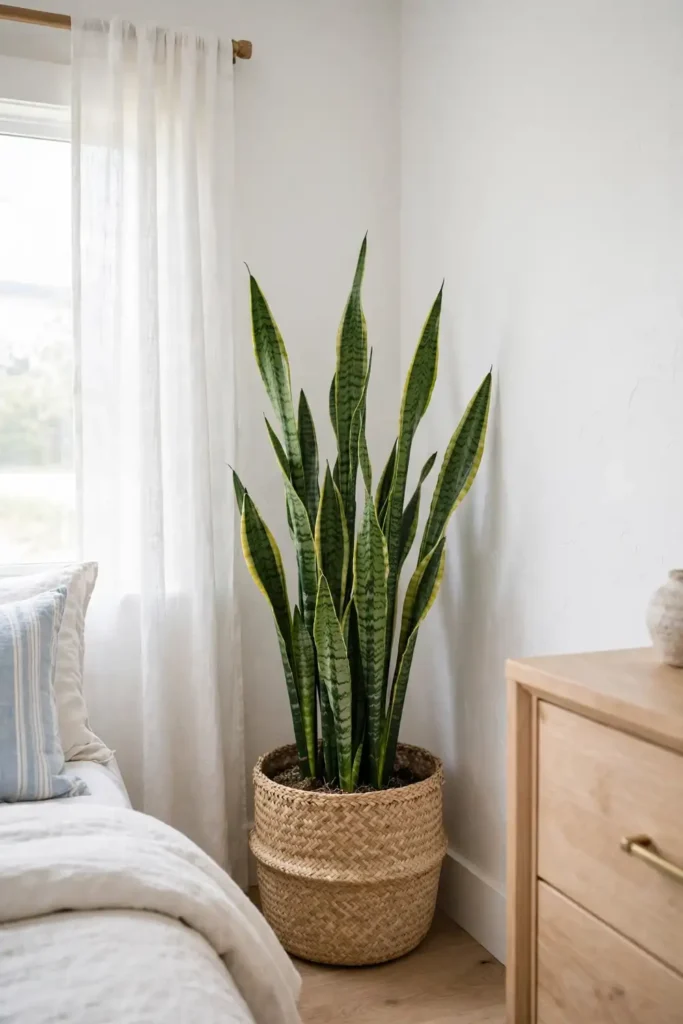
A bedroom plant adds the living green that keeps coastal from feeling sterile. But bedrooms are often dim, so pick plants that tolerate it instead of watching a fiddle-leaf die dramatically. Snake plants and pothos survive low light and irregular watering, which describes most bedroom plant parents honestly. One medium plant on the dresser or a tall one in an empty corner is plenty.
Put it in a natural pot, not plastic. Terracotta, seagrass baskets, or ceramic in sand tones keep the coastal thread going. The boho styling notes have more on basket planters if you want options.
One Large Print, Hung Right
A single large ocean print above the bed does more than a gallery wall of small photos. One big image reads as calm, many small ones read as busy.
Size it generously: span about two-thirds the furniture width below it. Most people hang art too small and too high, so measure twice.
Choose the image for mood, not subject. A misty shoreline in soft tones beats a bright beach postcard. You want the feeling of the coast, not a travel ad.
For a queen bed, that means art roughly 40 to 48 inches wide. Leave four to eight inches between the headboard top and the frame bottom.

Where $100 Actually Shows
Dollars do not show equally in a coastal bedroom. Ranked by visible impact: bedding first, curtains second, rug third. Everything else is garnish. A hundred dollars split across those three beats three hundred scattered on decor objects.
New white linen on the bed changes the room at a glance. A new throw pillow does not, however cute it is. The one splurge worth making is the duvet or comforter insert, not the cover.
A lofty insert makes even budget linen look expensive. Flat, thin bedding ruins the look no matter what the cover cost. See the budget makeover ideas for more ways to rank spending, including what the $100 tier covers.
Skip the themed bedding sets with printed shells or anchors. Solid linen in white or sand outlasts any print. You can change the accent color seasonally for the price of one throw.

Judge It at 7 AM
Here is your final test. Walk into the bedroom at 7 in the morning, before you fix anything. This is when you actually live in the room, half-awake and honest.
Does the light feel soft or glaring? Does the bed invite you back or only look pretty? Morning answers better than any photo.
If something feels off, it is usually light or clutter, not color. Adjust the sheers, clear one surface, and judge again tomorrow. Keep the light soft and the surfaces clear, and the calm mostly takes care of itself.

Final Thoughts on Coastal Bedrooms
The rooms that nail this look have less in them than you expect. Restraint is the whole aesthetic: fewer motifs, one blue, textures doing the talking. Most people add when they should subtract.
Today, do one thing: strip your nightstand down to three objects and open the curtains fully. That single change shows you what your light actually does, and everything else gets easier after it.
What this will not fix is a bedroom with no natural light and dark walls. No amount of white linen manufactures sunshine. In that room, go moodier instead of coastal, and save the breezy look for a brighter space.
FAQ About Coastal Bedroom Ideas
Can I do coastal style in a rental with beige walls?
Yes. Beige already reads as sand, so layer white bedding, natural textures, and your one blue. The beige joins the palette instead of fighting it.
How do I keep a coastal bedroom from looking cold in winter?
Add weight, not color. A heavier knit throw and a wool rug layered over the jute keep the airy look. The room still feels snug.
Is shiplap required for coastal style?
No, and in most bedrooms it is overkill. Shiplap suits bathrooms and entries better. Bedrooms get their coastal feeling from light, linen, and texture, none of which require a single plank.