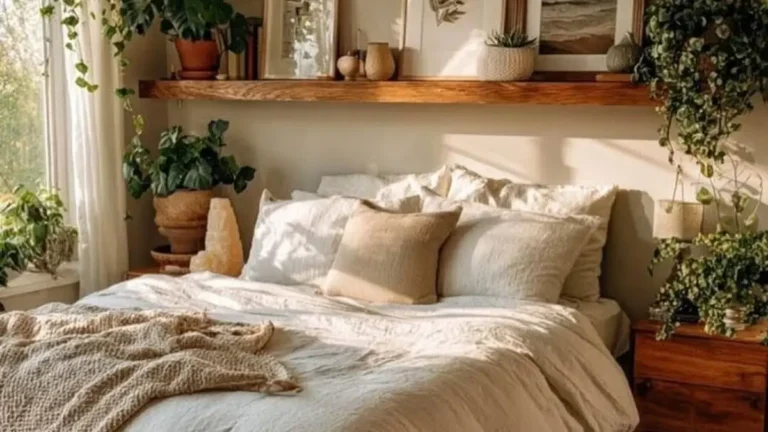
15 Living Room Color Ideas for Small Spaces That Look Modern
Choosing living room color ideas for a real home starts with what you already own. Your sofa, rug, wood floor, and light will shape the result more than any paint chart. Each room below gives you a full palette for wall, sofa, accent, and finish in one view.
You can copy the whole combination instead of guessing at one colour on its own. These are living room colour schemes first, and colour sitting room ideas second, since the same combinations suit a front room, a lounge, or a sitting room. Every idea also has a renter friendly way in through pillows, art, a rug, or one accent wall. You do not need a full repaint to change how the room feels day to day.
Pick the palette that fits your furniture and your light, test it small first, and let the room settle. The rooms range from bold art led colour to quiet beige with one soft accent.
Some ideas use paint on one surface, while others use only fabric and flowers for colour. Read each palette with your own sofa and light in mind, not with a paint chart alone. These living room colour ideas double as colour schemes for living rooms of any size, and the same palettes work as lounge colour schemes if that is what you call the room.
If you call it a lounge or front room, these palettes offer ways to bring in colour without repainting the whole space
1. Let one bold piece of art carry the colour

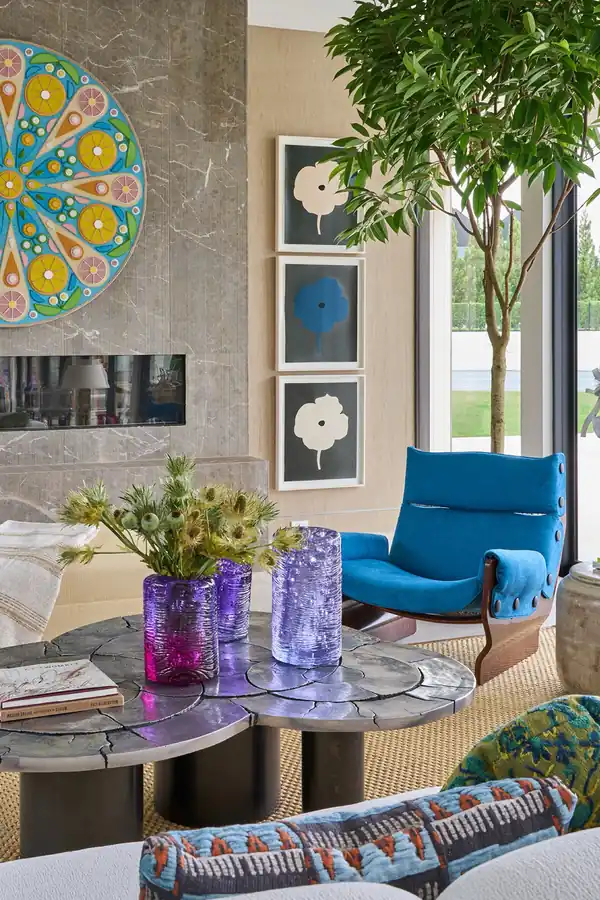
Marble and bold art set the palette in this bright room at once. A huge round artwork in turquoise, yellow, pink, and green hangs above the fireplace wall.
Three small flower prints hang beside the art, and a tall tree adds height to the corner. A bright blue chair and purple vases pick up two colours from the art with care.
Two echoes look planned, while five echoes would look busy and tired in one view. Keep walls and rug calm, so the strong colours have room to breathe in the room.
Renters can get the same effect with one large print in a light frame on a plain wall. Change the print when you tire of it, and keep the rest of the room quiet.
💡 Quick Tip
Start with art you love, echo two colours in small pieces, and keep large surfaces calm.
2. Use blue flowers and warm art as the accent pair

Pale walls keep this room calm, while blue flowers and warm art supply all the colour. A stone fireplace anchors the centre, and a round marble table sits in front of it. A tall white vase holds vivid blue hydrangeas, and three warm panels hang above the fire.
- Blue and warm orange sit opposite each other, so a little of each looks stronger.
- Keep walls, sofa, and lamps pale, and let flowers and art do the colour work.
- Fresh flowers test a colour for very little money before you buy pillows or a rug.
Buy one bunch, live with it for a few days, and see if you want that colour at home. If the colour tires you, you have spent very little to learn that lesson well.
Recreate this look
3. Commit to red on one wall, then soften everything else

Red on one wall gives this room courage, and soft patterns keep it from feeling loud. A grid of twelve framed textile samples fills the red wall with texture and interest.
A floral sofa with pink and green pillows sits under a bay window in soft light. Red and white striped curtains and a green and white striped blind frame the window well.
- Use red on one wall or in one set of accents only.
- Keep sofa and rug soft and patterned rather than solid and loud.
- Check red in daylight and lamplight, and keep the ceiling white for height.
Add one red curtain or throw to the room first.
Frame fabric samples in red tones on one plain wall.
Keep sofa and rug soft, and paint only after you still love it.
4. Build a sage green living room around ivory and walnut

This sage green living room reads as a neutral in daylight and as a colour at night. A sage panelled wall sits behind the television above a long ivory console table.
- Pair sage with warm ivory, not stark white, for a warm room feel.
- Use walnut wood, not black wood, so the green stays warm and soft.
- Repeat green only in pillows and a throw on the cream sofa.
Two dark green velvet chairs face the cream sofa, and round stone and wood tables sit between them.
Renters can bring sage in through pillows, a throw, and a green chair alone. Keep metals warm in brass tones, so the green does not turn cold at night.
| Warm pairing | Cold pairing |
|---|---|
| Warm ivory and walnut wood. | Stark white and black wood. |
| Brass tones with sage green. | Cold silver tones with sage green. |
5. Keep the living room light with pale walls, grey pillows, and plants

Pale beige walls and a white sectional make this room a safe place to start. Dark grey, light grey, and striped pillows give the pale base shape and depth.
Tall green plants in dark pots add the only strong colour notes in the room. Plants change with the seasons, which keeps a pale room from feeling flat or dull.
A dark accent wall far in the background adds depth without darkening the seating area. Marble topped tables and a pale armchair keep the seating area light and calm.
If your room is dark, add one warm lamp and a light rug for warmth. Choose pillow covers in two greys, and let plants carry the colour alone. This pale base is one of the gentlest living room color ideas for a first home.
- ▸One warm pale for walls throughout the room.
- ▸One true white for the sofa and pale chairs.
- ▸Charcoal for pillows, and plant green as accent.
6. Let hot pink flowers set a wood room alight

Hot pink flowers change this light wood room in one afternoon with very little cost. Light wood plank walls hold round plates and a sunburst mirror above the seating area. A rattan table holds a huge white vase of hot pink bougainvillea and pale pink flowers.
- Use one large bunch in one strong colour for impact.
- Repeat pink once in a pillow or a pouf nearby.
- Keep wood light and walls pale, so pink stays joyful.
Pink flowers need no permission, and they cost little compared with paint or furniture. If pink feels too much, use it only in flowers and one pillow for balance.
7. Go dark on the walls, then add jewel colours in art and velvet

Dark panelled walls frame a huge geometric painting in terracotta, sage, cream, burgundy, and deep green. A marble console sits below the painting, and a curved burgundy velvet sofa fills one side.
Dark walls make jewel colours look richer, and they make a room feel close and warm. Warm layered light matters here, so use gold sconces or warm lamps at two heights.
- Use one dark wall tone, not black, for depth.
- Keep ceiling and rug lighter than the walls always.
- Hang one large painting as the focal point only.
One cold ceiling light, dark walls, and no warm lamps in the room.
Warm lamps at two heights, jewel velvet, and one large colourful painting.
8. Use pink and yellow as a joyful, renter friendly pair

Pink and yellow glow in this sunlit room because sheer curtains soften both colours well. A pink quilted sofa cover and yellow velvet pillows sit above a colourful patterned rug.
- Use sheer curtains in yellow or pink, not both solid.
- Add a sofa cover or throw in the other colour.
- Mix both colours in pillows, plus one plain pillow.
Curtains, sofa covers, and pillows change colour with no paint and no permission needed.
Keep the rug pattern simple, with one pink and one yellow shape for calm. For a calmer room, use pink on the sofa and yellow only in curtains.
9. Pair navy velvet with a deep red rug and warm wood

Navy velvet and deep red share this bright room, while pale wood keeps both colours calm. Deep navy lounge chairs and a matching ottoman sit on light wood floors by tall windows.
A rich red rug anchors the seating area, and red flowers in tall silver vases echo it. A cream and wood chair sits nearby, and a wood panelled television wall warms the room.
Each strong colour appears twice and no more, so neither colour crowds the other out. Pale walls and ceiling give navy and red room to stand out with ease.
For a budget version, use navy pillows and a red rug instead of new furniture. Keep wood warm and light, so dark colours do not make the room feel heavy. It gives a navy living room accent wall look without paint or new furniture.
Keep the path to navy and red clear with pale floors.
Repeat each strong colour twice and no more.
Add a third strong colour to the same view.
Use dark wood that makes navy feel heavy.
10. Start white, then add colour only in pillows and art

White slipcovers give you a base that changes colour fast with pillows, art, and a rug. A white sofa sits against a textured grasscloth wall under six framed bird illustrations. Hot pink, floral, tiger, and navy pillows sit on the sofa beside a navy coffee table.
- Start with one art wall as the colour source.
- Repeat three art colours in pillows in a looser way.
- Keep table and rug to one strong colour each.
Choose a washable slipcover if you buy white, and change pillows with the seasons. A new set of covers gives the room a new palette for very little money.
Guests see the sofa first, so keep the base white and change colour in pillows and art.
11. Go all in on turquoise, then let rainbow pillows do the talking

Turquoise velvet dominates this room, and rainbow pillows keep the colour joyful rather than loud. A long turquoise sectional sits under a huge abstract painting in pink, orange, teal, and purple.
White walls give turquoise room to breathe, and a striped rug repeats the same rainbow colours. A glass bubble chandelier hangs above, and dark wood floors give colour a calm base.
- Keep walls white beside a bold sofa colour.
- Repeat each rainbow colour at least twice for order.
- Let rug stripes include the sofa colour as well.
💡 Quick Tip
Test a bold sofa first with pillows and a throw on a neutral sofa at home.
12. Paint one wall emerald green and match the sofa to it

Emerald green covers wall and sofa in the same family, and white trim gives a clear edge. A large framed bird painting hangs on the wall, and a brass floor lamp stands nearby.
- Use one green for wall and sofa family only.
- Keep trim white for a clear edge always.
- Add brass or gold for warmth beside green.
Blue velvet and patterned pillows add blue and pattern, while brass and gold add warmth.
For living room paint colors, test emerald in your own light before you paint. Green can look blue in cool daylight and yellow under warm lamps at home. Paint a large test board, and move it around the room for a day.
Recreate this look
13. Use one soft blue sofa on a cream room as the whole palette

Soft blue sits in a cream room as the whole palette, with warm wood to balance it. A soft blue slipcovered sofa sits near panelled walls, an arched doorway, and tall windows.
Cream walls bounce light back into the space, which helps small rooms and low light rooms. A wood bar with woven stools sits nearby, and framed portraits add warmth to the walls.
Keep the rug muted and the wood warm, and add only one more soft tone if needed. Dusty rose in flowers can serve as that second accent without darkening the room.
If your sofa is already neutral, a soft blue throw and two blue pillows give most of this palette. Remove them if the colour tires you, and the room returns to neutral with ease.
Use cream walls and warm wood as the base.
Add one soft blue sofa, or blue throw and pillows.
Keep the rug muted and quiet throughout.
14. Can colour on the ceiling work while the sofa stays calm?

Burgundy overhead changes this room, while beige walls and a soft blue sofa stay calm. A dusty blue sectional with patterned pillows and a striped ottoman sits below the ceiling. A framed fish illustration hangs on the wall, and a dog rests on the sofa nearby.
- Colour one surface only, here the ceiling, for drama.
- Keep sofa and walls calm and light throughout.
- Repeat burgundy once in trim or a throw.
Painting the ceiling gives drama and warmth, yet walls stay light so the room feels open. Test the ceiling colour with lights on, since a ceiling is mostly seen in lamplight.
| One coloured surface | Colour everywhere |
|---|---|
| Ceiling in burgundy, walls light. | Walls, ceiling, and sofa all coloured. |
| Sofa in soft blue or grey. | No surface rests, room feels loud. |
15. Keep it warm beige, then add sage as a quiet accent

Warm beige holds this room together, with sage green as one quiet cool accent only. Two light sofas and a patterned rug centre on a large window and garden doors.
A wood television console stands nearby, with sage pillows, a round mirror, and warm lights. Beige suits almost any wood floor and any existing furniture, which helps first homes.
- Use warm beige sofas and cream walls as base.
- Keep rug in beige and grey pattern only.
- Add sage green pillows only as the accent.
- ▸Warm beige sofas and cream walls as base.
- ▸Beige and grey pattern on the rug.
- ▸Sage green pillows only as the accent.
Related reading
If you want more ideas in the same style, start here. These Decor With Purpose articles cover layout, essentials, cozy styling, and apartment living.
Read living room design. Read living room decor ideas.
Conclusion
A good palette is a full combination, not a list of colours you like on their own. It needs a base for your light, a main colour, and accents that repeat just enough.
Start with what you already own, and choose one room above that fits it well. Test the palette small in pillows, flowers, or one curtain before you paint or buy furniture.
Colour should make a room easier to live in, not harder to look at each day. Save these living room color ideas for your next colour refresh, and pin the palette you love most. The best palette is the one you still love after a month of everyday use.