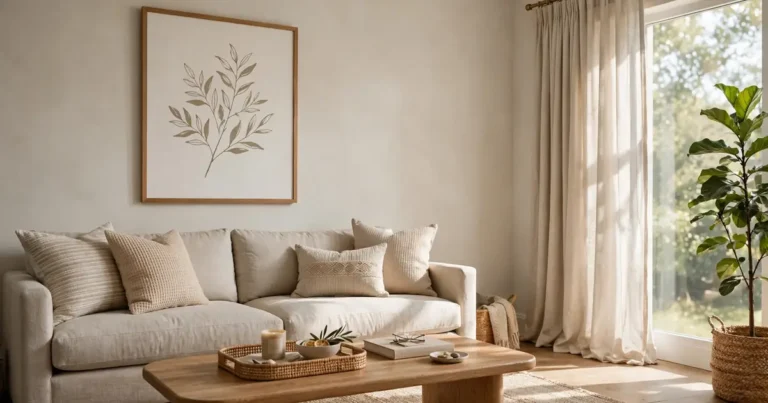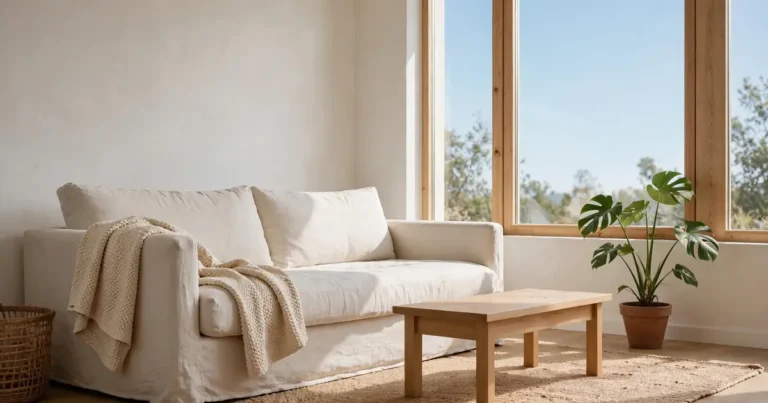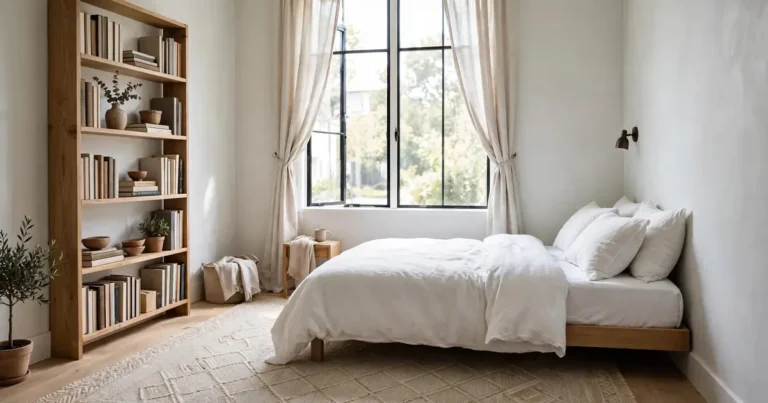
A rental hands you beige walls, beige carpet, and a lease full of rules. That is a real design constraint, not a failure of taste.
These 15 apartment decor ideas work inside those limits, on real renter budgets. No paint, no drilling, no lost deposit, and no room left untouched.
The shared thread is cohesion. One repeating color and one style of light, spent a little in each room. Then the whole place reads as one home, not seven small compromises.
Apartment Decor Starts With What You Can’t Change
The walls are not yours, and neither is the floor. That is not a tragedy. It is the brief.
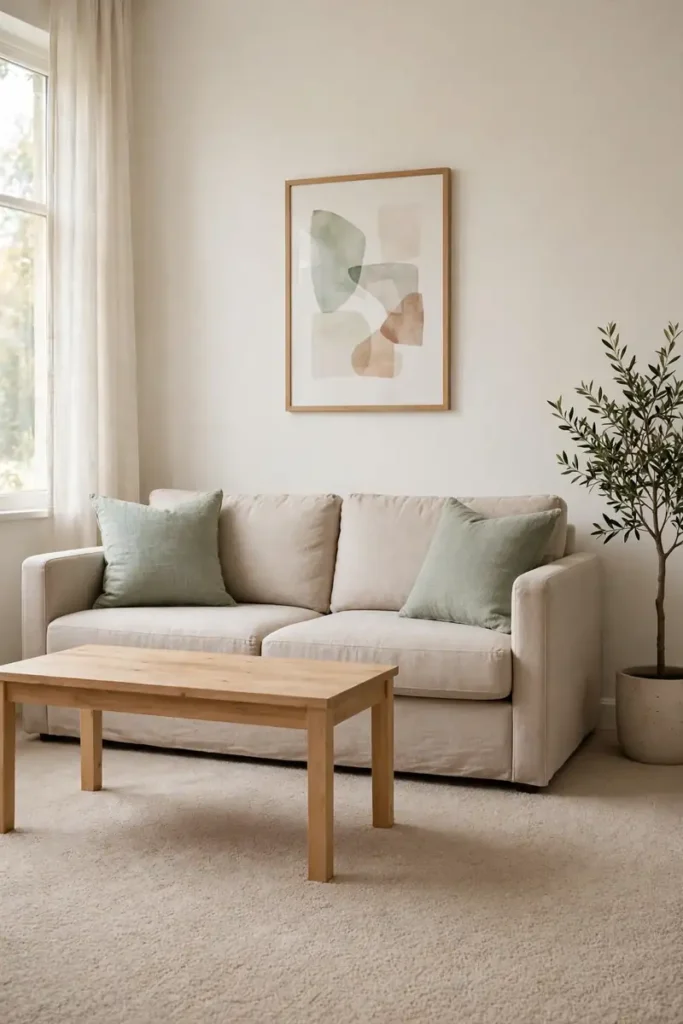
That beige carpet and the off-white walls set your palette before you buy a thing. Fight them and you lose money and weekends. Work with them, and the place reads as chosen instead of tolerated. Plenty of renter-friendly fixes start right there.
Choose colors that sit well next to beige and gray, not colors that need bright white walls to shine. Muted greens, dusty blues, and soft taupes look deliberate against landlord neutrals. Loud brights tend to argue with them. That one decision shapes each purchase after, and it costs nothing.
One Color Thread for the Whole Apartment
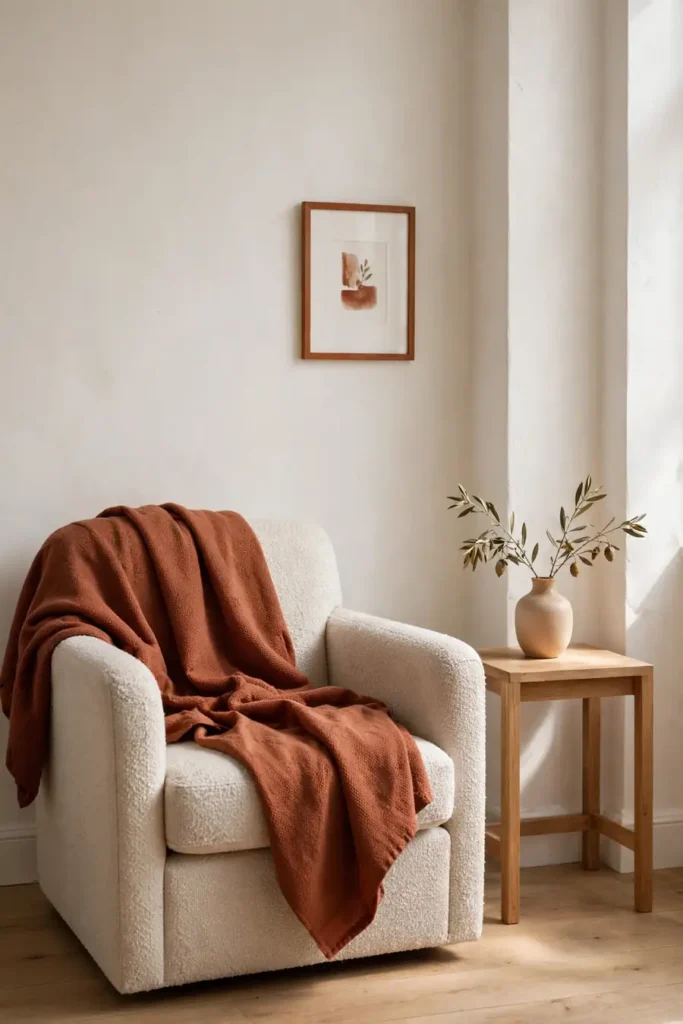
Most small apartments feel scattered because each room got decorated on its own schedule. The living room is gray, the bedroom is navy, the kitchen is nothing at all. Nothing talks to anything else, so the whole place feels smaller.
Pick one color thread and carry it through all the rooms. A rust throw in the living room, rust towels in the bath, one rust print above the bed. Small doses, repeated, look planned. A $100 budget stretches further when each buy serves the whole apartment.
Make the thread physical, not mental. Write the color down and carry a swatch when you shop. The mistake is buying two almost-matching rusts; side by side they clash.
Hang Curtains High and Wide
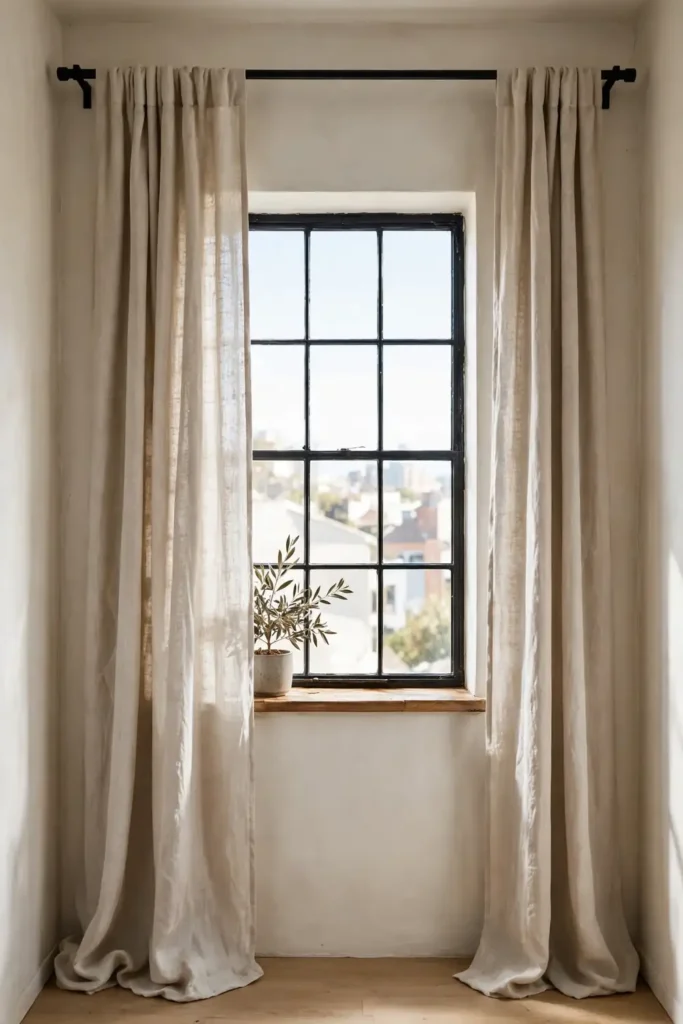
The standard advice says to hang the rod higher and wider than the window frame. The advice is right, and it is also incomplete. The missing part is why it works.
A rod set a few inches above the frame makes the window read taller. Panels that extend a few inches past each side make it read wider. That is a common guide, and it flatters small rental windows most of all.
The advice skips one thing: floor-length panels still drag through rental dust. Hem them to kiss the floor instead.
Buy the rod first. Then measure the wider window before buying panels. Most renters do it backwards and end with panels that barely cover the glass.
Apartment Decor: One Big Rug Beats Four Small
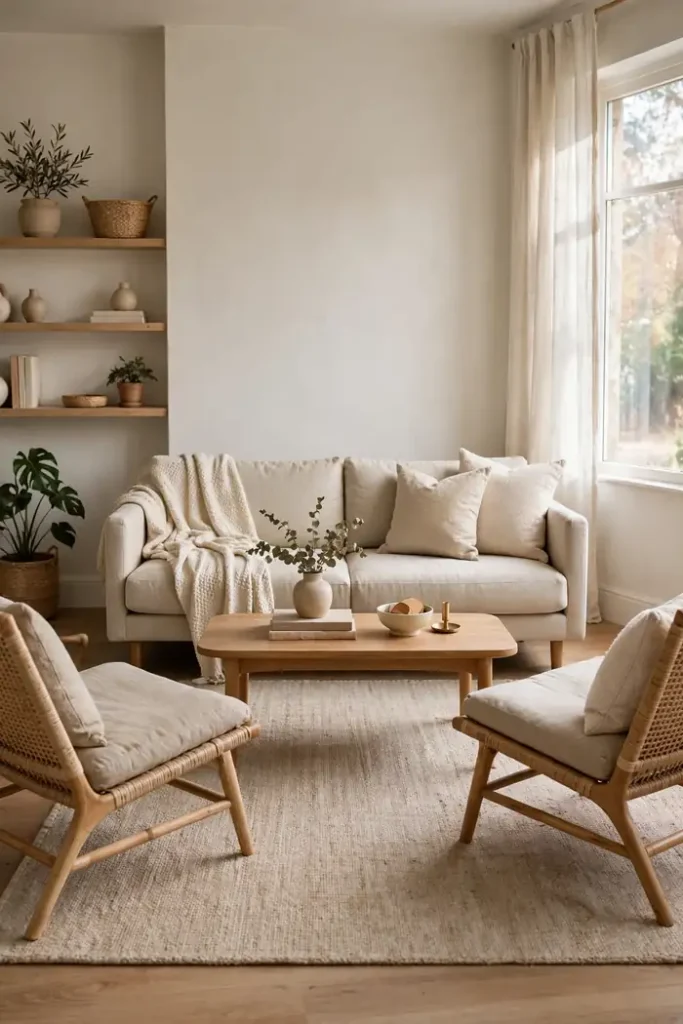
Small rugs scattered through a small apartment make it read like a shop floor. A mat by the door, a runner in the hall, a postage stamp under the coffee table. The eye stops at each edge.
One large rug in the main room changes the reading. It pulls the seating together into one zone. A common guide says the front legs of the sofa should sit on the rug. That anchors a small-space living room without swallowing the floor.
Skip matching rugs for each room. Choose rugs that share a family instead: same tone, same texture, or same pattern scale. With pets, pick a low pile in a forgiving pattern. Add a rug pad to stop it sliding on rental carpet.
In open layouts, rugs define zones too. One rug under the sofa marks the living area; a smaller flatweave under the dining table marks the eating area. One rug per function, and the eye reads two rooms where there are none.
Walls You Can Decorate Without Nails
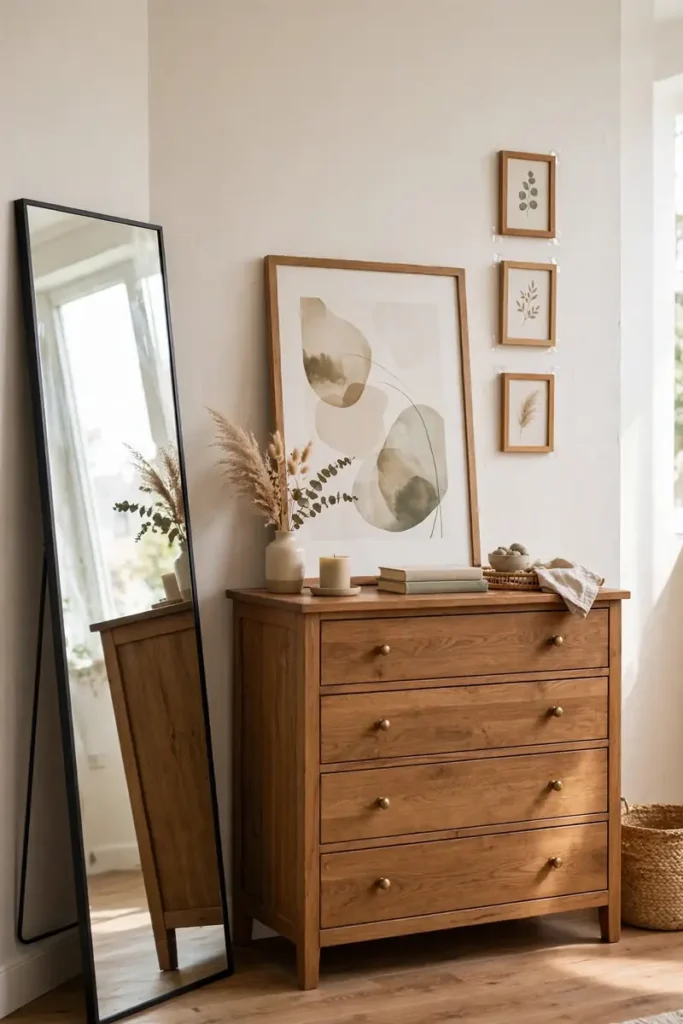
Nails are not the problem. The hole is, the one you notice on moving day, the one that costs part of your deposit. Most renters hang art freely and pay for it later.
Check your lease, then use removable strips for light frames and lean the heavy pieces. Command strips suit this job: follow the package directions, respect the weight limit, and test on textured paint first. Big art needs no nail. A large print leans on a dresser; a tall mirror leans in a corner.
Plan the layout on the floor before anything sticks. Trace each frame on kraft paper and tape the shapes to the wall. Live with the shapes for a day before you commit.
Style the Tops You Already Own
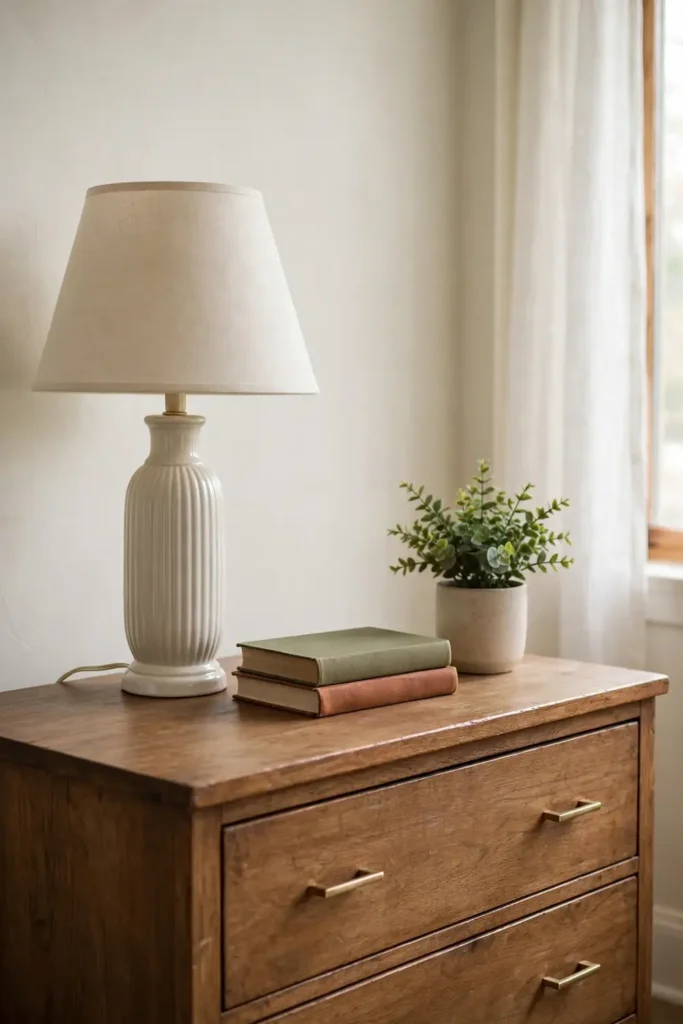
Flat surfaces in a rental collect clutter fast. The dresser top becomes a parking lot for keys, mail, and half-dead plants.
Clear one surface per room and style it with three things: something tall, something low, something alive. A lamp, a short stack of books, a small plant. Odd numbers read as styled, and even numbers read as stored. Shop your own rooms first, which is the minimalist move that actually works.
The quick test: photograph the surface with your phone. The camera shows clutter your eyes forgive. If the photo looks busy, remove one thing and shoot again.
The Fastest Apartment Decor Upgrade: Better Light
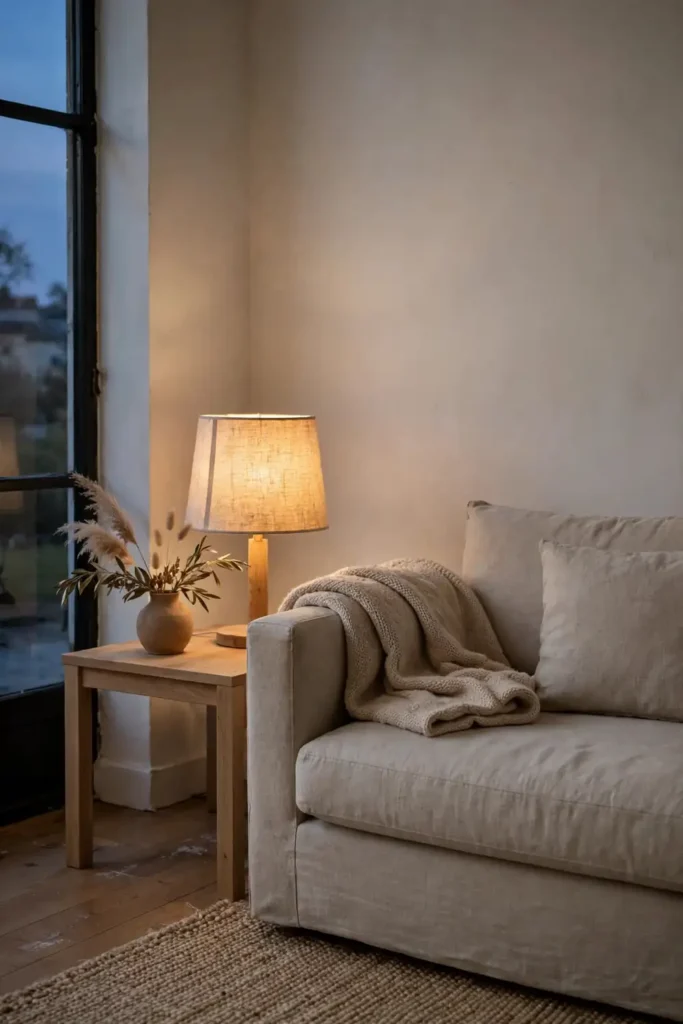
Start with the bulbs. Landlords install the cheapest ones they can buy, usually cold white. Cold light makes beige walls look gray and skin look tired.
Change the light before you change anything else. It sounds backwards, which is exactly why few renters try it first. Warm-white bulbs, around 2700K, make the same walls and the same furniture look richer.
A whole apartment of bulbs costs under fifty dollars. Match the lumen output, not the wattage, and keep the old bulbs for moving day.
Bulbs are step one; lamps are step two. One overhead makes a rental feel like an office after dark. Add a floor lamp in the main corner and a table lamp on the dresser. Thrifted lamps run ten to twenty dollars, and the shade does more than the base.
One evening of swapping changes how the rooms read the next morning. Light is the first upgrade, not the last.
Try Removable Wallpaper on One Wall
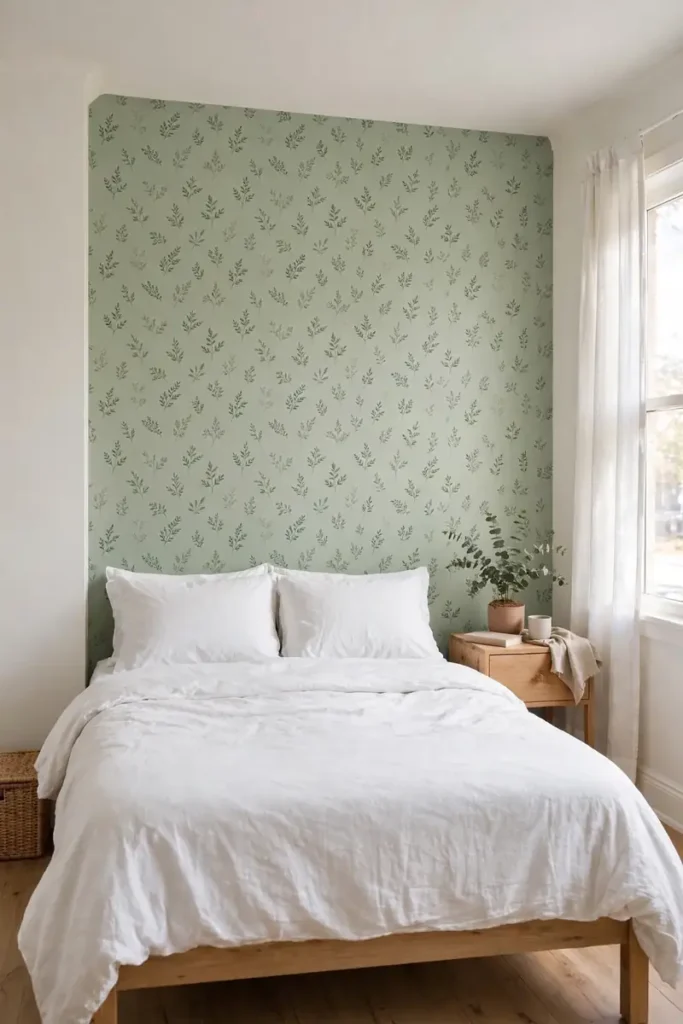
Wrapping a whole room in peel-and-stick paper is the popular move. The discovery, usually made at midnight with a blistered thumb, is that one wall does the job. Whole rooms look flawless in photos. In a real room, the seams lift at the edges within a season.
I learned the paint version of this the hard way: “I recently changed the paint color which my wife liked. When everything got styled, the paint did not appeal to me much.” The cost of repainting is not the paint. It is moving the whole house twice. Removable paper lets you test a color story without that bill.
Matching Frames, Mismatched Art
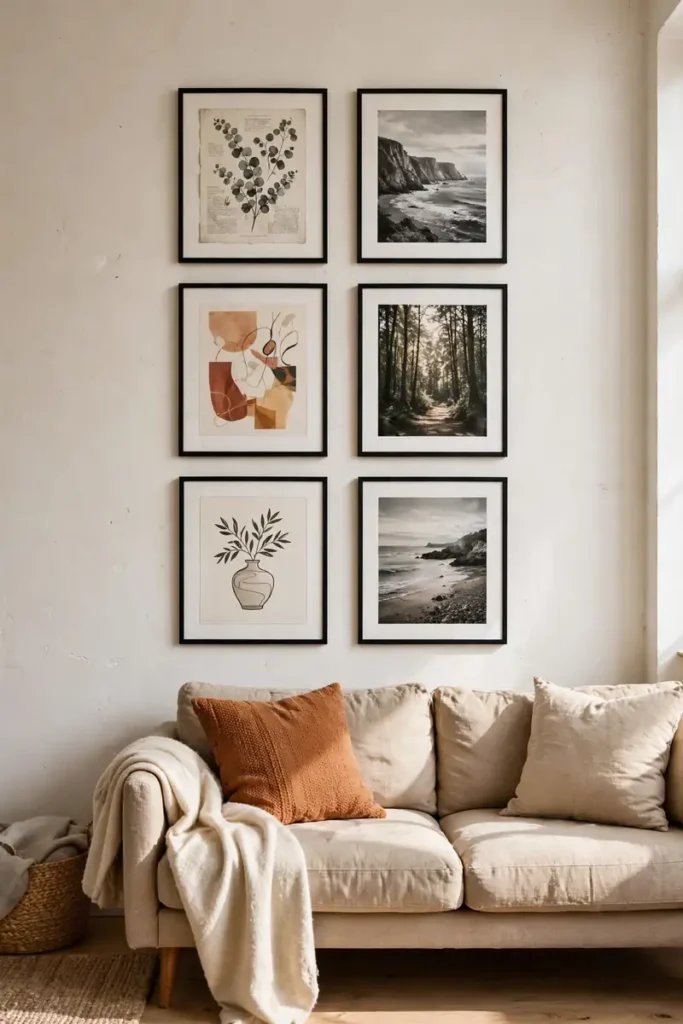
Walk through any home that looks pulled together. You will find this pattern: the art is all different, and the frames are all the same. The frames do the unifying. The art does the talking.
IKEA RIBBA frames are the usual answer, and they earn it. Clean lines, glass fronts, prices that let you frame a whole wall. The honest limit is depth: they suit prints and photos, not thick canvases. Measure your art before you buy the frame, not after.
Hang them in a tight grid with even gaps, or line them along a picture ledge. Either arrangement reads as one piece instead of ten. It is a solid weekend project, the kind that pays off each time you walk past.
Contain Clutter in Matching Boxes

Before: open shelves full of chargers, papers, and things with no category. After: the same shelves, the same stuff, hidden in matching boxes. Nothing was thrown away, yet the room looks calmer.
IKEA KALLAX units and their fabric bins are the standard pairing. The bins fit the cubes, the look is uniform, and the price stays low. The honest limit is weight: the bins suit light clutter, not files or tools. Heavy items belong in the cubes without bins, low and centered, and label the bins if you share the apartment.
Build a Landing Spot by the Door
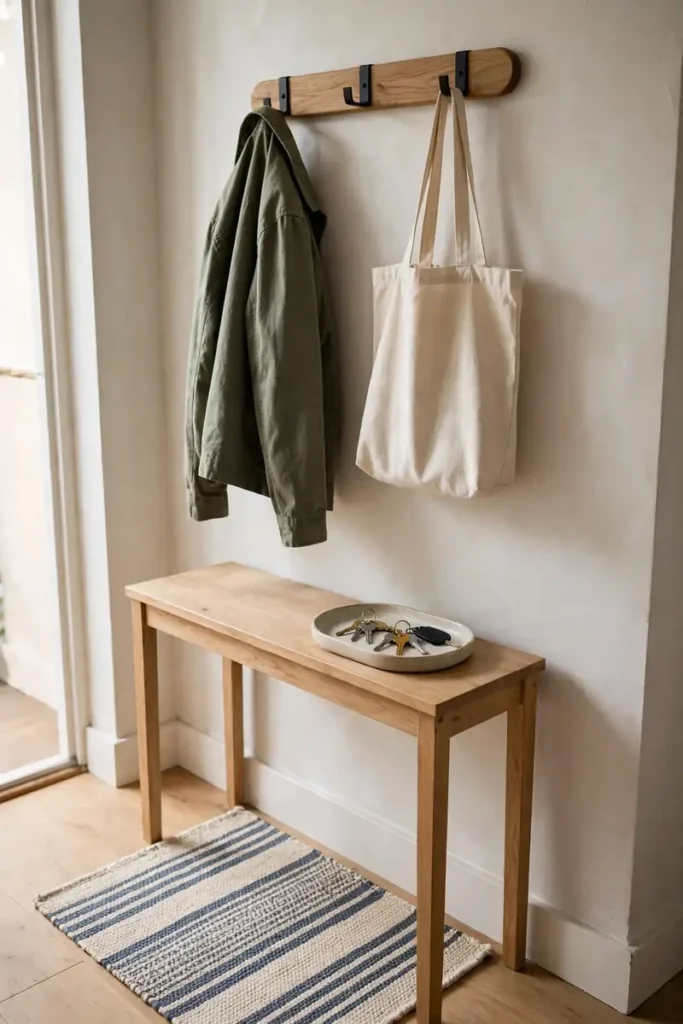
Some apartments have a chair that collects jackets. Others have a floor that collects shoes.
Give those things a proper home: a wall hook rail, a small tray for keys, and a washable mat. Mount the rail with removable hooks if your lease is strict.
Check the weight rating before it holds a winter coat. The tray is the simplest place to start: one minute to set down, and no more daily hunt.
Guests form their impression of the whole apartment at the door. Make those first seconds count with one clear surface.
Open Kitchen Shelves With Rules

You cannot drill in most rentals, so forget floating shelves. The workaround is furniture: a narrow baker’s rack or a freestanding shelf unit against a bare kitchen wall. It gives you the look with no holes to patch.
Style it with rules or it becomes clutter in a week. Group items in twos and threes, leave air between groups, and keep daily dishes low. Open storage in a small kitchen shows everything, so everything earns its spot.
The failure mode is the open shelf that holds everything you own. Edit it like a shop window, not a warehouse. If an item has not been touched in a month, it moves to a closed cabinet.
While you are styling the kitchen, swap the cabinet hardware. Unscrew the dated pulls and take one to the hardware store to match the screw spacing. New pulls run a few dollars each. Bag the originals in a labeled bag and reinstall them at move-out.
Hang Art Behind the Bed

A bed with no headboard and a bare wall behind it looks temporary. That is why the usual fix, a cheap headboard, usually disappoints: it wobbles, it squeaks, and it still looks temporary. When drilling is banned, lean the art on the wall behind the pillows.
What works is one large piece of art centered behind the bed. Hang it low enough to read as part of the bed. A common guide says 57 inches from the floor, but behind a bed you can go lower. Frame it to match the living room frames; more ideas live in our bedroom section.
Two Textiles: Apartment Decor for Any Bathroom

No room resists love like a rental bathroom. The tile is dated, the light is harsh, and you cannot change either.
Two textiles do most of the repair. Pick one color for the shower curtain and the towels. The curtain covers the largest surface in the room, so it sets the tone.
Target’s basic towels suit this job, with one honest limit: they tend to run thin, so replace them yearly. A washable runner in the same color family ties the floor to the curtain. Keep the palette to that one color. Two textiles, one color, and the dated tile fades into the background.
Spend Where Your Eye Lands
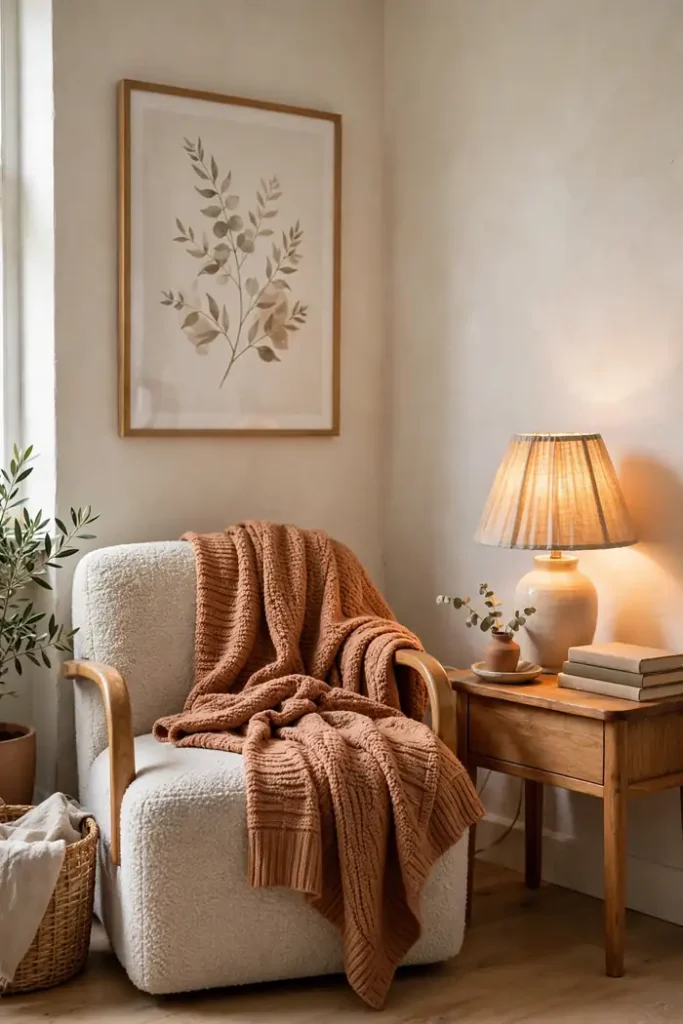
The final dollars should not buy furniture. A new coffee table will not fix a room that feels wrong. Light and textiles will.
Your eye lands on three things when you enter: the brightest spot, the biggest textile, and the wall straight ahead. Spend on those.
Bulbs for the bright spot, curtains or a throw for the textile, one piece of art for the wall. That is the whole $150 tier, and it beats any single furniture buy.
Walk through with a phone camera when you are done. The camera catches the clutter and the crooked frame your eyes forgave. Then stop when it feels chosen, not when it feels full.
Final Thoughts on Apartment Decor Ideas
Cohesion beats new stuff. A small apartment reads as home when the rooms agree with each other.
Today, do the free moves first. Walk room to room and name the one color thread you will repeat. Swap the bulbs. Photograph each room and delete nothing yet.
Be honest about what this will not fix. It will not add square footage, silence thin walls, or make you love the carpet. It will make the place feel chosen, which is most of what home means in a rental.
FAQ About Apartment Decor Ideas
Can you hang curtains in a rental without drilling?
Yes, with limits. Tension rods work inside the window frame for light panels, and adhesive hooks hold sheers within their weight limit. Check your lease first.
How much should a renter budget for decorating a whole apartment?
The tiers here are $50, $100, and $150. Fifty covers bulbs and hooks, a hundred adds curtain panels and a throw. One-fifty adds a rug or one large print, with furniture as a separate budget.
What color goes with beige rental carpet?
Most beige rental carpet leans yellow, so muted colors with yellow undertones sit well next to it. Buy a large sample, put it on two walls, and check it morning and evening. Light from different sides changes how a color reads.